Higher Education
No padlocks. No sign-up forms. No keys. Electronic access engineered into every locker cabinet — and usage data that tells you how students actually behave on campus.
The Challenge
Commuter students don't have a dorm room to drop things off between classes. A laptop, a change of clothes, gym gear, textbooks — they haul it all from arrival to departure. The locker systems most campuses offer weren't built to help.
Traditional campus lockers require students to purchase their own padlock, register on a website, and pay a semester fee — before they've even used a locker once. The friction alone keeps most commuter students from bothering. At the end of the year, maintenance staff cut off abandoned locks and start over.
Without usage data, campus administrators write locker policies based on assumptions — semester-long rentals, fixed pricing, assigned banks. Those assumptions are almost always wrong. Locker rooms end up either chronically empty or perpetually oversubscribed, with no way to tell which until students start complaining.
Commuter students don't think about their locker before September. They think about it when they're carrying a wet umbrella into their 9 AM lecture. The demand is spontaneous, short-term, and unpredictable — everything a semester-rental model is not designed for.
The Solution
HAMILTON smart locker systems remove every barrier between a commuter student and a secure place to store their things — while giving your campus the data to keep improving.
Students access their locker electronically through the access system the university deploys — no padlock to buy, no PIN to forget, no keycard to lose. Many university programs integrate with the existing student portal so students use the login they already have. HAMILTON manufactures the locker cabinet; the university or their vendor selects the access platform.
Students can book a locker for a single afternoon or reserve it for an entire semester. The software makes it easy to support both models simultaneously, and to adjust policies as usage data reveals how your population actually behaves. No locksmith required to change the rules.
The administrative dashboard shows real-time occupancy, booking duration patterns, peak usage hours, and locker-position preferences. That data turns guesswork into evidence — and makes it possible to set fees, expand capacity, and write policy based on what students actually do rather than what you assumed they would.
Fordham University — New York City
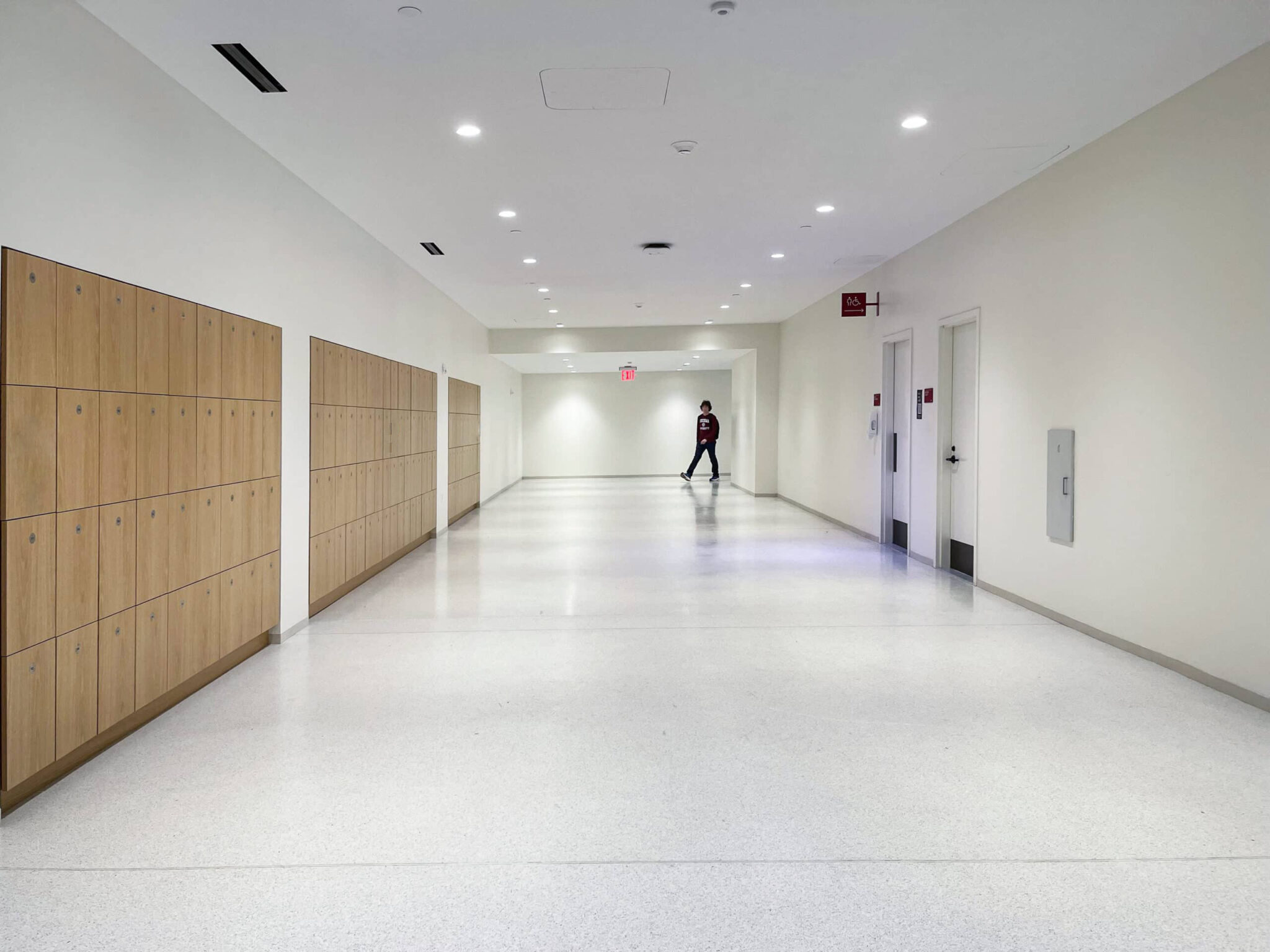
Fordham University's new campus center — a four-story building housing a 9,500-square-foot student lounge, Career Services, Campus Ministry, and the Center for Community Engaged Learning — was designed to be the social and academic hub of campus life. The administration knew the commuter student population needed secure day-use storage at the center of it all.
The existing solution was 90 lockers requiring students to purchase their own padlock and pay for access through a website registration process. The friction was high and the data was nonexistent: the only way to know if a locker was in use was to look at it.
HAMILTON manufactured and installed 288 smart locker cabinets in the new building using laminate construction engineered for electronic lock integration. The university's chosen smart locker access system was integrated with the "My University" SSO portal, so students could book and access lockers using their existing campus credentials. Access was automatically restricted to undergraduate students at the specific campus — no separate account creation, no padlock purchase, no sign-up fee.
Fordham launched the system as a complimentary service to collect usage data before setting any fees or policies — a decision that proved prescient. What they found reshaped how the university thinks about commuter storage entirely.
"Let your people use your lockers before you write your policies."
— Fordham University Administration
What the Data Revealed
Three months of usage data from Fordham's deployment fundamentally challenged the assumptions behind traditional campus locker policy — and revealed design insights that will shape future installations.
Data collected over three months. Bookings under 30 minutes excluded from dataset.
| Booking Duration | Quantity |
|---|---|
| Hour or less | 51 |
| 2 to 4 hours | 49 |
| 5 to 9 hours | 69 |
| 10 to 23 hours | 5 |
| 1 to 7 days | 10 |
| 7 to 31 days | 11 |
| 1 month or more | 12 |
The data tells a clear story: the overwhelming majority of commuter students want a locker for a few hours, not a semester. Policy and pricing built around semester rentals leaves enormous same-day demand unserved.
How It Works
Smart locker programs for commuter students are built to work around what students already have — no new hardware to carry, no padlocks to buy, no friction at the locker bank. The specific access workflow depends on the electronic access system the university deploys; HAMILTON manufactures the locker cabinet infrastructure that makes it all possible.
Many university smart locker programs integrate with the campus identity system so students use their existing login — no separate account required. The access platform handles credential validation; HAMILTON manufactures the locker cabinet the lock hardware is installed in.
Students select from available lockers by location and row height — top, middle, or bottom — through the access platform the university provides. Fordham's data shows a clear preference for middle-row lockers, a finding that informs future locker bank layouts and configurations.
Students open their locker electronically through the method their university deploys — mobile credential, QR code, badge tap, or keypad. No padlock, no keycard to lose, no PIN to forget. Access is logged automatically. When done, the booking releases — or expires at the end of the reserved period.
Smart Locker Program Capabilities
Many university smart locker programs integrate with the existing campus identity system so students use their existing login — no separate account required. Access control by student type, campus, or enrollment status is handled through the access platform the university selects; HAMILTON builds the locker cabinet that receives the lock hardware.
Specific locker positions can be designated as ADA-accessible and reserved for students who need them — lower rows, larger door openings, and accessible locations within the locker bank. These designations persist regardless of daily occupancy patterns.
Many electronic locker access platforms allow campus staff to remotely open individual lockers or entire banks — useful for safety checks, end-of-semester cleanouts, or assisting a student who's having trouble. The specific remote capabilities depend on the access system the university deploys.
Electronic smart locker programs typically include administrative dashboards for real-time visibility and student-facing support channels. The support model is provided by the electronic access platform the university selects — not by HAMILTON. We manufacture the locker infrastructure; the university controls the software experience.
Smart locker access systems collect time-stamped access data that helps administrators understand actual student behavior — which lockers are popular, how long they're held, and which are sitting unused. At Fordham, this data directly informed locker expansion and policy decisions.
Smart locker programs can support complimentary access, paid semester rentals, hourly rates, or any combination. Policy adjustments are handled through the access platform's software — no hardware changes required. Fordham started complimentary to gather behavior data before setting any fees.
Frequently Asked Questions
How do smart lockers work for commuter students?
Smart lockers for commuter students use electronic access instead of padlocks — no key to carry, no padlock to buy, no sign-up forms. Students access their locker through the electronic access system the university deploys, which may include a mobile credential, QR scan, badge tap, or keypad. Lockers can be reserved for a single day or a full semester, giving commuters the flexibility to use storage as they actually need it. HAMILTON manufactures the locker cabinet infrastructure; the university or their locker distributor selects the electronic access platform.
Can smart lockers integrate with a university's existing campus systems?
Many electronic smart locker access platforms support integration with university identity systems so students can use their existing campus login — no separate account required. At Fordham University, the access system integrated with the student portal so undergraduates at that specific campus could book and access lockers using their existing credentials. The integration capability is a function of the electronic access platform the university selects; HAMILTON manufactures the locker cabinets that the lock hardware installs into.
Should commuter student lockers be free or fee-based?
Both models work, and the right answer depends on actual usage patterns that are only visible after deployment. Fordham launched as a complimentary service for the first semester specifically to collect data before setting fees. That data revealed 84% of students used lockers for less than one day — very different from the semester-long rental model originally planned. Smart lockers make it easy to adjust pricing and duration policies with a few clicks, so universities can start free to gather data and adapt as actual behavior becomes clear.
What does smart locker utilization data tell a university?
The administrative dashboard gives universities real-time visibility into which lockers are booked, when each was last accessed, and how long current bookings have been active. Fordham's three-month dataset revealed that 73% of lockers were in use at any given snapshot, that students overwhelmingly preferred middle-row lockers, and that 17% of active bookings hadn't been accessed in over a month. This kind of insight is completely invisible with traditional padlock systems.
How many lockers does a commuter-heavy campus need?
The right number depends on your commuter population and expected utilization. Fordham's 288-locker deployment achieved 73% utilization. As a starting benchmark, a ratio of 1 locker per 6–8 commuter students works well for campuses where same-day use is the primary pattern. For campuses with higher semester-rental demand, ratios closer to 1:3 or 1:4 may be more appropriate. HAMILTON will size your system based on your enrollment data and intended use model.
From D-I locker rooms to campus recreation centers — HAMILTON-built athletic storage for every level.
See Athletic Solutions →Self-serve parcel pickup for student mail centers, residence halls, and campus service buildings.
See Parcel Locker Solutions →The data-driven guide to sizing any locker installation — including commuter hubs and student unions.
Read the Guide →Tell us about your campus — commuter population, building plans, and current locker situation — and we'll design a system that works for how your students actually live.