Why This Question Matters More Than You Think
There's a version of this conversation that happens in almost every workplace planning project: someone says "we have 200 employees, so we need 200 lockers." And everyone nods. And then the lockers are installed. And then, six months later, a third of them are empty on any given day.
This isn't a small problem. Office real estate costs money — a lot of it, particularly in dense urban markets. Every locker that sits unused is taking up floor space that could be a collaboration zone, a focus room, or simply less square footage on a lease renewal. In New York or Chicago, the cost of unnecessary lockers can easily run into tens of thousands of dollars annually when you factor in the floor space they occupy.
The good news: this is one of the most solvable problems in workplace design. The data exists. The methodology is proven. HAMILTON has applied it in workplaces across the country — from a global bank's Manhattan headquarters to a 500-person insurance company's Chicago offices — and the numbers are consistent.
Here's the framework.
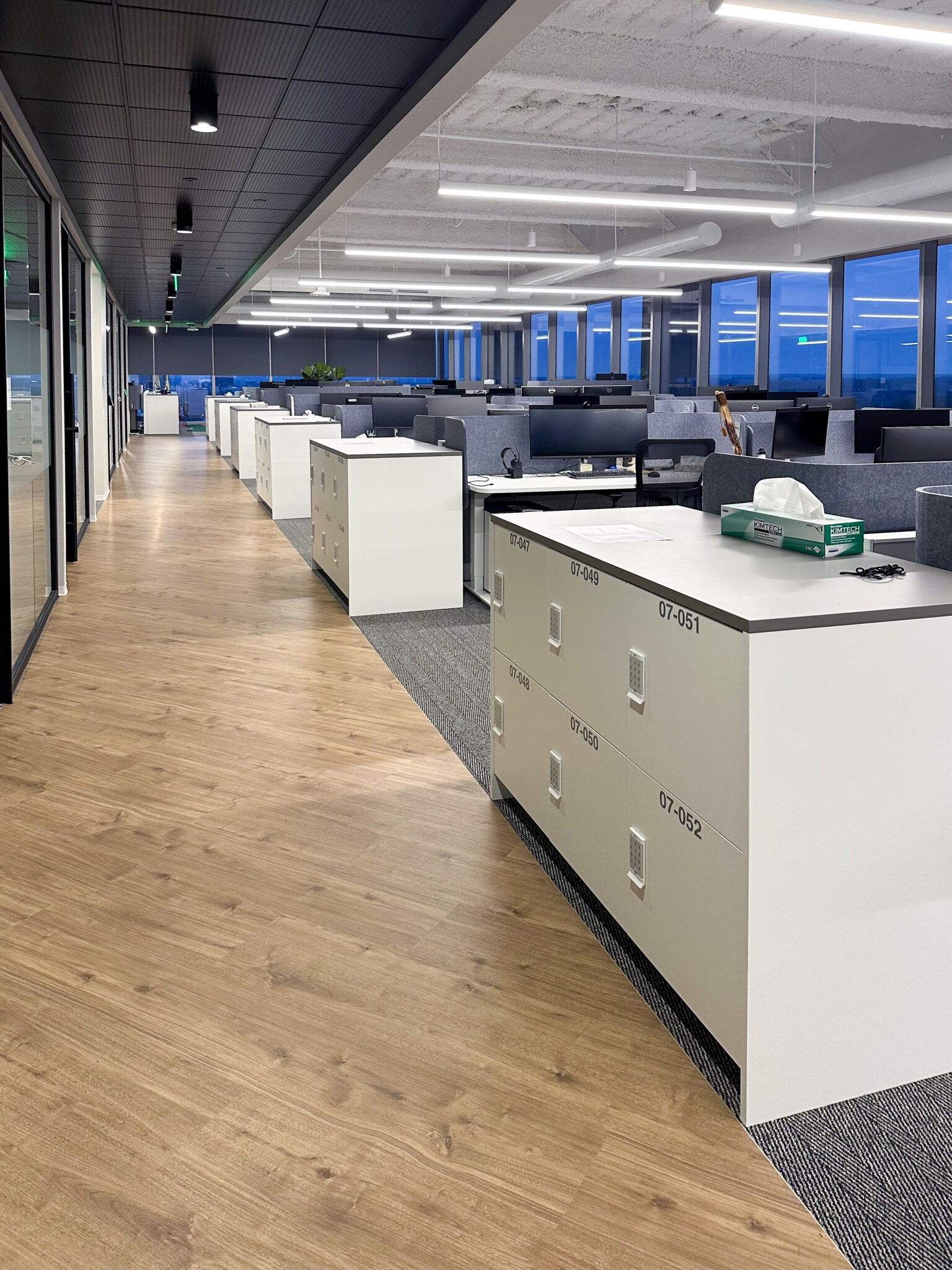
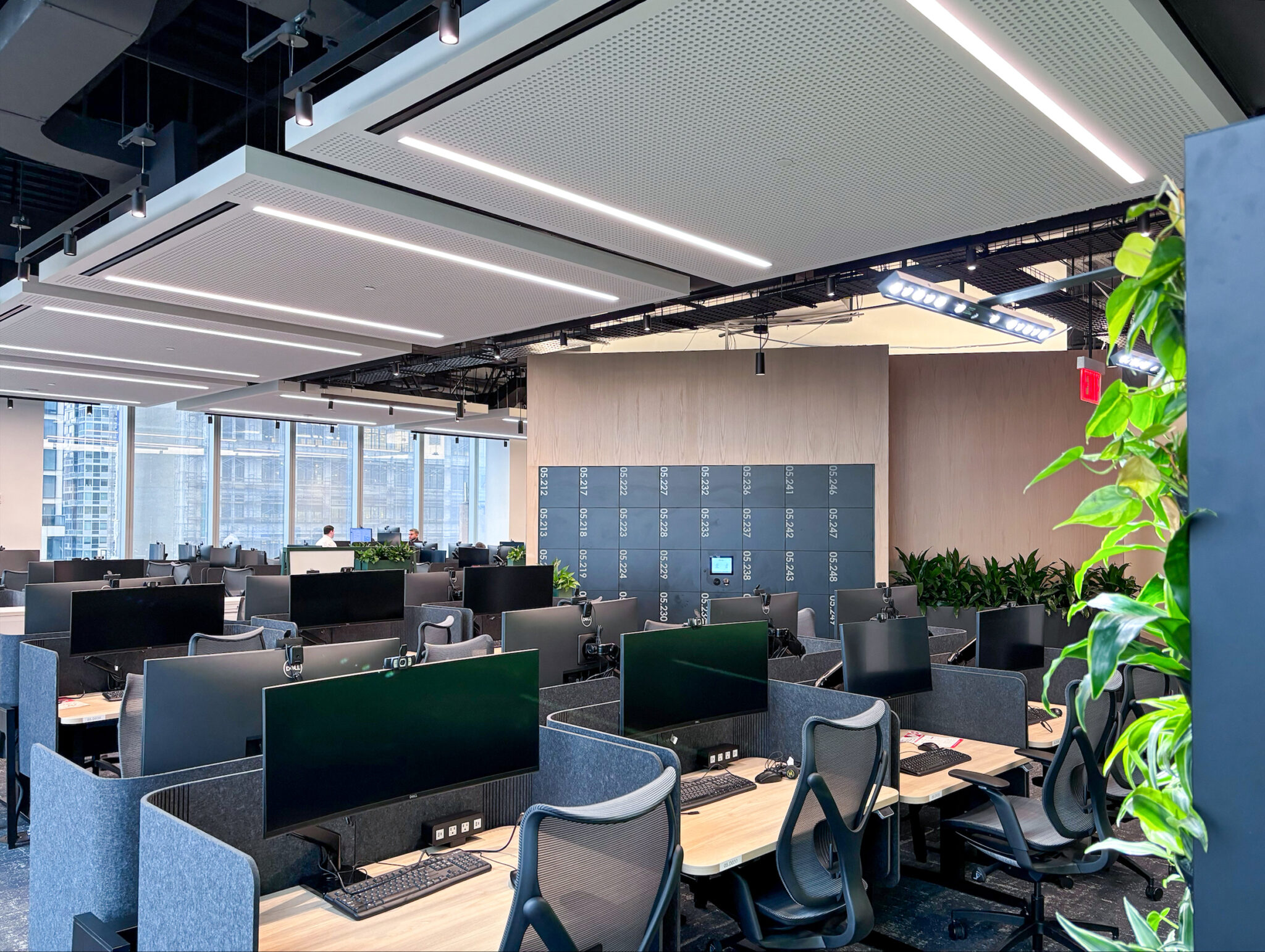
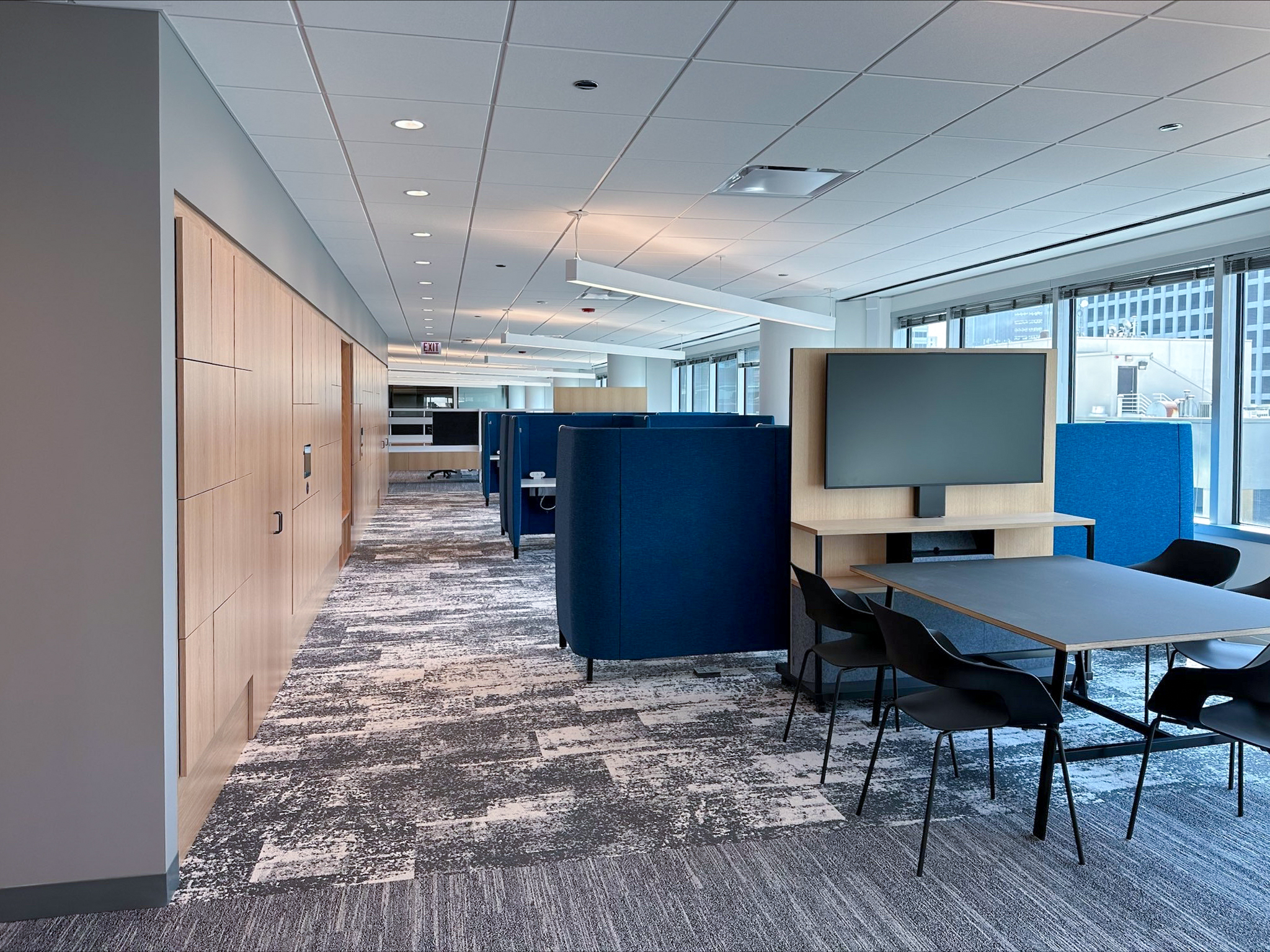
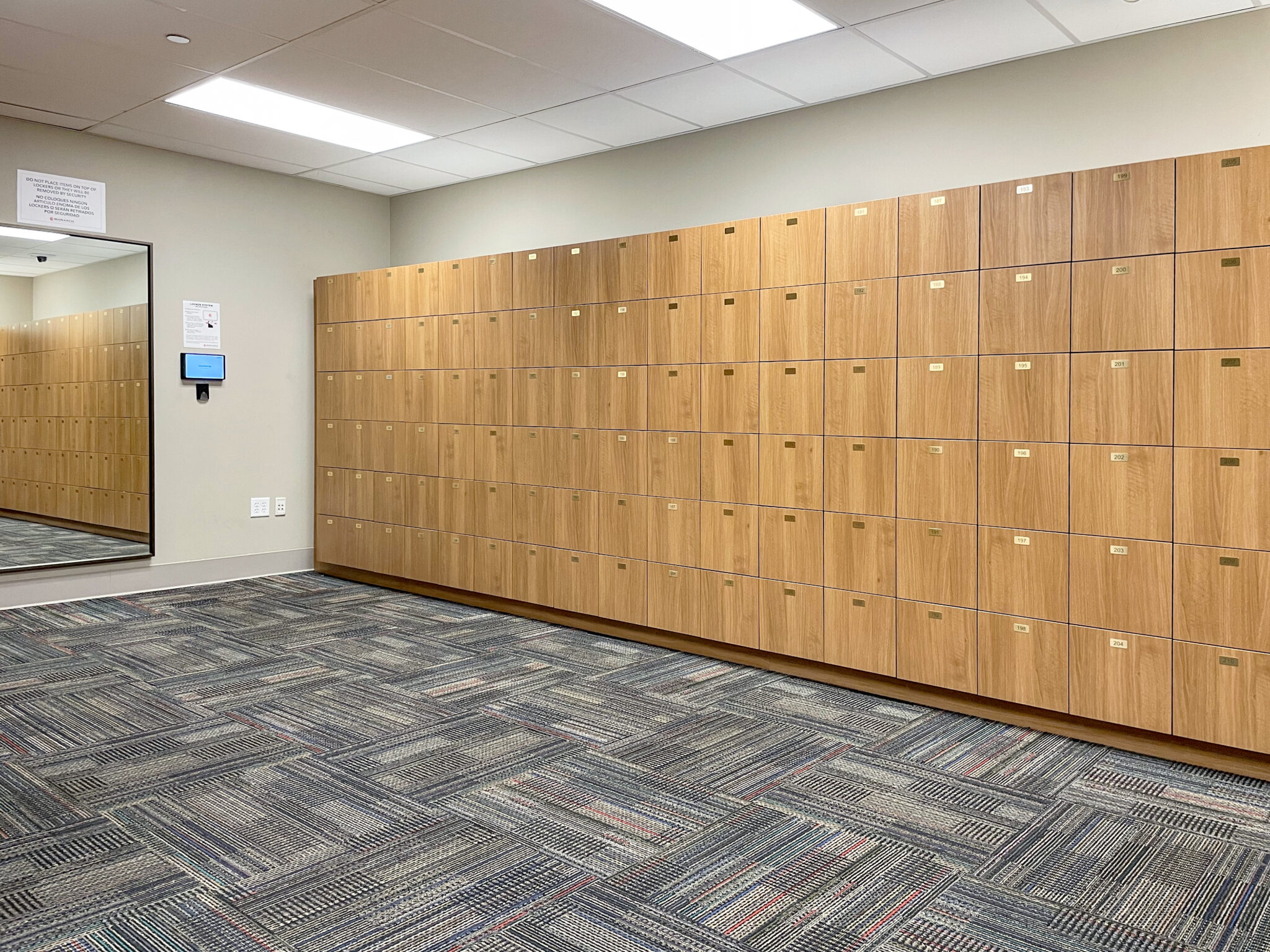
HAMILTON island locker system in a modern hybrid office — designed to the exact dimensions of the floor and matched to the interior color palette.
"Here's a truth: thinking 100% of your employees will use a locker consistently is like expecting everyone to show up to the office holiday party — it's just not happening."
The 3 Factors You Can't Ignore
Right-sizing your locker count comes down to three variables. Get these right, and you'll have a workplace storage strategy that works with your space — not against it.
The 70% Reality Check
In a hybrid workplace, data consistently shows that only about 70% of employees will use a permanent locker in any given week. Some employees work fully remote. Some come in irregularly. Some simply prefer to carry everything in and out. Planning for 100% locker utilization doesn't reflect how people actually work.
The benchmark is reinforced by deployments at major financial institutions. When a leading global bank recalibrated their New York City headquarters from a 90% locker ratio to 70%, they did so using anonymized data from similar firms worldwide — not guesswork. The result was a smaller, more efficient locker footprint with no degradation in employee experience.
Apply this factor: Take your total headcount and multiply by 0.70. That's your baseline locker count before any other adjustments.
The Flex Factor — Your Hybrid Policy Multiplier
Your desk policy tells you a lot about how many lockers you need. The more flexible your attendance model, the lower your realistic locker demand on any given day.
A fully assigned-seat office with 5-day-a-week expectations has a different storage profile than a hot-desk office with a 2-day-per-week guideline. If your employees are typically in the office 3 days per week, your peak single-day attendance might only ever reach 60–65% of headcount — which changes your locker-count math significantly.
Apply this factor: Estimate your realistic peak daily attendance as a percentage of headcount. If it's 65%, that becomes your multiplier — not 70%, and certainly not 100%. The 70% rule gives you a conservative floor; your actual attendance data may push it lower.
The Sharing Multiplier — Unassigned vs. Assigned
Whether lockers are permanently assigned or day-use (unassigned) has a dramatic effect on how many you need. With permanently assigned lockers, you need one per user. With day-use lockers, you can apply a sharing ratio — because if 100 people share 70 lockers and they never all show up on the same day, everyone gets a locker.
For truly unassigned smart locker programs, some organizations push the ratio to 60% or lower without impacting availability. However, we recommend maintaining a small buffer — especially in industries where high-attendance days (quarterly all-hands, audit season at a financial firm, back-to-school at a university) create temporary spikes.
Apply this factor: If you're using day-use smart lockers, apply a sharing ratio of 0.6–0.8 to your baseline. If lockers are permanently assigned, this factor is 1.0.
A Worked Example: The 400-Person Hybrid Office
Let's put the three factors together. Imagine a financial services firm with 400 employees in a New York City office. Their policy is 3 days in-office per week (flexible). They're implementing a smart locker system (day-use).
400-Person Hybrid Financial Services Office · NYC
That's 225 lockers for 400 people — versus the 400 that simple headcount-matching would have delivered. The difference is 175 lockers' worth of floor space returned to productive use, and a significantly lower upfront investment.
Note: this is a framework, not a formula. Your organization's specific attendance patterns, seasonal variations, and role mix may shift these numbers. A HAMILTON workplace storage consultant can help you run the analysis with your actual data.
Quick Reference: Locker Count by Office Size
Use this table as a starting point. It applies a 70% usage baseline and a 0.80 sharing ratio for day-use smart locker systems. Adjust based on your actual hybrid policy and attendance data.
| Office Headcount | 100% (Old Standard) | 70% Baseline | With Day-Use Ratio (×0.80) | Lockers Saved |
|---|---|---|---|---|
| 50 employees | 50 | 35 | 28 | 22 |
| 100 employees | 100 | 70 | 56 | 44 |
| 200 employees | 200 | 140 | 112 | 88 |
| 300 employees | 300 | 210 | 168 | 132 |
| 500 employees | 500 | 350 | 280 | 220 |
| 1,000 employees | 1,000 | 700 | 560 | 440 |
| * Apply a buffer of +10–15% if your office has high-attendance spike days (annual meetings, quarterly reviews, etc.) | ||||
What About Locker Size — Not Just Count?
Once you've right-sized your locker count, the next question is configuration. Most workplaces benefit from a mix of locker sizes rather than a single standard. The right mix depends on your workforce profile and geography.
In cities with significant seasonal variation — New York, Chicago, Boston — a portion of lockers should accommodate outerwear. A parka needs a full-height locker (60"+) with a coat hook; a laptop bag does not. A typical mixed installation might include 60% standard lockers, 30% half-height for bag-only days, and 10% full-height for seasonal items.
Smart drawer units are increasingly popular for tech-forward offices — they eliminate the awkwardness of bottom-tier lockers and let facilities teams reconfigure storage density over time without replacing the entire unit.
Download: Locker Math That Works — The Complete Guide
The full PDF guide with extended data tables, real case study numbers, and a worksheet for calculating your ideal locker count. Free download — no account required.
Download Free PDFPutting It Together: Planning Your Project
The three-factor framework gives you a starting point, but a well-executed workplace locker project involves several more steps. The good news is that HAMILTON handles most of them.
First, a site analysis — understanding your floor dimensions, structural constraints, and how the locker system will interact with desking, circulation paths, and mechanical systems. Second, a design phase — working with your architect or interior designer to match finishes, colors, and hardware to your space. Third, manufacturing at our US Midwest facility — where most construction is completed before delivery, so on-site installation is fast and minimally disruptive. Finally, installation with a lifetime guarantee on the product.
The process typically runs 10–16 weeks from final sign-off to installed product. HAMILTON has completed this cycle in occupied Manhattan office buildings, three-shift manufacturing facilities, hospital administration floors, and university libraries. Whatever your environment, we've built for it.