Universities & Corporate Campuses
Manual package management costs $175,000 a year and 3.6 minutes per package. HAMILTON locker cabinets cut that to 15 seconds — with 24/7 student access and no staff intervention at pickup.
The Problem
For a campus with 1,900 students receiving 6,700 packages a month, the math is straightforward: at 3.6 minutes of staff time per package, you're spending the equivalent of a full-time position on package logistics alone. Add storage overhead, missed pickups, and redelivery loops, and the total hits $175,000 per year before you've accounted for a single exception.
The deeper problem is access. Students with evening classes or weekend schedules can't pick up packages outside mailroom hours. Staff handle the same package multiple times — logging intake, managing storage, pulling it again at retrieval. Every touchpoint is manual, and none of it scales as package volume grows.
The system wasn't built for e-commerce volume. It was built for a world where a student might get a package once a semester.
Staff time logging packages, managing storage, and handling retrieval adds up to a six-figure annual expense — before you account for errors, lost packages, or overtime during peak periods.
At 3.6 minutes per package across 6,700 monthly deliveries, staff spend over 400 hours per month on package management alone — time that should be spent on higher-value campus services.
When the mailroom closes at 5 PM, students with evening classes or work schedules are simply out of luck. Missed pickups create redelivery loops and compound staff workload the following morning.
The HAMILTON Difference
HAMILTON locker cabinets remove staff from the retrieval cycle entirely. Staff load the package once. The system handles everything after that — notification, access, logging, and audit trail. No desk, no follow-up, no redelivery.
A 1,900-student campus running HAMILTON smart lockers saved $69,000 per year compared to their previous manual system. Staff productivity doubled. The system paid for itself in measurable, auditable operational savings — not projections.
What took 3.6 minutes per package under the old system now takes 15 seconds. Staff scan a package in, load it into the designated locker compartment, and move on. The locker system notifies the student automatically. No retrieval, no follow-up, no paperwork.
Students pick up packages at 2 AM before an early flight, at midnight after a study session, or on a Sunday morning when no one is staffing the desk. HAMILTON lockers are always open, always secure, and always logged — with no staff required at the point of pickup.
Real-World Results
A mid-sized campus with 1,900 students and 6,700 monthly packages had been running the same manual system for years — staff logging every delivery by hand, storing packages in a shared back room, retrieving items one at a time when students came to the desk. At $175,000 per year in operating costs and 3.6 minutes per package, the system wasn't sustainable.
After deploying HAMILTON smart locker cabinets, per-package handling dropped to 15 seconds at intake — and zero at pickup, because students retrieved their own packages using existing campus ID credentials. Staff productivity doubled. The campus saved $69,000 in year one.
Students gained 24/7 access. Lost-package disputes dropped to near zero — every transaction timestamped and logged automatically. The same locker infrastructure is now deployed for technology lending, department supply distribution, and library material pickup.
Campus-Wide Applications
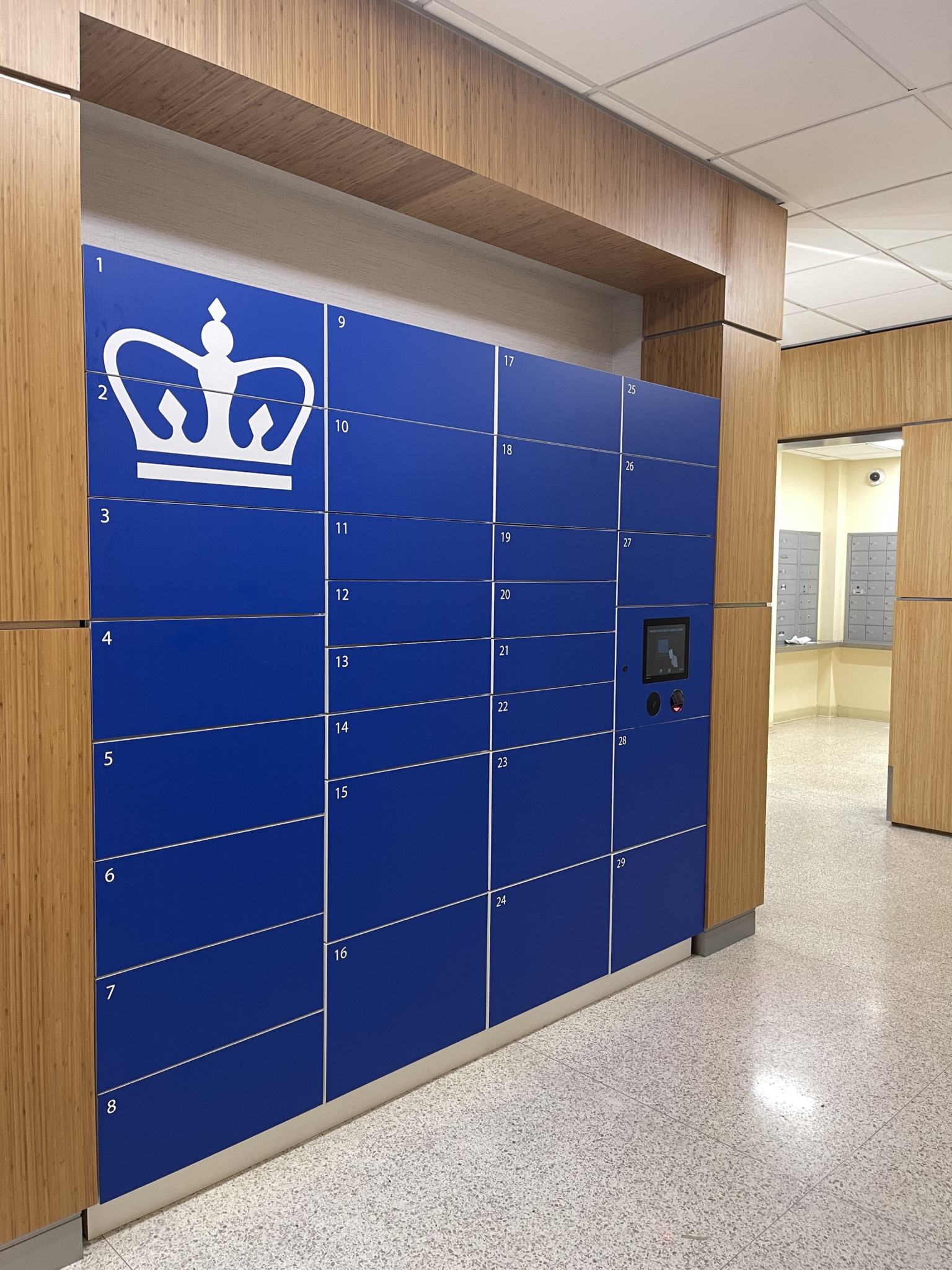
The same locker cabinet infrastructure supports six distinct campus workflows — each with its own access controls, notification rules, and workflow configuration set through the chosen access platform.
Laptops, tablets, hotspots, and calculators checked out 24/7 through locker compartments. Students reserve online, retrieve with campus ID, and return on their schedule — with no IT desk staffing required at pickup or return.
Library staff load reserved materials into assigned compartments. Students pick up and return books at any hour. Wake Forest University's ZSR Library reached 90% locker utilization within weeks of launch using this model.
Textbooks, course materials, and merchandise ordered online or by phone loaded into secure lockers for self-service pickup. Eliminates the end-of-semester bookstore line and allows fulfillment outside store hours.
Facilities, IT, and administrative departments use locker compartments to distribute supplies, keys, credentials, and equipment to staff without requiring a staffed distribution window or scheduled pickup appointment.
Official correspondence, financial aid documents, legal notices, and student mail distributed securely through the locker system. Eliminates paper-based mail logging and ensures documented, timestamped delivery for compliance-sensitive items.
Faculty, HR, and administrative teams use lockers for secure document exchange and internal delivery — replacing ad hoc mailroom runs with a scheduled, trackable workflow that doesn't require both parties to be present simultaneously.
Featured Deployment
Wake Forest University's Z. Smith Reynolds Library needed to give students access to reserved materials outside staffed hours — without extending staff schedules or building out a second service window.
HAMILTON installed a smart locker system that let library staff pre-load reserved books and materials during the day. Students picked up items at any hour using their existing Deacon OneCard. No staff required at the point of access.
"The system hit 90% capacity utilization within weeks of launch — demand for contactless, around-the-clock access was immediate."
The deployment extended ZSR's effective service hours without adding headcount — and became a model for contactless library access across Wake Forest's campus.
Talk to a University Specialist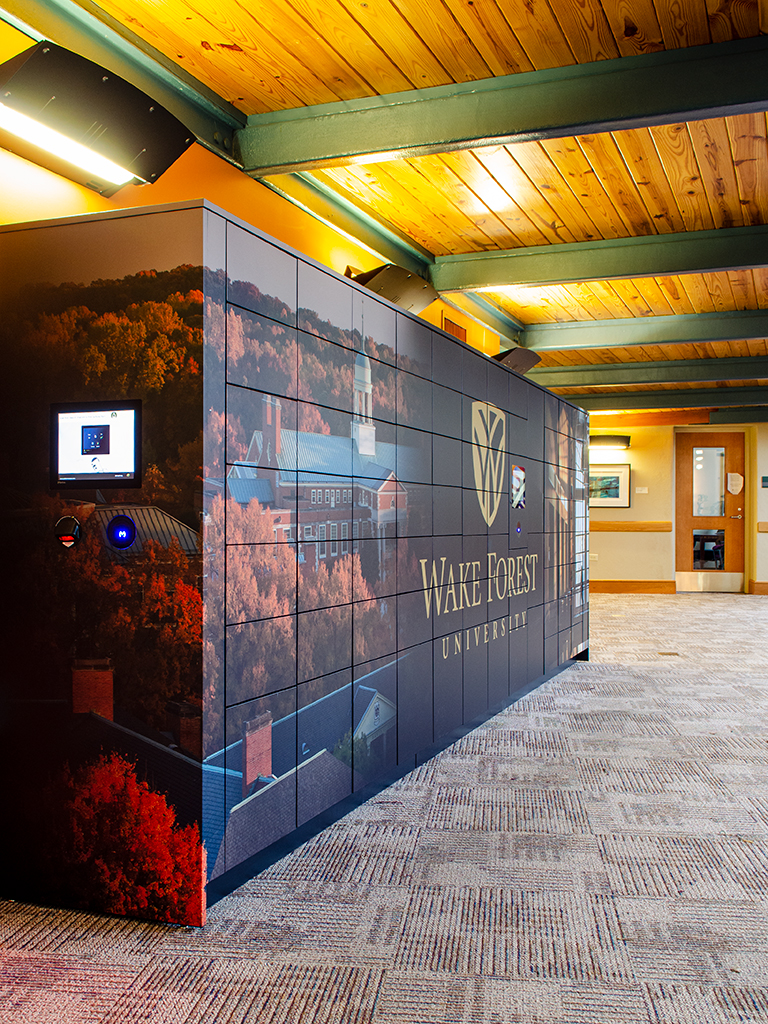
Project Portfolio
From flagship research universities to community colleges, HAMILTON smart locker systems are deployed across institutions of every size and type.
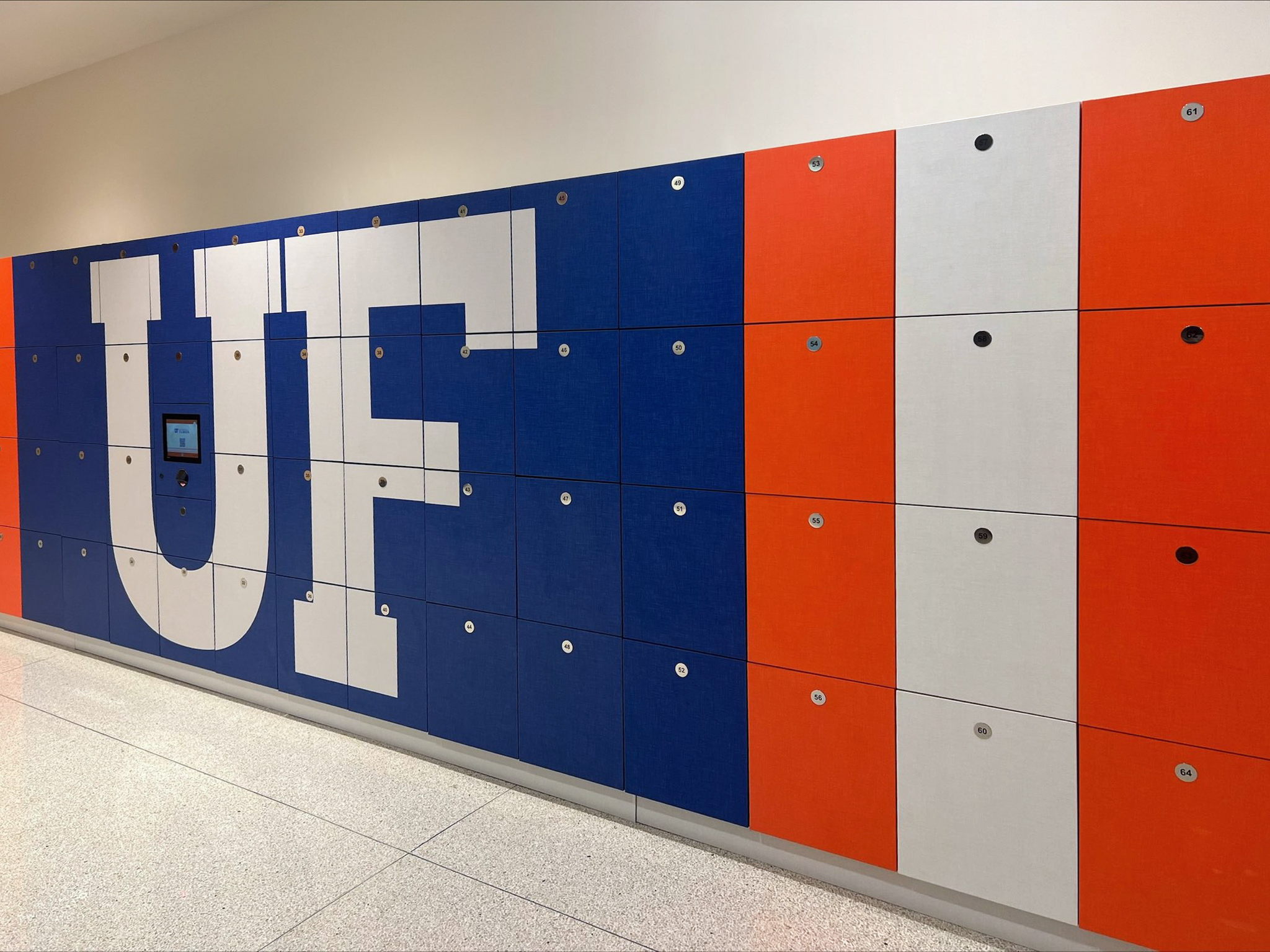
High-volume package and parcel management at scale — HAMILTON lockers deployed across residential and academic buildings to handle a large and rapidly growing student package volume.
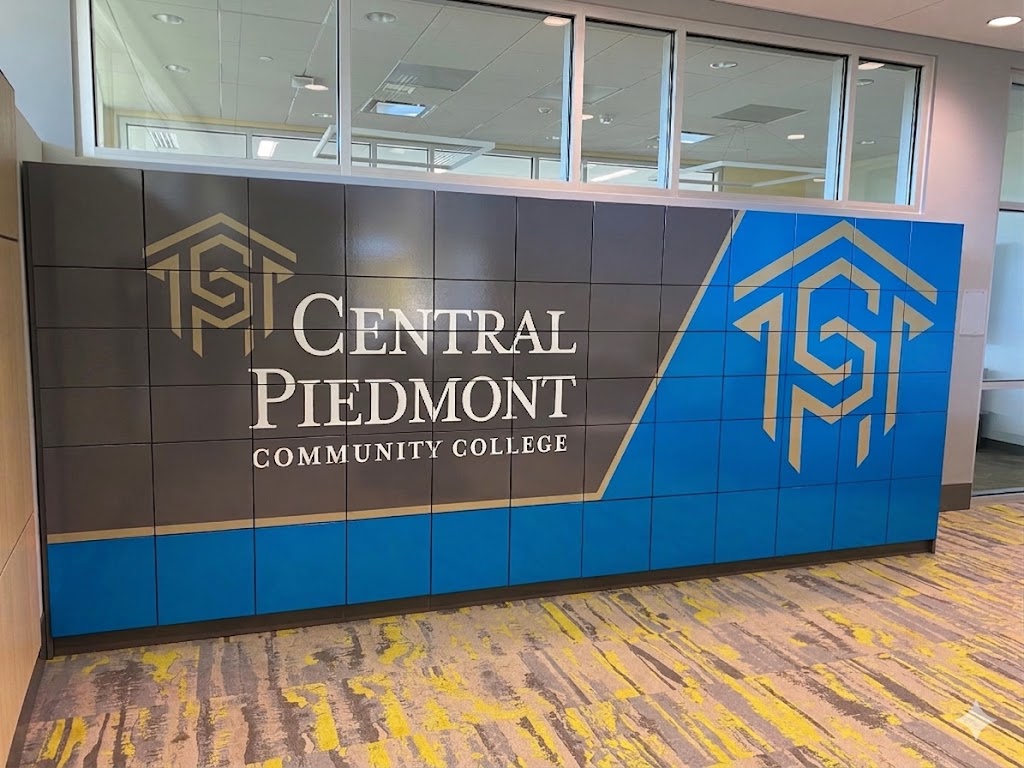
HAMILTON smart lockers supporting a commuter-heavy campus population, providing flexible package pickup and technology lending access across multiple campus locations.
24/7 contactless library material pickup system. Reached 90% capacity utilization within weeks of launch, extending library services beyond staffed hours without additional headcount.
Frequently Asked Questions
Based on HAMILTON's university case study with a 1,900-student campus receiving 6,700 packages per month, switching from a manual package management system to smart lockers generated $69,000 in annual savings. The old manual system cost $175,000 per year in staff time, logging labor, and operational overhead. Smart lockers eliminated the need for staff intervention at every stage of the package lifecycle, dropping per-package handling time from 3.6 minutes to 15 seconds and allowing staff to be redeployed to higher-value work.
Many electronic access platforms used in campus smart locker programs support integration with existing campus ID card systems so students can use their existing credential for package retrieval — no separate PIN or key required. The specific integration is a function of the electronic access platform the university selects; HAMILTON manufactures the locker cabinet and engineers it to accommodate the access hardware. Campus notification integration (email, SMS, app alerts) is also handled through the chosen access platform.
HAMILTON configures locker banks with a mix of compartment sizes — from small parcel lockers for envelopes and small boxes up to oversized compartments for large shipments. Each campus deployment is sized based on the actual package volume and size distribution of that institution. For items that exceed even the largest compartment, the system flags them during intake and routes them through a defined exception process, which may include a staffed window pickup or a scheduled oversized-item locker configuration.
Absolutely. HAMILTON smart locker systems are actively deployed across six distinct campus use cases: package and parcel delivery, technology and device loan programs (laptops, tablets, hotspots), library book and material distribution, bookstore order pickup, department supply distribution, and campus mail and interoffice delivery. Wake Forest University's ZSR Library uses HAMILTON smart lockers for 24/7 contactless library material pickup, reaching 90% capacity utilization within weeks of launch.
When a package arrives, mail room staff scan it into the system and load it into an available locker compartment. The locker system automatically sends a pickup notification to the student via email or SMS with a unique access code or campus ID instruction. The student can then retrieve their package at any hour — 2 AM or 2 PM — without requiring a staff member to be present. The locker records the pickup event with a timestamp and closes the loop in the system. No staff intervention is needed at any stage after the initial loading.
How Fordham University deployed 288 HAMILTON smart locker cabinets for commuter students — and what campuses can learn from the utilization data.
See the Fordham Case Study →How Monarch Casino deployed 330 smart lockers across a full-service resort — and saved $31K in the first 90 days.
See the Hospitality Case Study →Smart locker systems for offices, hybrid workplaces, and corporate campuses across the US.
Explore Workplace Solutions →Talk to a HAMILTON university specialist about your package volume, the right cabinet configuration for your campus, and what the ROI looks like before you commit.