Flexible Storage Programs
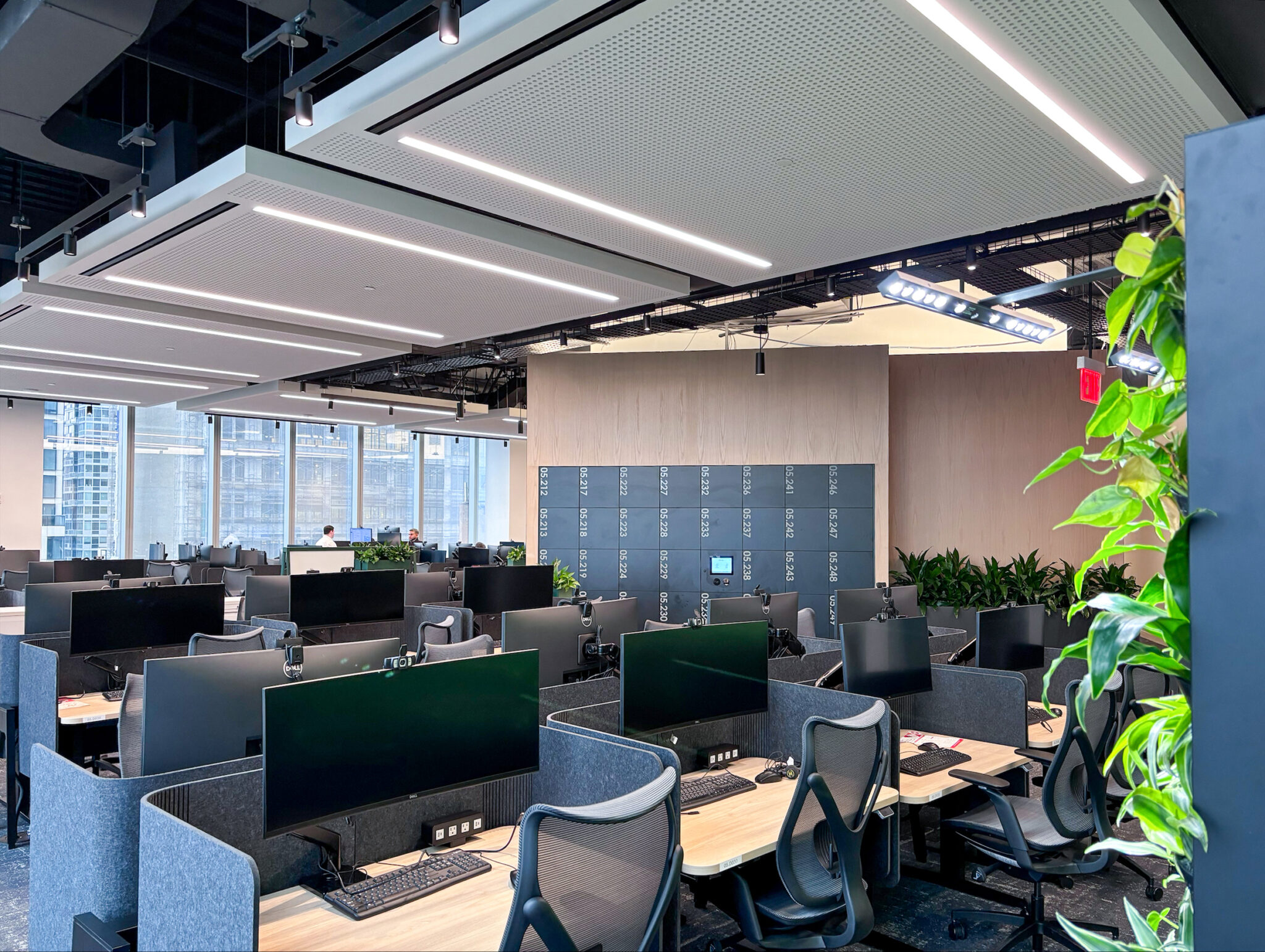
Unassigned lockers your people claim in the morning and release at night — so 100 people can share 70 lockers and everyone always has secure storage. HAMILTON manufactures the American-made laminate cabinets that make day-use programs work.
The Definition
A day use locker is an unassigned locker that a person claims for a single day and releases when they leave. Nobody owns it. An employee, student, or staff member arrives, selects an available locker in the size that fits that day's needs — a full-height locker on days with a bag and coat, a smaller compartment on lighter days — and the electronic access system ties it to their credential until the end of the day.
That single change — from owned to shared — transforms the economics of storage. With permanently assigned lockers, you need one locker per user, and lockers sit empty every day their owner isn't in the building. With day-use lockers, the pool matches actual daily attendance instead of theoretical headcount. If 100 people share 70 lockers and they never all show up on the same day, everyone gets a locker.
HAMILTON manufactures the laminate locker cabinet infrastructure that day-use programs are built on. Our lock-agnostic construction accepts whichever electronic access system your organization selects — smart networked locks, battery-powered keypads, or RFID — so the daily claim-and-release cycle runs on the software platform of your choice, and can change later without replacing a single cabinet.
Choosing a Model
Whether lockers are shared or owned has a dramatic effect on how many you need, how much floor space they consume, and what the program costs. Many organizations run both models side by side in a single HAMILTON locker bank.
How It Works
The day-use cycle is designed to be frictionless. The specific access workflow depends on the electronic lock system your organization deploys; HAMILTON manufactures the locker cabinet infrastructure that makes it all possible.
The user selects an available locker at a touch display, through a mobile app, or with a badge tap — in the size that fits the day's needs. Letting people choose their locker size daily means utilization adapts to actual need rather than a fixed allocation.
The electronic access system secures the selected locker and ties it to the user's credential — badge, phone, PIN, or QR code — for the rest of the day. They can open and close it as often as needed; nobody else can.
At the end of the day the locker is cleared and returned to the available pool — automatically at an expiration time, or when the user releases it. Tomorrow it serves someone else. Administrators see occupancy, duration, and turnover in real time.
Calculator
Our sizing guide walks through the sharing-ratio math — peak attendance, the 0.6–0.8 factor, and the spike buffer — so you buy the right number of lockers, not the theoretical maximum.
Where Day Use Works
The day-use model was proven in hybrid workplaces, but the same claim-and-release logic serves campuses, hospitals, and athletic facilities. HAMILTON builds the cabinet infrastructure for all of them.
Hybrid Workplace
When hot desking replaced assigned seats, personal storage became the missing piece. Day-use lockers restore that sense of "home base" — a consistent, secure touchpoint for hybrid teams no matter where they sit. Unassigned configurations work best where daily attendance varies.
Explore Office Lockers →Higher Education
Commuter students don't want semester rentals — they want a locker right now, for a few hours. Fordham University's data showed 84% of bookings lasted less than one day, reshaping campus locker policy around same-day use.
Explore Campus Lockers →Enterprise & Financial
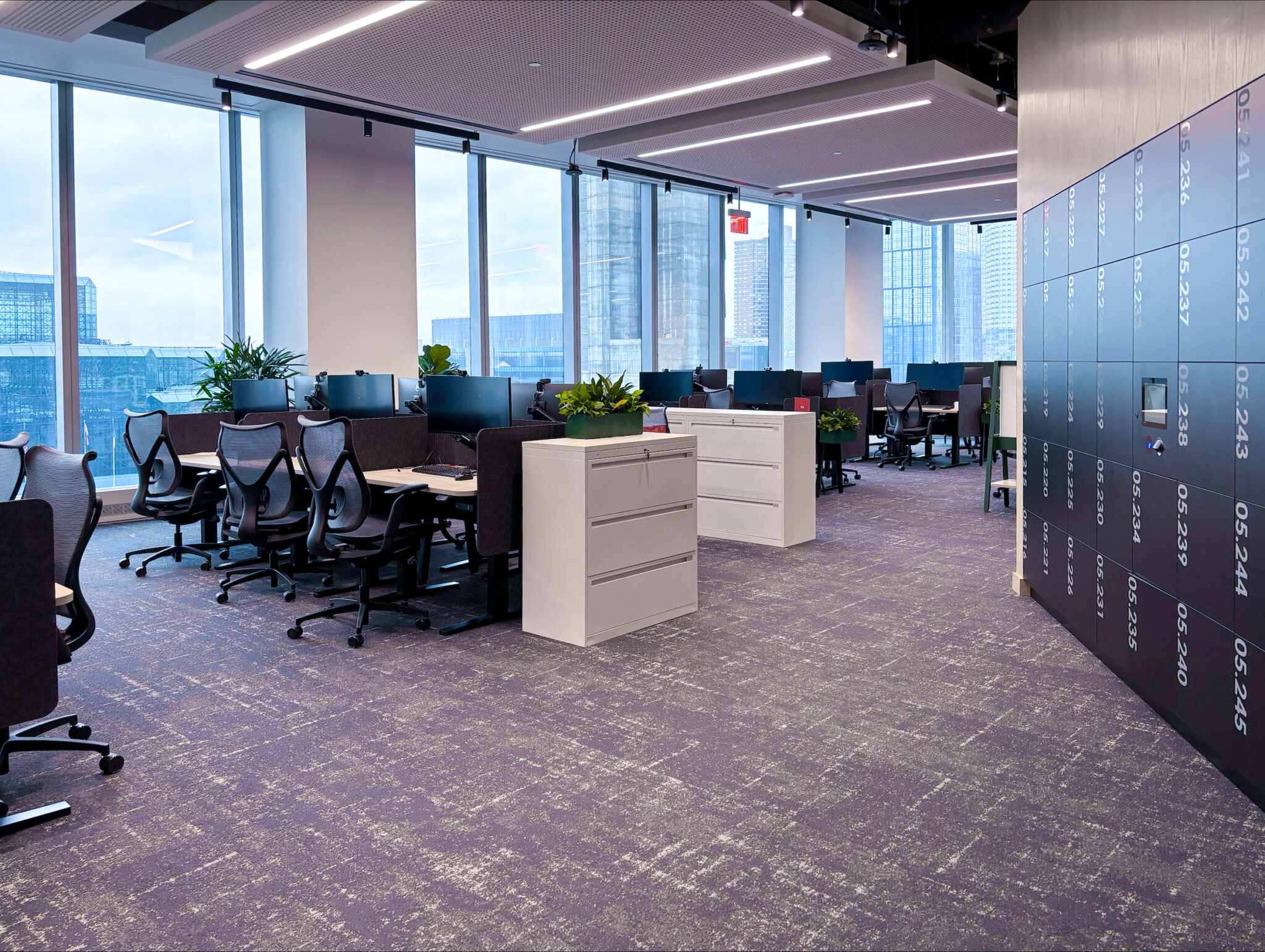
Global firms use day-use "hot locker" configurations so employees claim and release lockers based on daily attendance. HSBC New York right-sized from a 90% to a 70% locker ratio using global benchmark data — reclaiming premium square footage.
Explore Enterprise Programs →Athletics, Healthcare & More
Recreation centers, hospital staff areas, and athletic facilities all serve rotating populations — day-use handles smaller gear-storage needs while assigned lockers cover dedicated equipment. Mixed programs live comfortably in a single HAMILTON bank.
Explore Athletic Solutions →HSBC — New York City
When HSBC brought its New York workplace into the hybrid era, the original plan called for lockers at a 90% locker-to-employee ratio. Before committing, the team leveraged anonymized usage data from enterprise locker deployments across similar global financial workplaces.
The data pointed to a day-use hot-locker program at a 70% ratio — employees claim and release lockers dynamically based on daily attendance rather than holding permanently assigned units. Locker counts were right-sized from 90% to 70% without sacrificing availability or employee experience.
In New York, where office space is among the most expensive in the world, that 20-point difference reclaims significant square footage. HAMILTON manufactured the laminate locker cabinets; HSBC's chosen electronic access platform runs the daily claim-and-release cycle.
Fordham University — New York City
Fordham University deployed 288 HAMILTON smart locker cabinets in its new campus center and launched the program as a complimentary service specifically to collect usage data before writing policy.
The data was unambiguous: 84% of locker bookings lasted less than one day. Students didn't want the semester-long rentals the old 90-locker padlock system was built around — they wanted a locker for a few hours between classes. At any given snapshot, 73% of lockers were in use.
The lesson generalizes well beyond campus: when people are free to choose, day use is how they actually behave. Programs designed around that reality serve more people with fewer lockers.

Sizing & Compliance
Day-use programs are sized with a sharing ratio, not a headcount. And because day-use and assigned lockers are counted as separate types under ADA guidelines, accessibility planning has to happen per type — not per bank.
Local jurisdictions and state accessibility codes — California Title 24 and similar — may impose stricter requirements and should be checked at project outset.
| Step | Result |
|---|---|
| Total population | 200 people |
| Peak daily attendance (typical hybrid: ~70%) | 140 people |
| Day-use sharing ratio (×0.7) | 98 lockers |
| Spike buffer (÷0.85) | ≈115 lockers |
| ADA-accessible minimum (5% of day-use type) | 6 lockers |
The same population provisioned at 1:1 assigned would require 200 lockers — roughly 74% more cabinets, floor space, and cost than the day-use program. HAMILTON models this math against your actual attendance data before you commit to a count.
Frequently Asked Questions
What is a day use locker?
A day use locker is an unassigned locker that a user claims for a single day and releases when they leave — no one permanently owns it. A person arrives, selects an available locker in the size they need that day, and the electronic access system ties it to their credential until they release it or the booking expires. Because the same locker serves different people on different days, a day-use program typically requires only 60–70% as many lockers as a permanently assigned program. HAMILTON manufactures the laminate locker cabinets; the access system that manages claiming and releasing is selected by the organization or their facilities team.
How many day use lockers do I need?
Because day-use lockers are shared rather than owned, you can apply a sharing ratio of 0.6–0.8 to your peak daily headcount instead of provisioning one locker per person. HSBC New York recalibrated from a planned 90% locker-to-employee ratio down to 70% using anonymized usage data from global deployments — without sacrificing availability. For universities, Fordham's 288-locker commuter program ran at 73% utilization. HAMILTON will model the right ratio for your attendance patterns, headcount, and use model before you commit to a locker count.
What is the difference between day use and assigned lockers?
With assigned lockers, each person permanently owns one locker, so you need one locker per user — a 1:1 ratio — and lockers sit empty on days their owner is absent. With day-use lockers, no one owns a locker; users claim any available locker each day and release it when they leave, so a smaller pool serves the full population. Day-use suits hybrid offices, commuter campuses, and shift-based facilities where daily attendance varies. Assigned lockers still make sense for roles with consistent daily attendance or specialized storage needs. Many programs mix both models in a single locker bank — HAMILTON manufactures mixed-configuration programs while maintaining visual consistency across all locker sizes.
How does the day use locker model work day to day?
A user arrives and chooses an available locker — often at a touch display or through an app — in the size that fits that day's needs: a full-height locker on days with a bag and coat, a smaller compartment on lighter days. The electronic access system locks the selected locker and ties it to the user's credential for the day. At the end of the day the locker is released, cleared, and returned to the available pool. The specific access method — badge tap, mobile credential, PIN, or QR code — is determined by the electronic lock system the organization selects; HAMILTON's lock-agnostic cabinets accept whichever hardware the program requires.
Do ADA requirements apply to day use lockers?
Yes. Under ADA guidelines, at least 5% of lockers of each type must be accessible — and day-use lockers and assigned lockers are counted as separate types, so the 5% calculation applies to each independently rather than to the total locker count. Lockers in different rooms or areas are also counted separately. Accessible day-use lockers are typically positioned in lower rows with compliant reach ranges and operable hardware, and the access system can designate specific positions as reserved for users who need them. Local codes such as California Title 24 may impose stricter requirements and should be checked at project outset.
What access systems work with day use lockers?
HAMILTON locker cabinets are lock-agnostic — engineered to accept smart networked locks, battery-powered electronic locks, or mechanical combination locks. Day-use programs are most often run on electronic systems (RFID badge, mobile app, PIN, or touch-display selection) because they automate the daily claim-and-release cycle and generate usage data. The organization or their facilities team selects the access platform; HAMILTON builds the cabinet infrastructure to receive it, so the program can change lock technology later without replacing the lockers.
The full data-driven sizing guide — sharing ratios, hybrid adjustments, and the business case.
Read the Guide →Touchdown storage, assigned programs, and everything between — engineered for how your teams work.
See Office Lockers →The Fordham case study in full — 288 smart lockers and the data that rewrote campus locker policy.
See Campus Solutions →Furniture-grade laminate construction, lock-agnostic engineering, and finish options for every environment.
See Laminate Lockers →The full 12-part framework for specifying a locker program — sizing, materials, placement, lock types, and ADA compliance.
Read the Planning Guide →Tell us about your population, attendance patterns, and space — and we'll model the right locker count, configuration, and finishes before you commit to a single cabinet.