A practical framework for facilities leaders, workplace strategists, and design professionals planning workplace locker programs.
Locker systems are almost always the last thing on the project list — and that's almost always a mistake. They sit at the intersection of employee experience, space efficiency, and building design. Most organizations treat them like a procurement checkbox.
Hybrid work changed the math. Shared desks, flexible schedules, and rotating teams mean the old locker formula is broken. Plan lockers the way you did ten years ago and you get ten-year-old results.
This guide is for the teams who want to do it right.
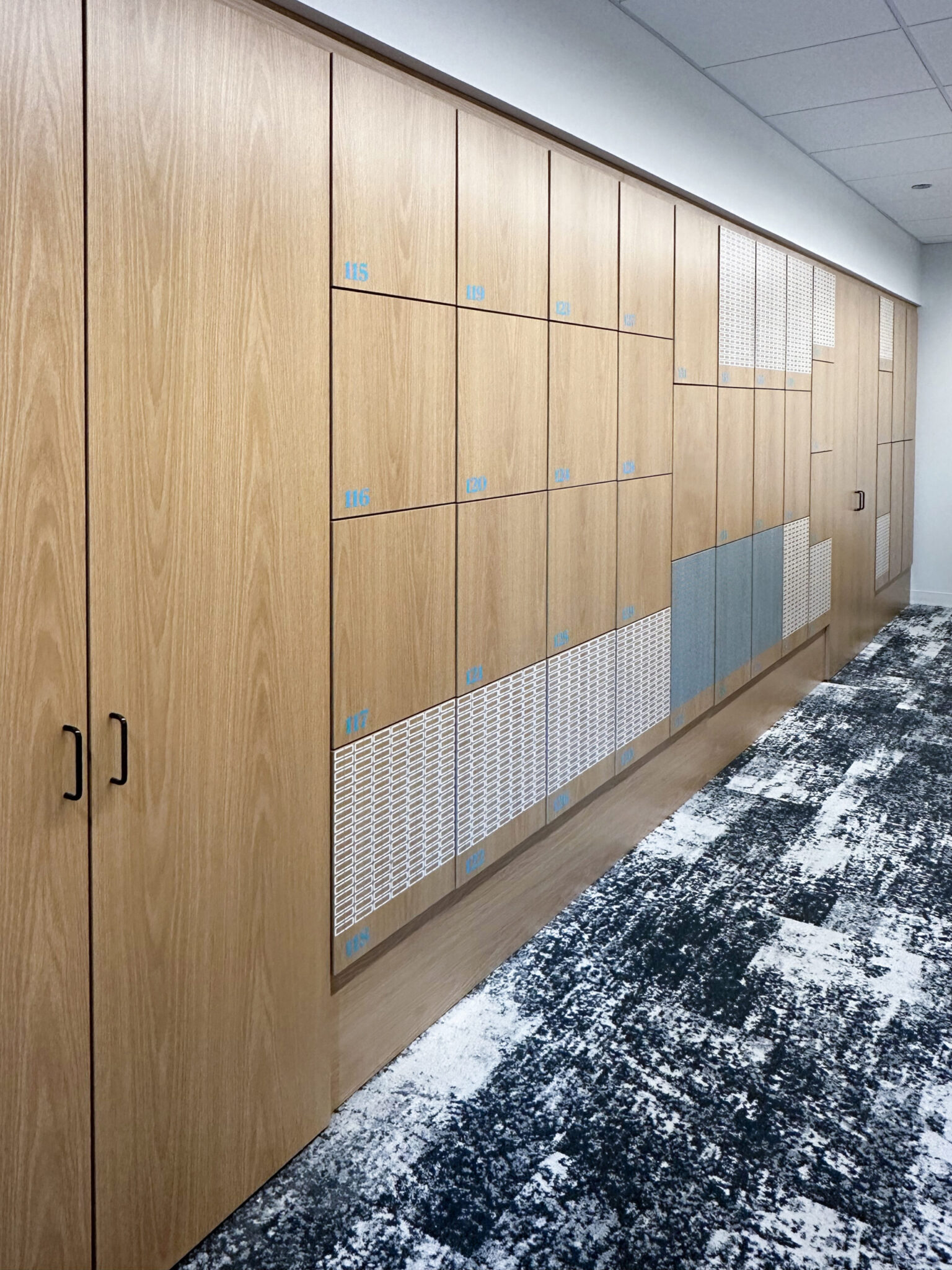
Chubb Chicago — HAMILTON enterprise locker deployment across multiple floors.
The most common locker planning mistake: jumping straight to specifications. Before sizes, materials, or lock types, you need to understand how your workplace actually functions.
Your locker system should support your workplace strategy. A locker program that contradicts how people work gets ignored. One that fits naturally into daily patterns gets used.
Headcount is a census. Behavior is the truth. A 400-person office where 60% of staff is hybrid three days a week does not need 400 lockers.
Most workplaces assume locker users are a monolith. They're not. One deployment can serve five or more distinct groups with entirely different needs around size, duration, and access.
Dropping in for the day. Need a secure, temporary place for laptop, bag, and personal items.
Long-term storage for personal items, materials, and on-site equipment.
Arriving by bike or gym. Need taller, wider compartments for helmets, gear bags, and shoes.
Storing equipment, cables, and specialty items. Often need custom sizing.
Short-term, occasional use. Need simple access without full credential setup.
Design for all of them from the start. Each group should be able to use the system without workarounds.
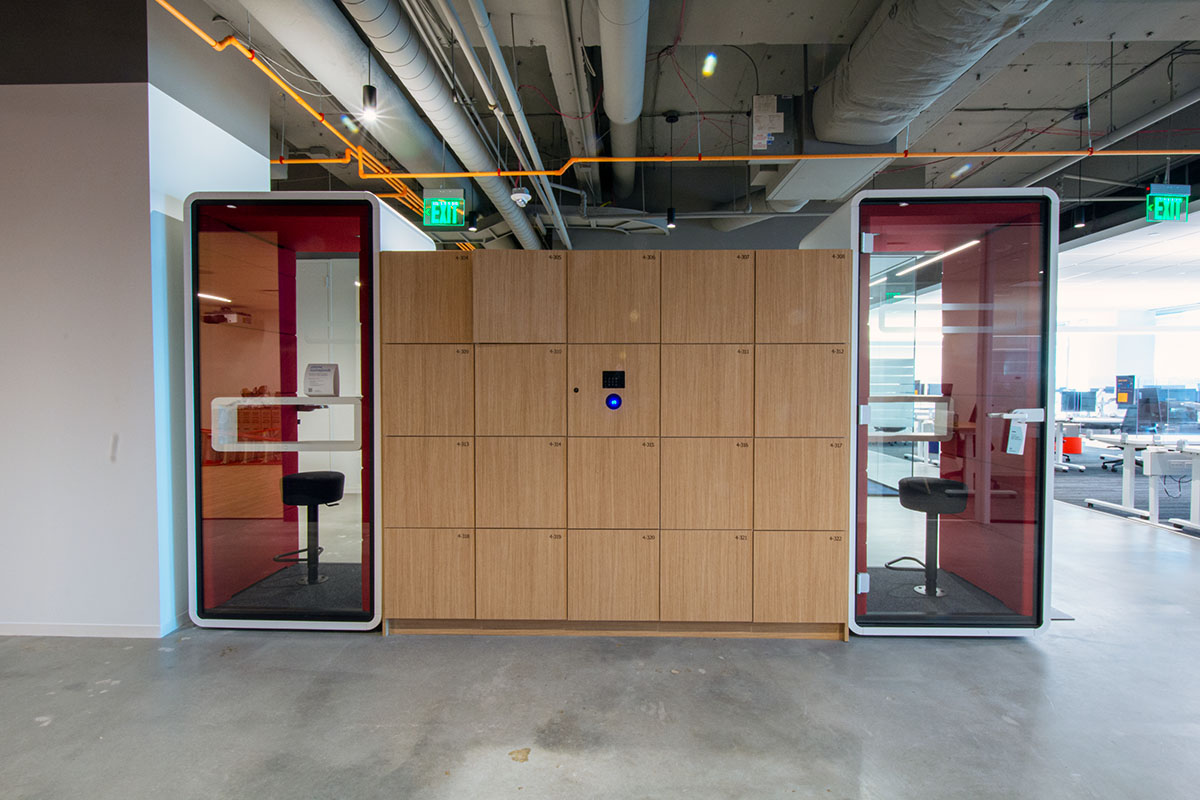
Randstad Atlanta — locker programs serve multiple user types on the same floor.
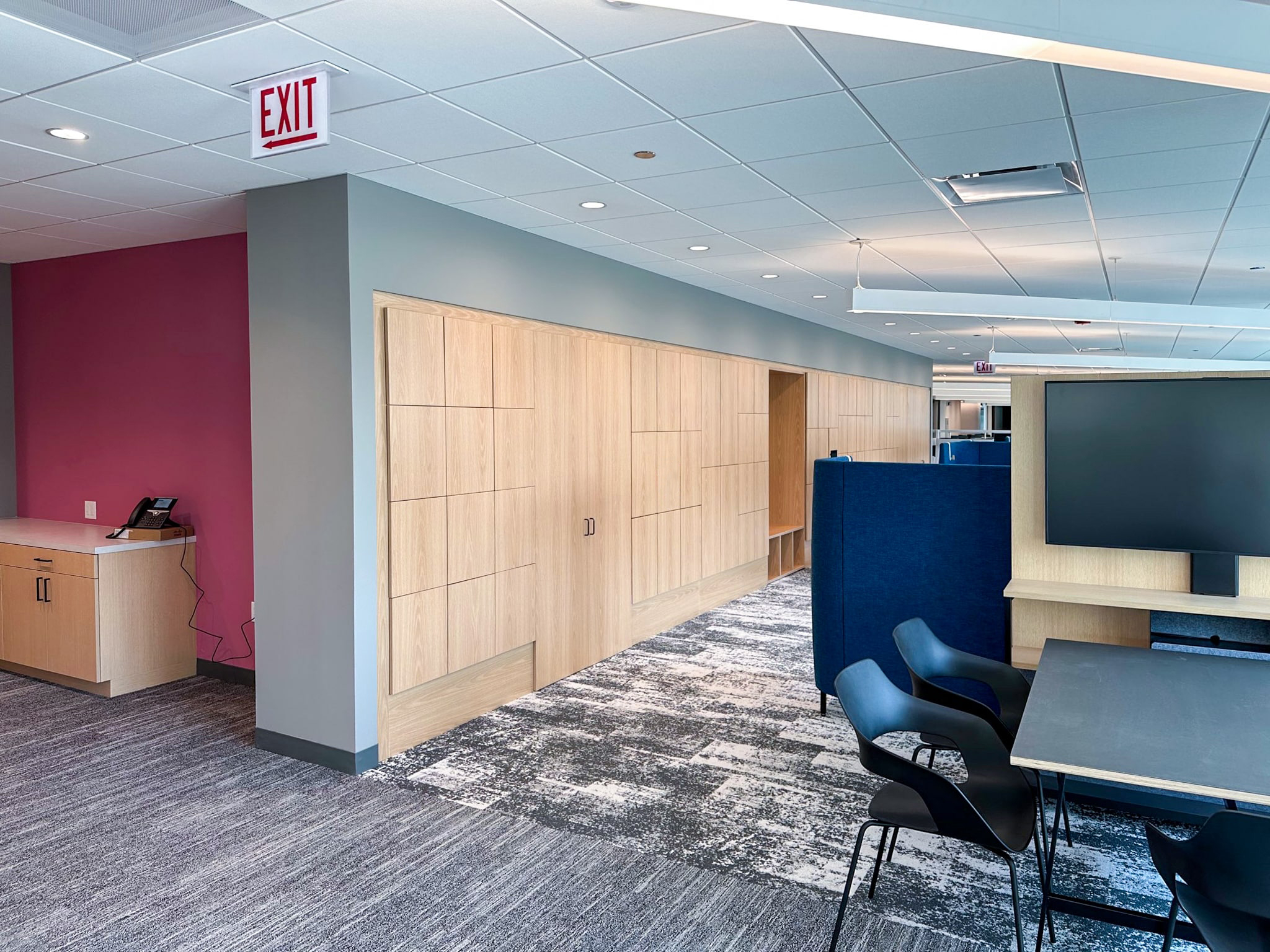
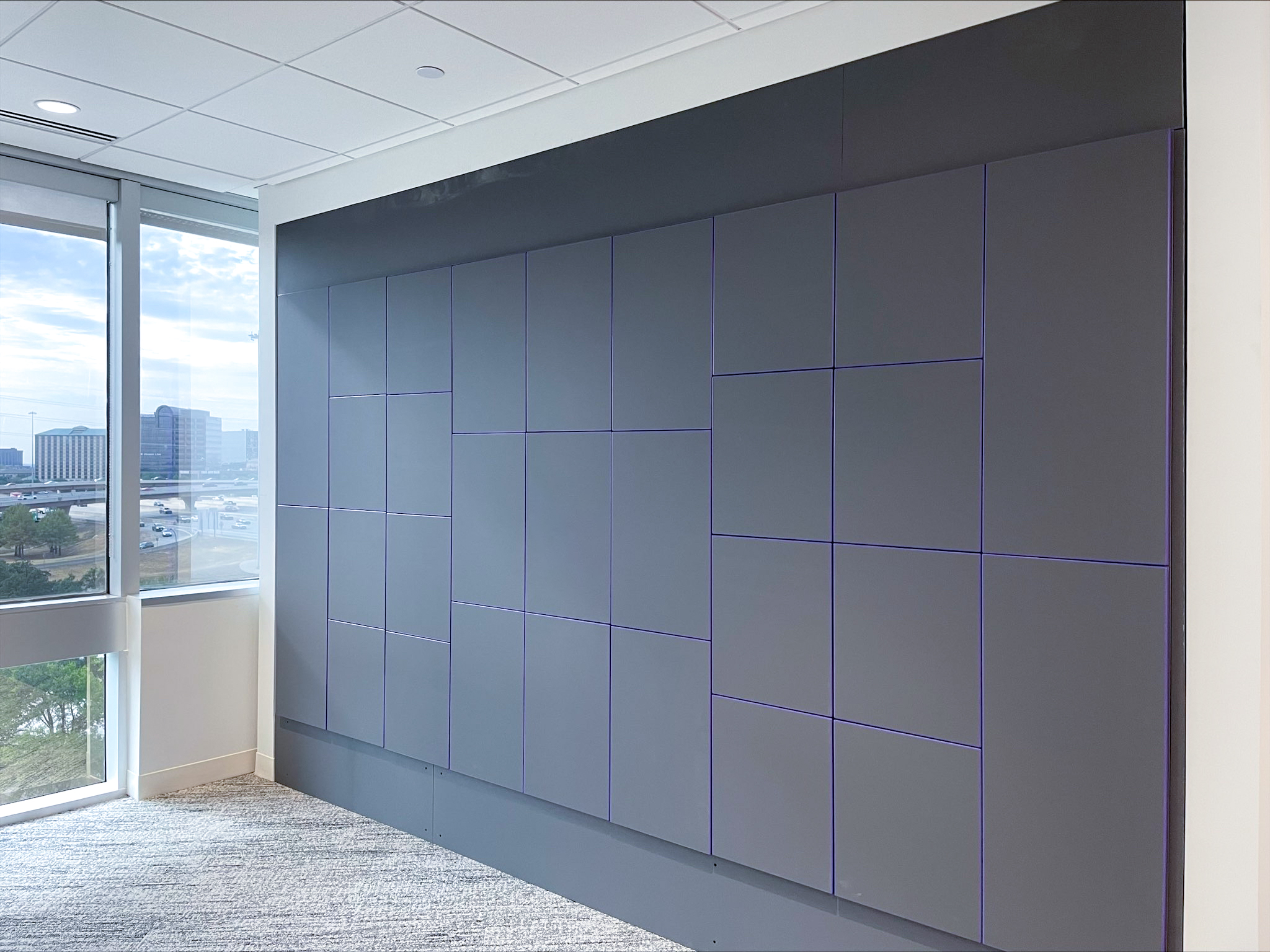
Chubb enterprise program — HAMILTON deployed consistent locker systems across Chicago, Dallas, New York, and Philadelphia. Same spec, same quality, every city.
One locker per employee was designed for a world where everyone showed up every day and stayed all day. That world is gone. The right number is a function of how your workplace actually operates.
What actually drives the right ratio: Average daily occupancy (not headcount) · How quickly lockers turn over · Duration of typical locker use · Peak usage days and patterns
Typical ratios in practice:
Assigned seating: 0.7–1.0 per employee
Hybrid 3 days/week: 0.4–0.6 per employee
Fully flexible / hot-desking: 0.25–0.4 per employee
High end-of-trip use: add 0.1–0.15 per employee
Start conservative. Design for scalability. Overbuilding on day one is expensive — and unnecessary when HAMILTON's modular construction allows locker banks to be expanded or reconfigured later without full replacement.
A wall of identical lockers is a wall of compromises. A thoughtful mix of sizes outperforms a uniform grid in every real-world deployment.
| Locker Type | Typical Dimensions | Best For | Recommended Mix |
|---|---|---|---|
| Extra Small / Slim | 6–9" W × 12–15" H | Phones, wallets, high-turnover day use | 10–15% |
| Standard / Day Use | 12" W × 12–18" H | Laptop, bag, coat. The workhorse of most deployments. | 40–55% |
| Half Height | 12–15" W × 18–24" H | Backpacks, lunch bags, light gym gear | 20–25% |
| Full Height | 12–15" W × 36–72" H | End-of-trip: helmets, full gear bags, coats, boots | 10–15% |
| Oversize / Custom | Built to spec | IT equipment, uniforms, specialty tools, medical gear | 5–10% |
Use smaller, higher-turnover lockers near entrances for day use. Reserve full-height compartments for end-of-trip areas. Custom sizing is always available — HAMILTON builds to specification.
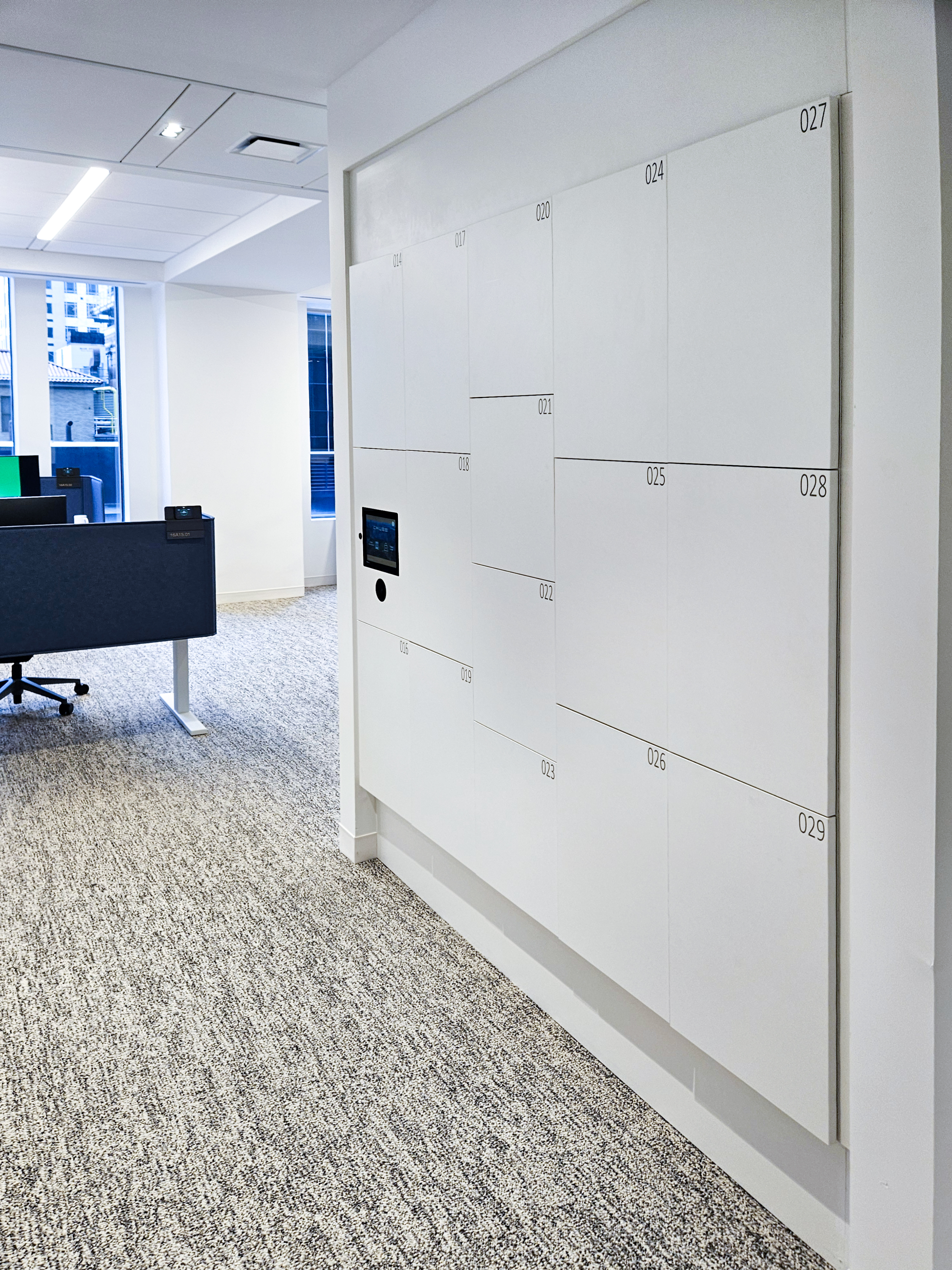
Chubb New York — mixed-height locker configuration serving day-use, full-length, and standard storage needs on the same bank.
The material you choose determines how your lockers look on day one — and whether they still look good on day 3,000. It affects durability, finish options, maintenance, and total cost of ownership.
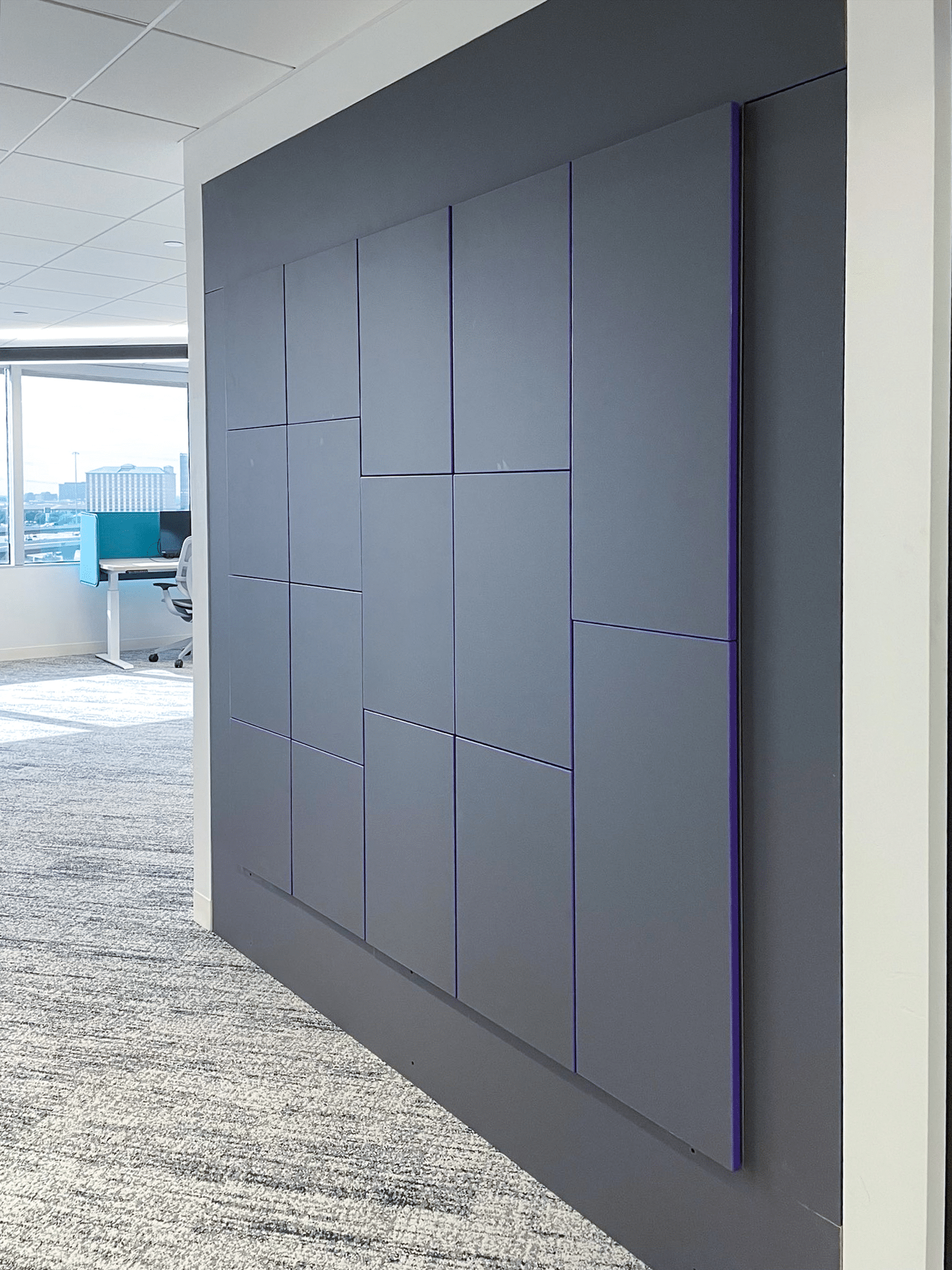
The premium choice for corporate environments. Vast finish library with commercial-grade scratch, impact, and moisture resistance. Per spec: ANSI A208.1 Grade M-2 particleboard or ANSI A208.2 Grade 130 MDF substrate. Door faces are thermoset decorative panel on both interior and exterior. Carcass interiors finished with thermally fused white melamine.
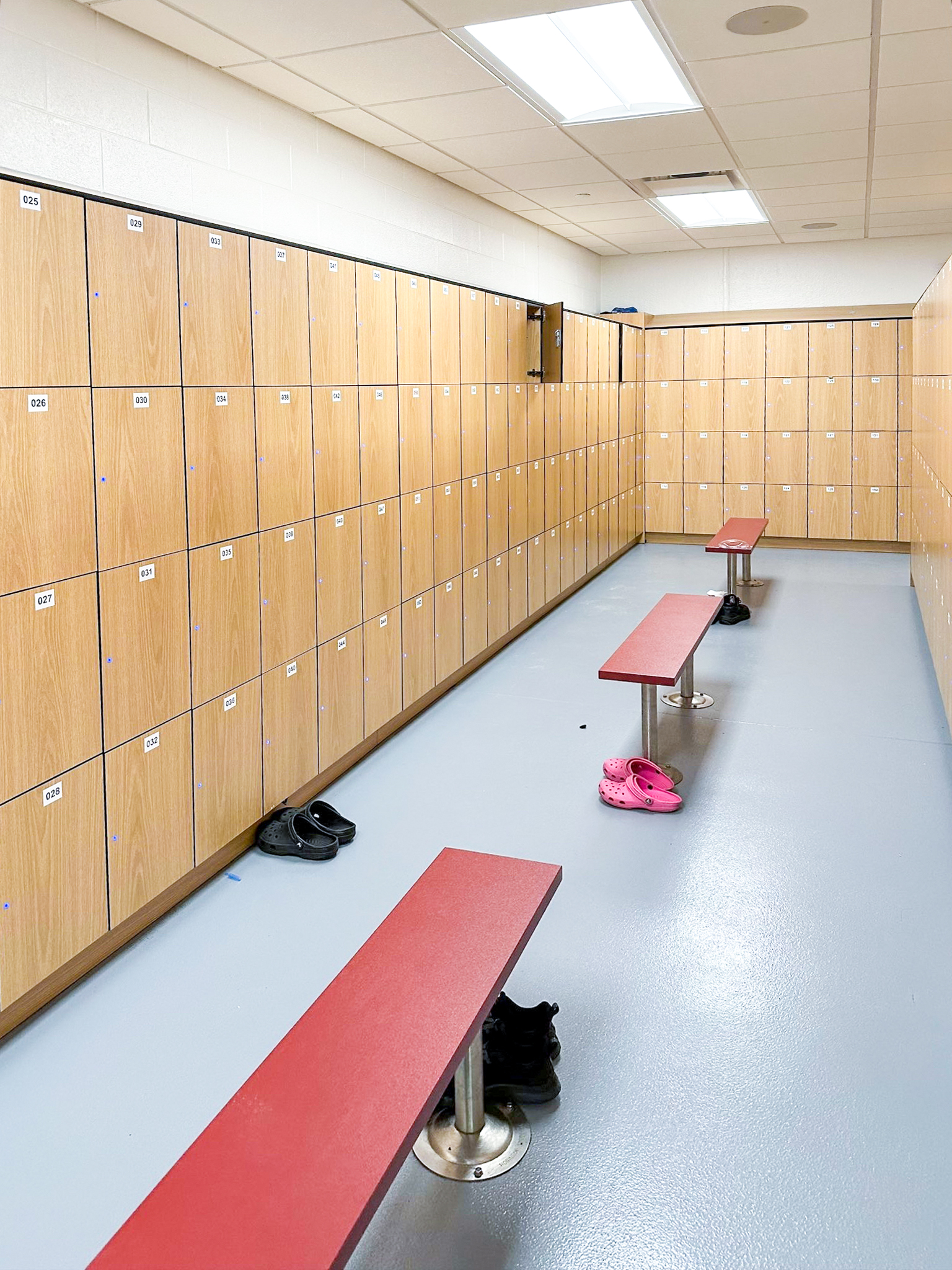
Through-body material — color runs all the way through, so chips and scratches are virtually invisible. Excellent for high-traffic, high-humidity environments such as athletic facilities or end-of-trip areas.
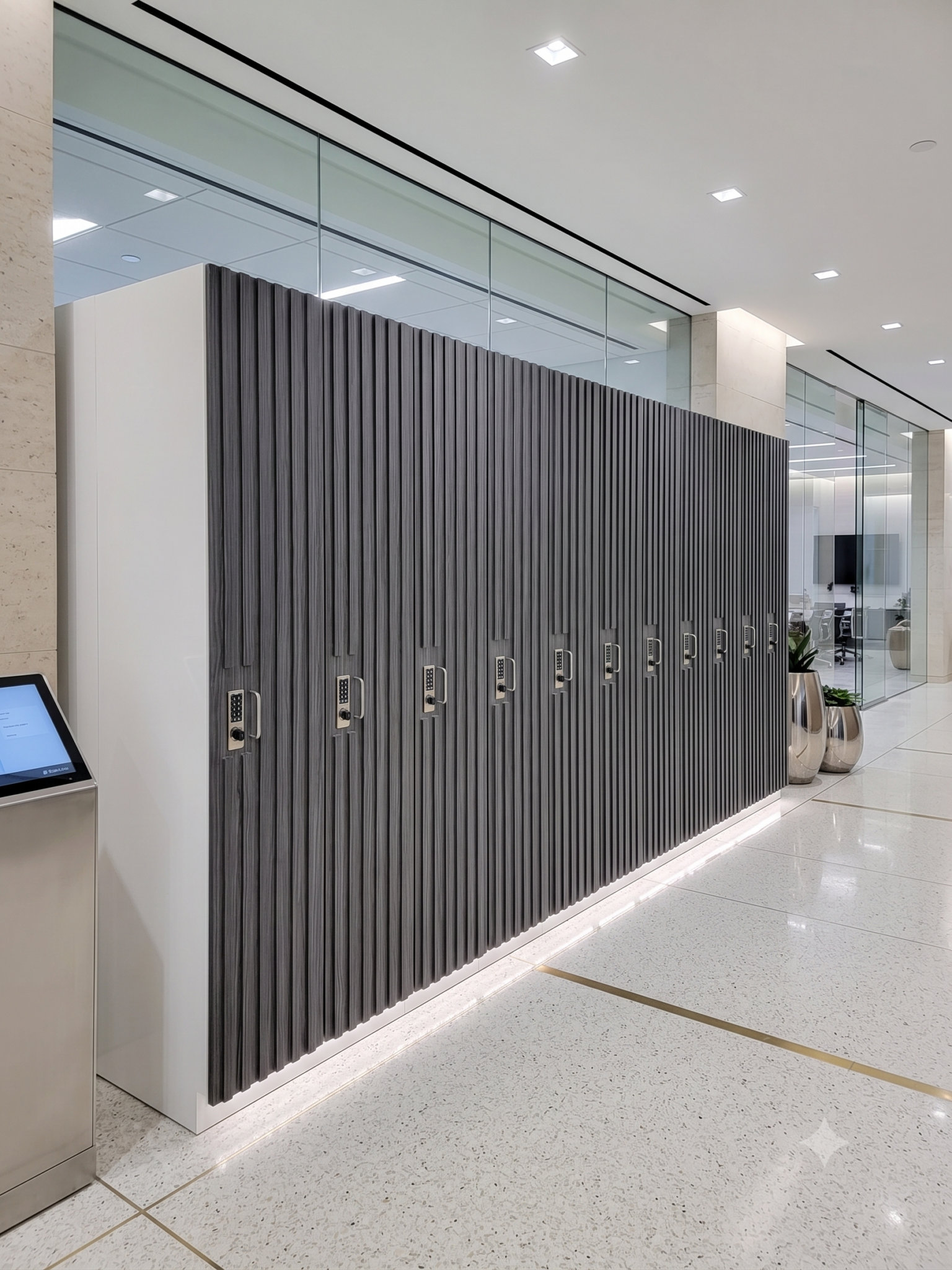
For environments where lockers are a design statement, not just storage. Textured surfaces — reeded profiles, fluted panels, dimensional patterns, custom routed faces — transform a locker bank into an architectural feature. Available in any finish family, with full custom sizing and configuration.
Specification note: For corporate environments, HPL is the right call — the finish library, long-term durability, and furniture-grade aesthetic consistently outperform alternatives over the life of the installation. For A&D-specified projects, pair HPL with textured or custom door profiles to make the locker bank a deliberate design feature. Laminate suppliers include Wilsonart, Formica, Nevamar, Pionite, and Abet-Laminati.
HAMILTON lockers are available in a broad range of HPL finishes — solid colors, woodgrains, and patterns — sourced from Wilsonart and Formica. Coordinate with surrounding millwork using the same laminate family and finish line.
Standard Finish Library

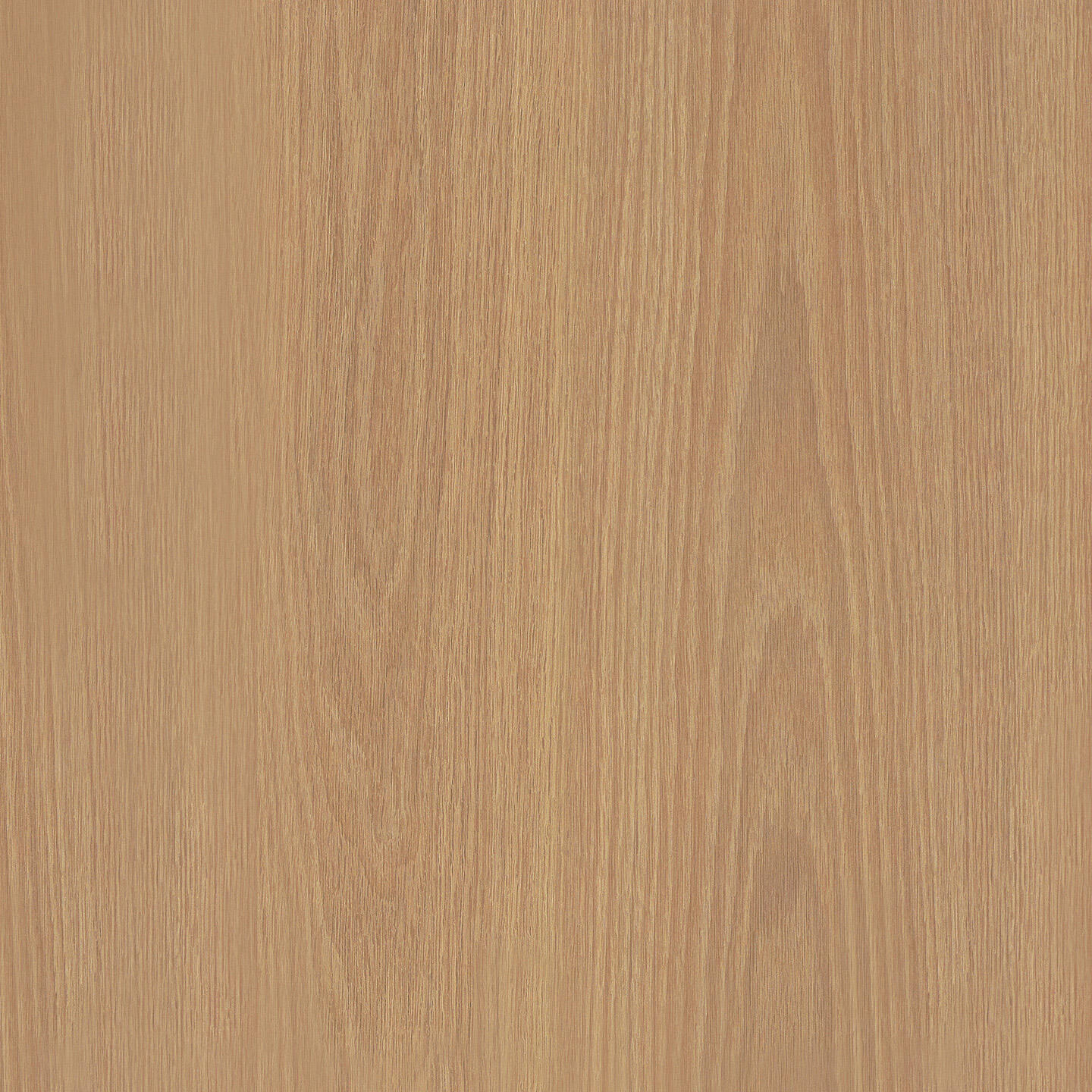
✦ Textured finish

W: Wilsonart · F: Formica

Ultra-matte, anti-fingerprint surface with a soft-touch feel. Available exclusively on the Arraya product line.
Specification note: Specify lockers and surrounding millwork in the same laminate family and finish line. Mismatched undertones between lockers and adjacent casework are one of the most common specification mistakes.
You can specify excellent lockers and still fail if they're in the wrong place. Placement directly determines whether employees use them — and how they feel about the experience every day.
Lockers pushed into a back corridor get ignored. Lockers placed with purpose get used. The location decision is as important as the product decision — and it's often made too late in the project timeline.
Within 30–60 seconds of the main entry point. Every step beyond that reduces adoption rate.
Plan for the 8–9:30am arrival crunch. Locker zones should not create corridor bottlenecks.
Smaller distributed clusters consistently outperform one large locker wall. Spread convenience across floors.
Design insight: Lockers employees walk past every day get used. Lockers they have to seek out become dead storage. Getting locker zones into the daily circulation path is the single highest-impact placement decision.
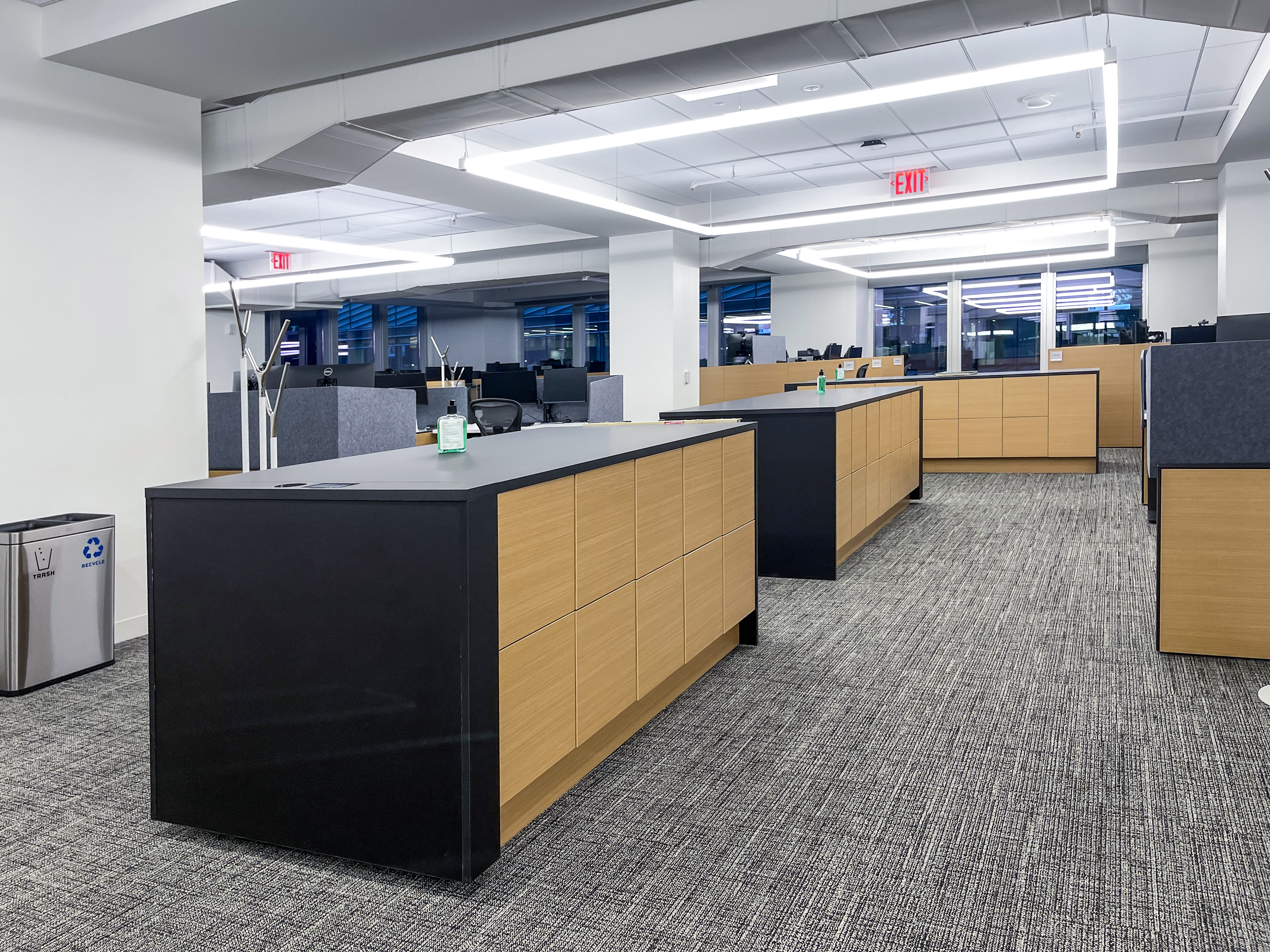
Munich Re — locker banks integrated directly into the workplace neighborhood, not tucked in a back corridor.
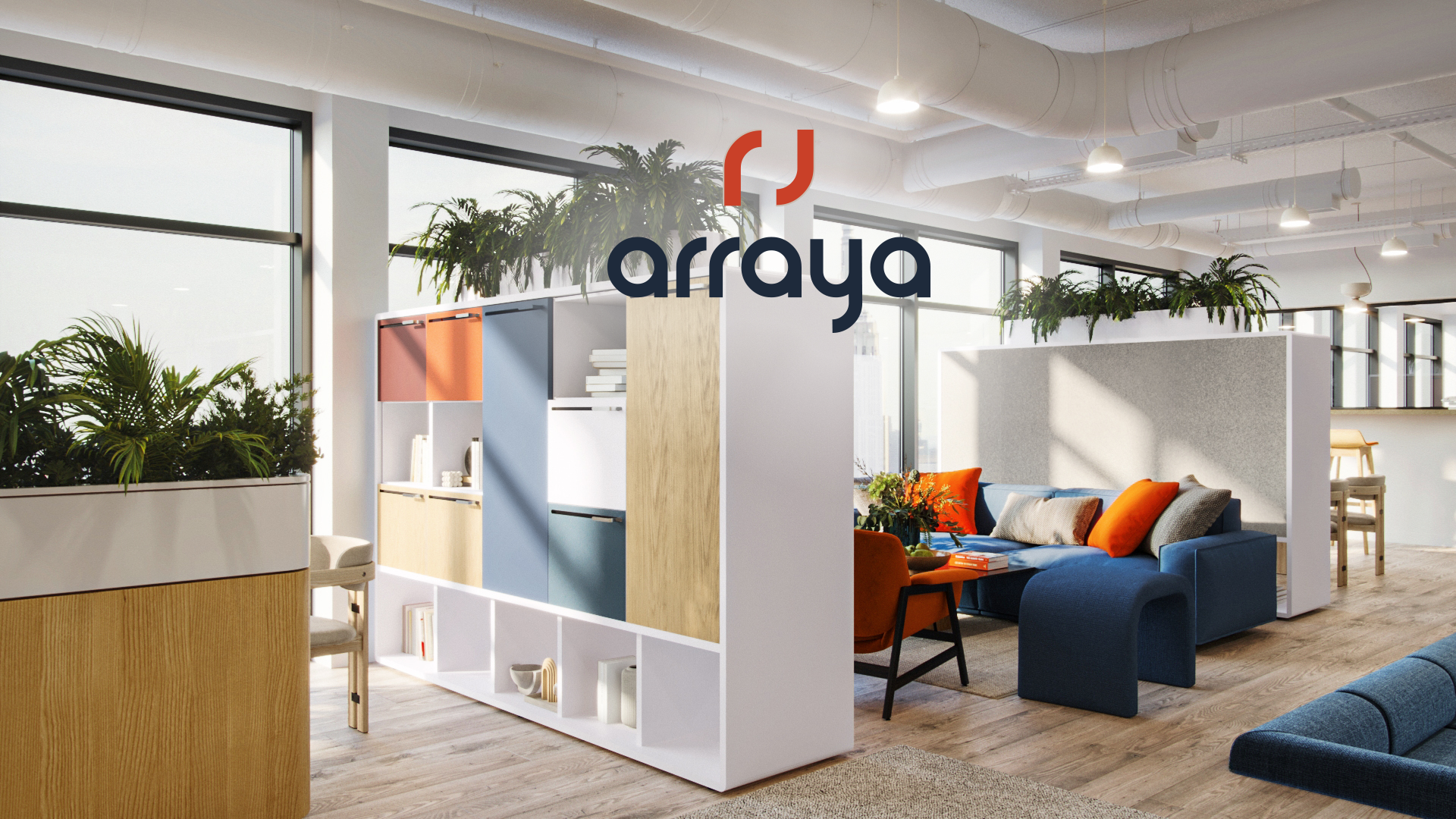
Arraya — co-designed with Gensler. Available in Fenix® NTM ultra-matte and Wilsonart woodgrain finishes.
Arraya is HAMILTON's furniture-grade locker system, co-designed with Gensler. Built for environments where storage needs to function as architecture — not interrupt it.
Arraya is a modular kit-of-parts system. Lower zone, middle zone, upper zone — each independently configurable. The same system scales from a low day-use credenza to a floor-to-ceiling locker wall. Finished in Fenix® NTM ultra-matte solid colors or Wilsonart woodgrain. Manufactured in the USA.
Three zones, independently configured. Adapts from low credenza to full-height locker wall in the same product line.
Ultra-matte, anti-fingerprint, soft-touch surface. Exclusively available on Arraya.
Every proportion, radius, and finish detail developed from first principles for the modern workplace.
Designed with Universal Design principles across the full product line. Accessible configurations available in every format.
How employees get into their lockers is a daily experience and a security decision. All HAMILTON hardware complies with ANSI/BHMA A156.9 and hinges are Grass America full overlay self-closing 110-degree concealed.
Reliable, low-cost, no power required. Ideal for long-term assigned lockers where the same person uses the same locker daily.
Assigned, long-termNo keys to lose, no batteries to replace. Robust and maintenance-free for medium-security applications.
Shared, lower-adminUser sets their own code each session. Locker releases automatically at end of day. Battery or wired options available.
Day-use, flexibleEmployee badge opens the locker. Seamless daily experience, full audit trail. Requires integration with existing access control.
Enterprise, hybridSmartphone opens the locker via BLE. No badge integration required. Useful for visitor and contractor access.
Visitors, contractorsUser provides their own padlock. Flexible and low-cost but no audit trail. Common in athletic settings.
Athletic, basic use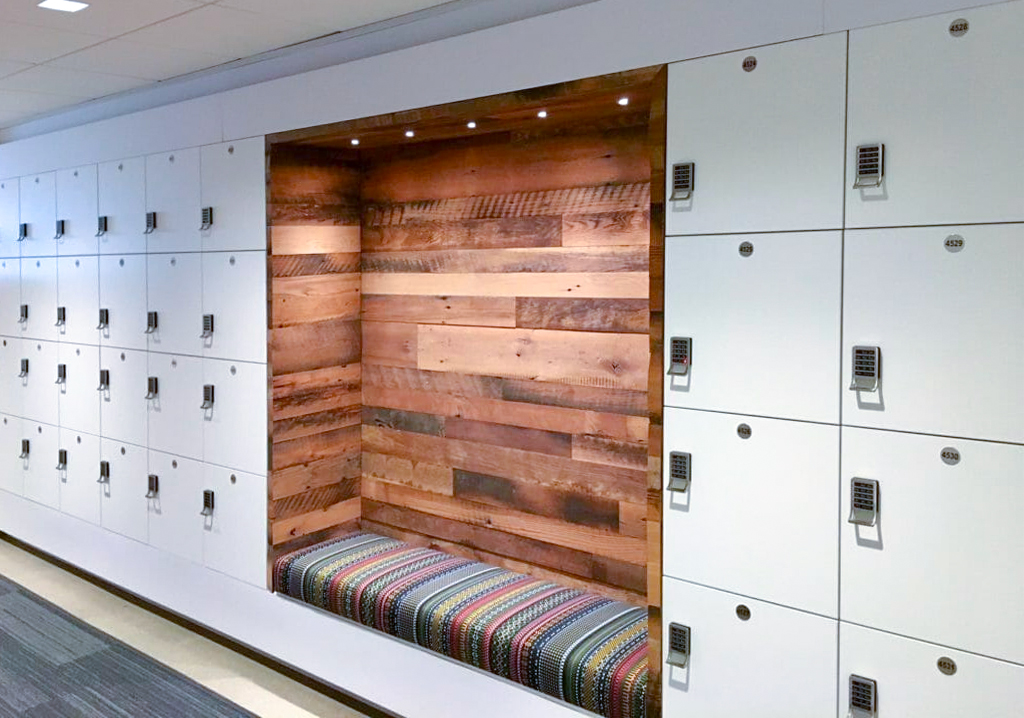
Barclays — HAMILTON locker program for enterprise hybrid workplace. Access hardware specified by owner.
Key planning question: Is this locker assigned (same person, same locker) or shared day-use (different user each session)? The answer drives nearly every lock decision downstream.
Powered vs. battery-operated: Wired locks offer lower lifetime cost and eliminate battery maintenance but require electrical infrastructure at each bank. Battery-operated locks offer installation flexibility but need replacement every 1–2 years per lock. Define the failsafe protocol for outages before installation.
All laminate lockers are not the same. The specification sheet rarely tells you what you need to know about how a locker is actually built. These are the construction details that determine whether your lockers still look and function well in year 10 — or show their age in year three.
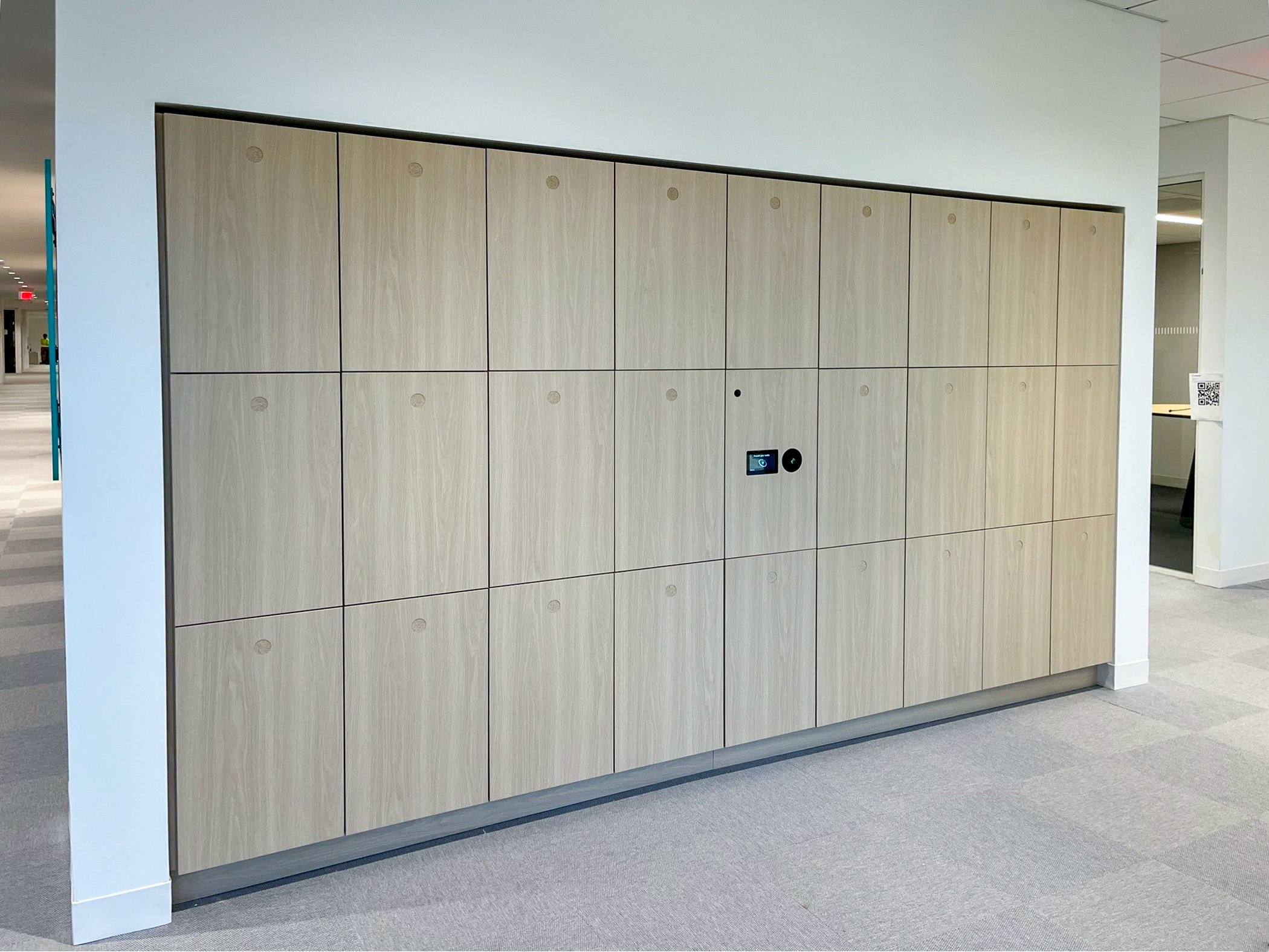
Kenvue — thermoset decorative door panels with 1mm PVC edgebanding and Grass America concealed hinges.
Ask your supplier: What is the edge banding thickness? What is the door interior finish — thermoset decorative panel or raw board? What hinge brand and cycle rating? Is hardware ANSI/BHMA A156.9 compliant? What warranty is offered? If they can't answer these questions clearly, that tells you something important.
| Construction Detail | HAMILTON Standard | Industry Typical |
|---|---|---|
| Edge banding thickness | 1.0 mm PVC | 0.5 mm |
| Door interior & exterior finish | Thermoset decorative panel, both faces | Single-face or raw interior |
| Carcass interior finish | Thermally fused white melamine | Raw or foil-wrapped |
| Hinge system | Grass America full overlay, self-closing, 110° concealed | Exposed butt hinges |
| Structural connections | Wood doweled & glued + pin and cam | Visible screws |
| Hardware standard | ANSI/BHMA A156.9 compliant | Not typically specified |
| Substrate | ANSI A208.1 Grade M-2 particleboard or A208.2 Grade 130 MDF | Standard particleboard |
| Warranty | Limited Lifetime Warranty to original purchaser | Varies / limited term |
By year five, the difference between 0.5mm and 1.0mm edge banding is visible in every deployment.
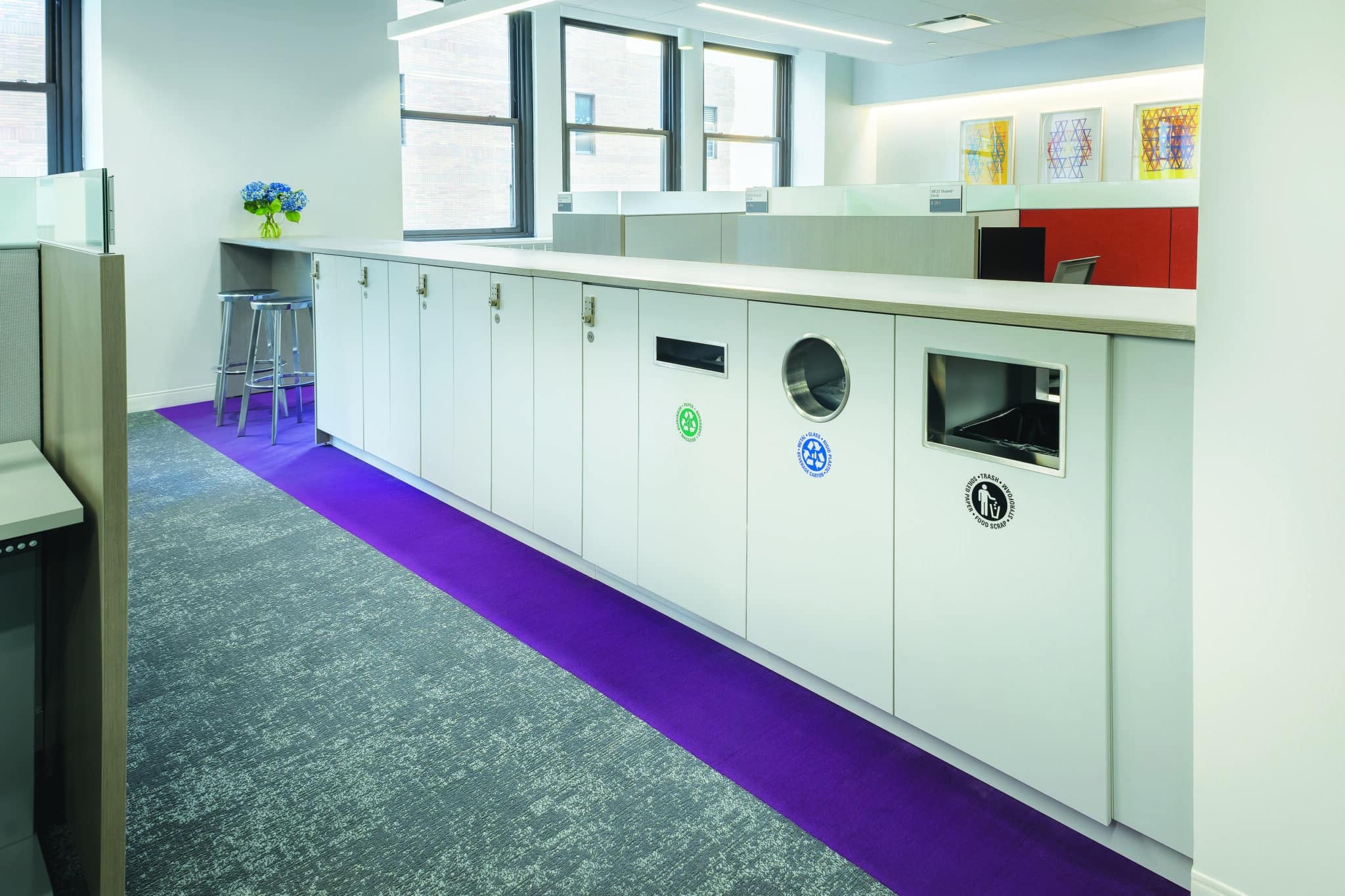
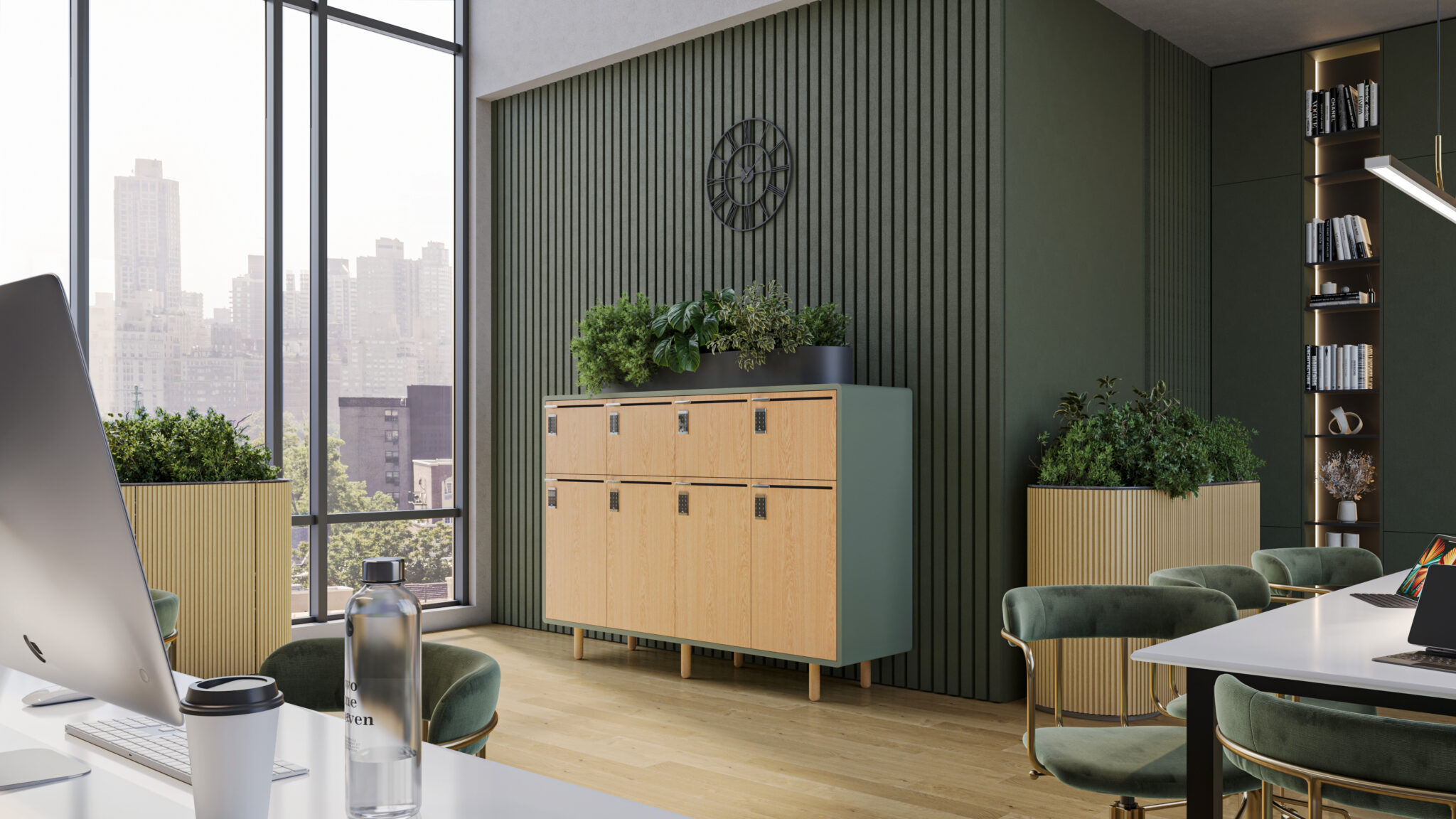
Arraya is designed with accessibility across the full product line. NYU Langone Medical Center above.
ADA compliance in locker design is not optional — and it is far easier to design in from the beginning than to retrofit after installation.
HAMILTON builds ADA compliance in at the specification stage. Share your accessibility requirements in the initial planning conversation and we'll ensure layout, reach heights, hardware, and aisle widths are all accounted for before a single panel is cut.
Design principle: Locate accessible lockers on the ends of banks, not buried in the middle. End placement provides the required clear floor space without reconfiguring the adjacent aisle.
Arraya was designed with accessibility and inclusivity across the entire product line — not as a compliance add-on. The modular base system raises locker banks to place accessible openings within the required 15"–48" AFF reach zone. Lock options include ADA-compliant mechanisms meeting the one-hand, 5 lbf activation requirements of ADA §309. Every Arraya configuration supports accessible specification without visual compromise.
Workplaces evolve. Teams grow, shrink, reorganize, and relocate. Your locker system should be able to keep up — without requiring a full rip-and-replace every time something changes.
The only guaranteed thing about your workplace is that it will change. Locker systems that cannot adapt become fixtures in a floor plan that has moved on.
Add to, remove from, or reconfigure HAMILTON banks without replacing the entire installation. Plan for expansion from day one.
Lock technology changes faster than the locker body. HAMILTON designs bodies to accept lock upgrades without replacing the carcass.
Day-use lockers become equipment storage. Standard units can be repurposed for IT lending or package pickup as your program evolves.
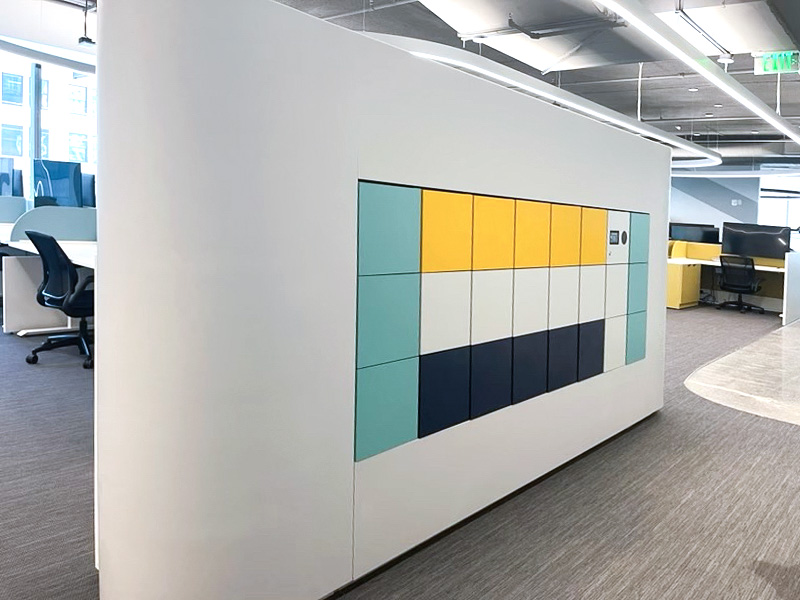
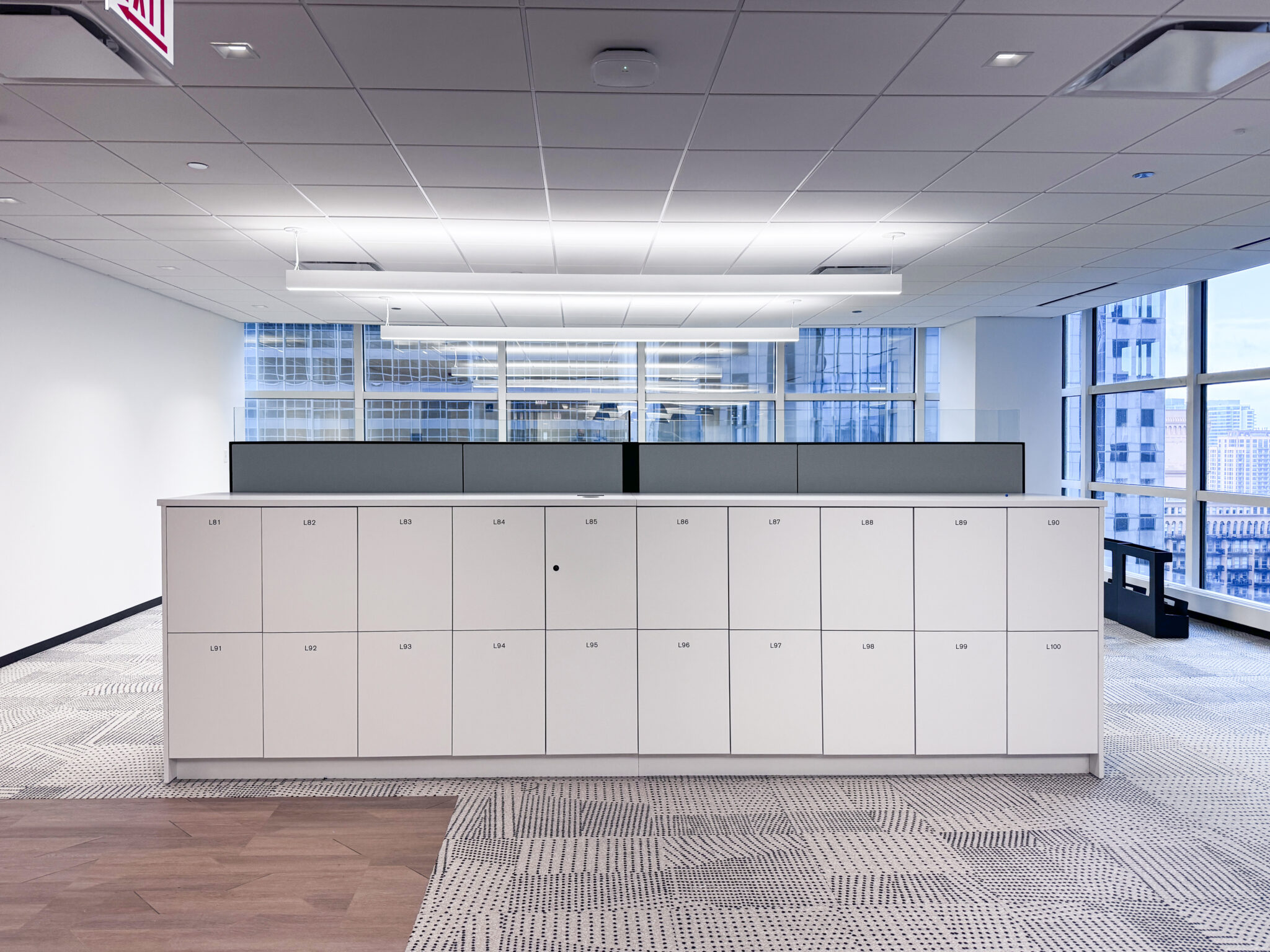
HAMILTON modular locker programs are designed to grow, reconfigure, and repurpose — without a full replacement — as your workplace evolves.
Locker decisions touch more stakeholders than most project teams realize — and misalignment between them is one of the most common, and most avoidable, sources of project delays and costly late-stage changes.
Defines the usage model, user types, and how the locker program supports broader workplace goals.
Owns day-to-day management. Must define workflows before deployment — not after the first incident.
Governs access control integration, audit trail requirements, and credential management.
Owns finish, placement, and integration with the broader interior design specification.
Communicates the program to employees and manages ongoing policy questions.
Should be in the conversation at schematic design — not at construction documents. That's when it's easy.
Early alignment prevents mid-project redesigns and delivery delays.
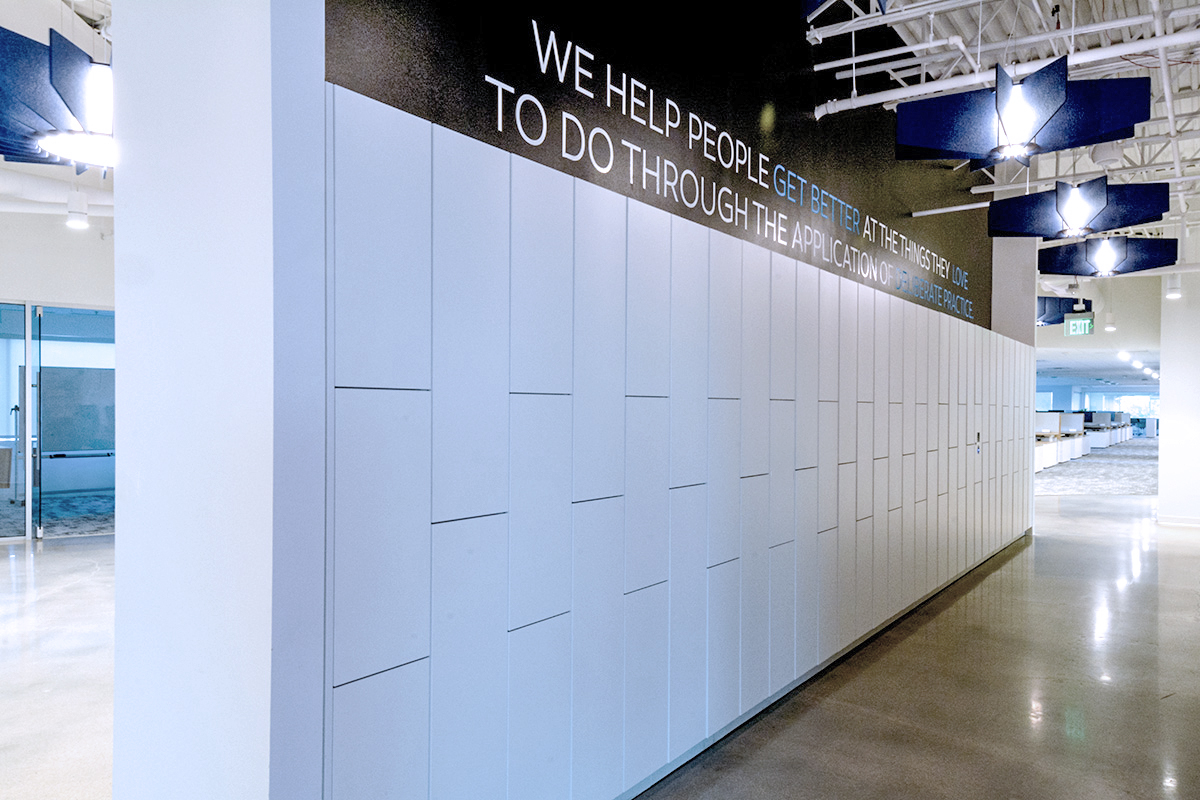
Peaksware, Boulder CO — cross-functional project team alignment led to a seamless deployment integrating lockers with end-of-trip facilities.
Work through every question on this list. If you can answer all of them, you're ready to specify.
In a modern workplace, lockers sit at the intersection of employee experience, space efficiency, security, and design. Treating them as an afterthought creates long-term friction. Treating them as a system — intentionally planned and professionally manufactured — creates a workplace that actually works.
That's the standard. HAMILTON has been meeting it for 40 years.