A global insurance company brought a larger budget and a clear brief: make the Dallas lockers a design focal point, not a utility fixture. HAMILTON delivered 347 lockers that still draw attention every day.
The same global insurance company behind HAMILTON's Chicago flagship chose the same architect for their Dallas office — and this time brought a larger budget with a clear ambition: make the lockers a design focal point. The result is 347 lockers that stand out in every corridor they occupy.
HAMILTON developed multiple full design concepts in close collaboration with the client and architect before the final direction was selected — exploring finishes, configurations, and color combinations until landing on something none of them had seen before in a locker context.
The locker doors are faced in Wilsonart Traceless HPL in Charcoal Velvet — a rich, dark matte surface engineered to resist fingerprints and smudges. In a 347-locker system used daily by a large workforce, that's not cosmetic: it means the installation looks as clean on month twelve as it did on day one.
The defining detail is the 3mm PVC edge banding in Abet Laminati Viola Madris — a vivid purple-violet matched precisely to the company's brand color. Against the Charcoal Velvet doors and the office's orange accent walls, the edge banding appears to glow. Elegant where it needs to be, bold where it counts.
Multiple locker sizes are available throughout the installation on an honor-system day-use basis: employees arrive and choose the size that matches their daily need. No permanent assignments, no wasted capacity.
"Some of the most distinctive and premium lockers we've created so far."— HAMILTON project team, Dallas installation
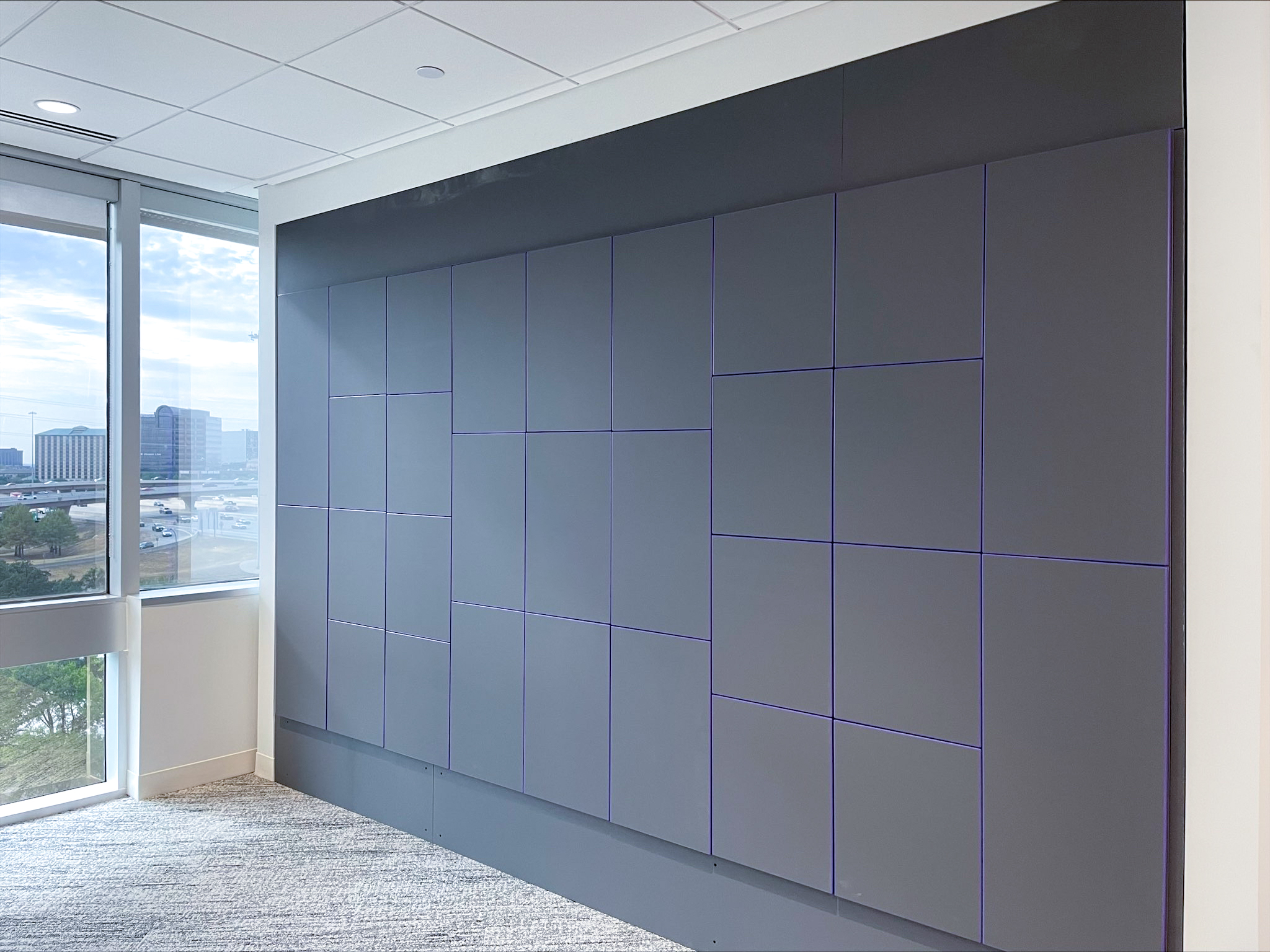
Charcoal Velvet HPL doors with Abet Laminati Viola Madris edge banding — a purple that appears to glow against the office's orange corridor walls.
Confidential global insurance company — same client and same architect as the Chicago flagship installation.
Larger budget than Chicago. Make the lockers a genuine design focal point, not a utility fixture bolted to a corridor wall.
347 premium lockers in Wilsonart Traceless HPL with vivid brand-color 3mm PVC edge banding and brand-matched touch displays.
Global Insurance · Dallas, TX · Same architect as Chicago and Jersey City offices
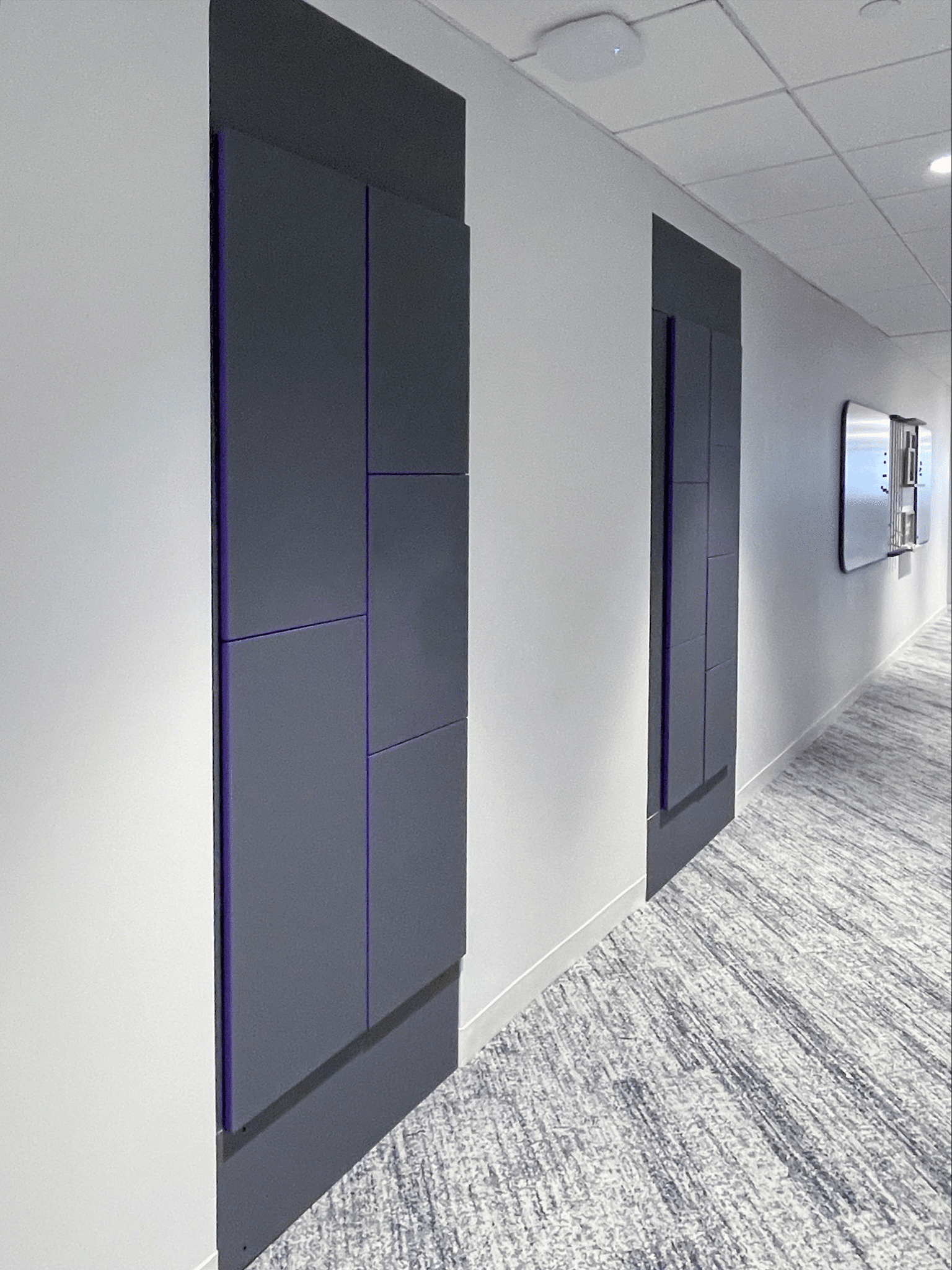

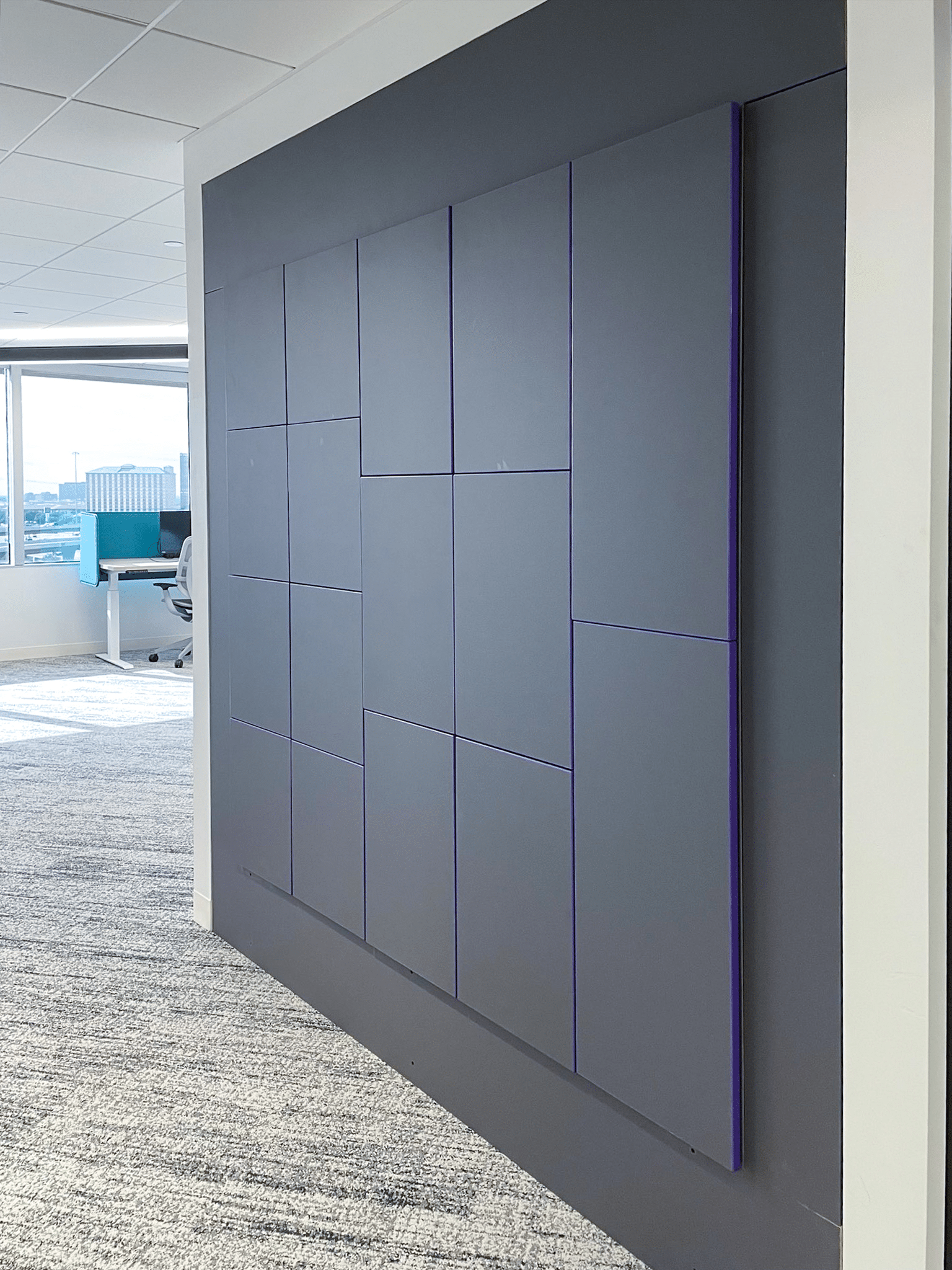
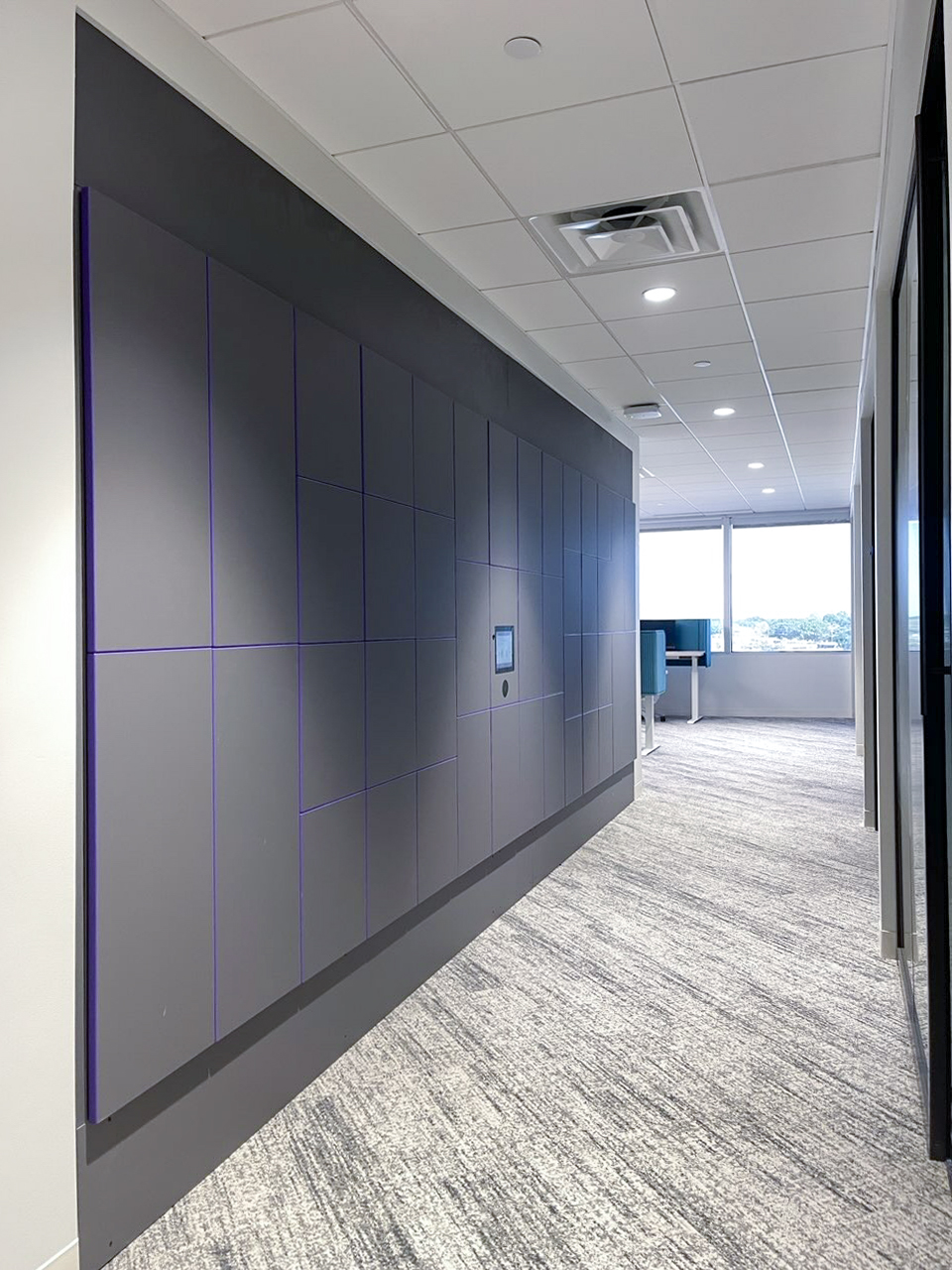
Premium workplace lockers are not an accident. These are the three deliberate decisions that elevated this installation above anything the client had seen before.
Standard laminate locker doors show fingerprints. In a high-traffic 347-locker installation, that means a corridor that looks perpetually dirty without constant attention from facilities. Wilsonart Traceless HPL in Charcoal Velvet is engineered to prevent fingerprints and smudges — the matte surface stays pristine under daily use without special treatment.
Practical and premium in the same material decision.
Edge banding is typically an afterthought — a thin strip of matching or neutral material that disappears into the surface. In Dallas, HAMILTON used 3mm PVC edge banding in Abet Laminati Viola Madris, a vivid purple-violet matched precisely to the company's brand color.
Against the Charcoal Velvet doors and the office's orange accent walls, this edge appears to glow — signaling brand identity the moment someone enters the corridor. Elegant, bold, unmistakably intentional.
Every locker in the day-use system includes a touch display for employee access. In most installations, these are generic — black or silver hardware, standard UI. In Dallas, the touch displays were configured to reflect the company's brand image: colors, interface style, and visual language all aligned to the client's identity standards.
The result is a locker system that feels like an extension of the brand, not technology grafted onto a cabinet.
Dallas was the premium flagship — but the same global insurance company chose HAMILTON for two other US offices, each designed to the local space while meeting the same national locker standard.
The Chicago office was the original flagship: a 3-floor smart locker rollout with integrated seating and smart closets throughout. 505 lockers built to the national standard that set the template for Dallas and Jersey City.
A smaller-footprint NYC metro installation serving both employees and single-day visitors. Designed by a different architect than Chicago and Dallas, applying the same national locker standard to a compact floor plan.
The 347 lockers feature Wilsonart Traceless HPL doors in Charcoal Velvet — a fingerprint-resistant surface that stays pristine in heavy-use corridors — combined with 3mm PVC edge banding in Abet Laminati Viola Madris, a vivid purple matched precisely to the company's brand color. Multiple design concepts were developed collaboratively with the client and architect before landing on the final direction. The result is a locker system that functions as a deliberate design element rather than a utility fixture.
HAMILTON works with the client's architects and interior designers from the earliest concept phase — before specifications are finalized. Finish matching uses precision-selected HPL surfaces from manufacturers like Wilsonart and edge banding from Abet Laminati, chosen to align with the company's exact brand color palette. HAMILTON supplies Revit and CAD files throughout the design process to keep the project fully coordinated.
Wilsonart Traceless HPL is a premium door surface engineered to resist fingerprints and smudges. Unlike standard laminate, which shows every handprint in high-traffic corridors, Traceless HPL maintains a clean, matte appearance with normal use. The Charcoal Velvet colorway provides a sophisticated dark finish that complements the vivid purple edge banding while staying fingerprint-free — a practical necessity for a system used daily at this scale.
Yes. The majority of HAMILTON's construction work is completed at our US Midwest manufacturing facility before the lockers arrive on site. This prefabrication approach means on-site installation is fast — typically days per area, not weeks — with minimal dust, noise, and disruption to ongoing operations.
Lockers are unassigned — no employee permanently owns a specific unit. Employees arrive each morning and choose an available locker in the size that fits their day: full-height on heavy-bag days, smaller on lighter ones. With an electronic access system, the locker is locked and tied to the employee's credential for that day; at the end of the day it clears and returns to the available pool. The specific access method is determined by the electronic lock system your organization selects. This model typically requires only 60–70% as many lockers as permanent-assignment systems.
The full picture — every locker type, finish, and smart-access option HAMILTON offers for modern offices.
Explore All Workplace Solutions →How HAMILTON delivered 505 lockers across 3 floors for a global insurance company and set their national standard.
See the Chicago Project →Stop guessing. The 70% rule and three other data-driven factors that should drive every locker decision.
Read the Guide →Tell us about the project — space, brand, headcount. We'll come back with a program that fits.
Download the guide our Dallas clients use to size, justify, and specify their workplace locker systems before the first conversation with an architect.
The data behind the 70% locker ratio — why most offices are over-provisioned and what to do about it. Includes a sizing worksheet you can use today.
Download Free Guide (PDF)