Operating rooms, hybrid cath labs, and sterile processing areas require casework engineered for infection control, chemical resistance, and precise custom specification — not adapted from standard product lines.
The OR is the highest-stakes environment in the hospital. Casework in this space must survive daily chemical treatments, repeated bleach washings, and the physical demands of a room where every surface must be cleanable to the most exacting infection control standards.
Standard laminate casework — even high-quality laminate — is not appropriate for sterile field environments. The wrong hinge material can harbor pathogens. Gaps at cabinet bases create zones that can't be cleaned. HAMILTON engineers OR casework from the right materials, specified correctly for the specific environment where each piece will live.
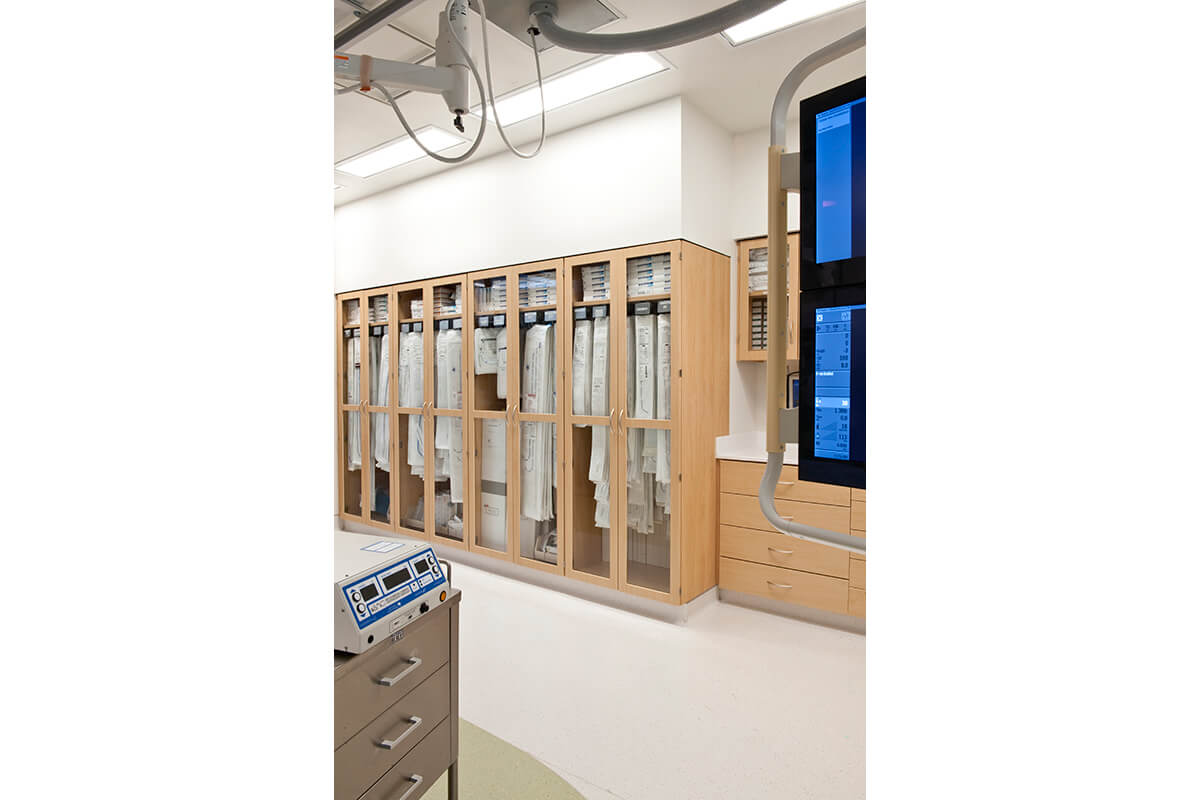
The Pediatric Heart Center at Tulane Hospital for Children housed one of just ten combined Hybrid Cath Lab / Operating Room suites in the country at the time — and the only one in Louisiana. In this suite, cardiologists and surgeons work side by side to open the chest, place delivery catheters directly into the heart, and deploy devices — without moving the patient.
The grant-funded physician in charge had precise directives for the structure of the suite and the storage of the equipment. HAMILTON worked with VergesRome architects and the surgical team to engineer the exact solution.
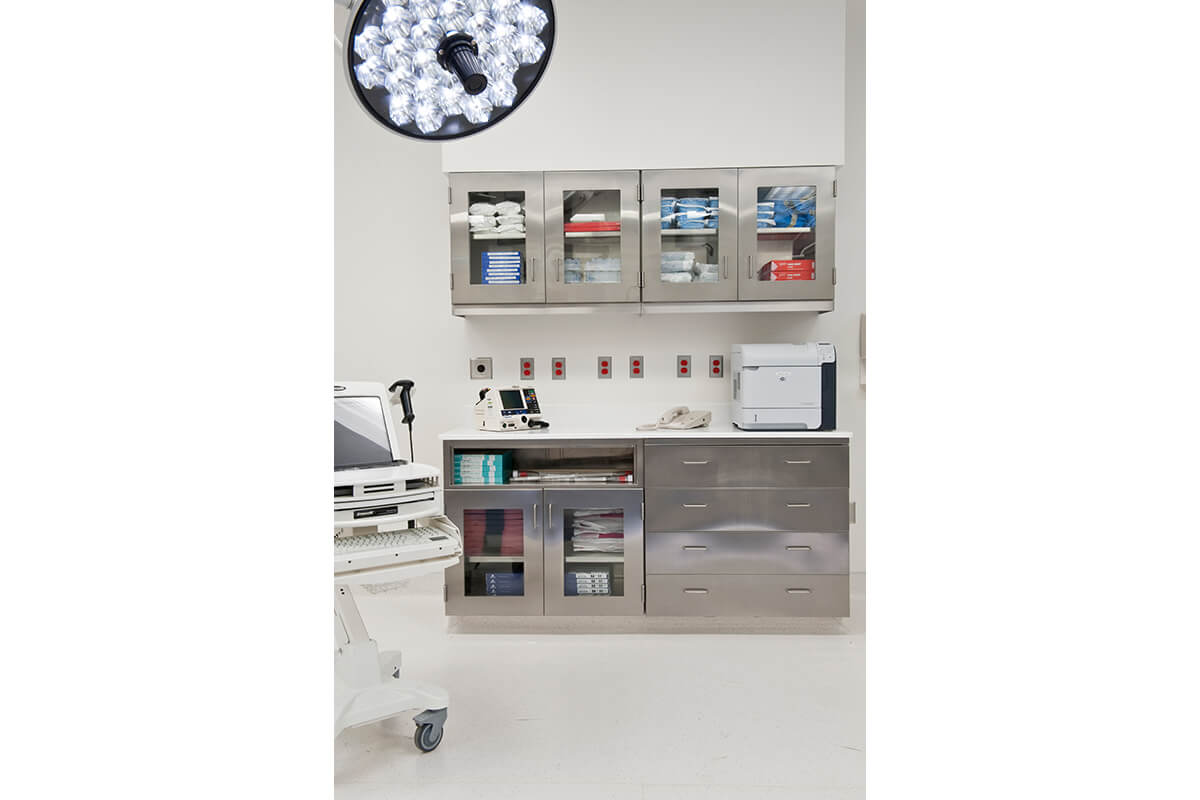
The Tulane hybrid suite demonstrates a principle that applies across all surgical casework: different zones within the same room require different material specifications. HAMILTON engineers each zone appropriately rather than applying a single solution across the whole space.
The catheterization laboratory area uses high-quality laminate casework with thermofoil fronts — providing a clean, clinical aesthetic with excellent durability for the level of chemical exposure this zone experiences. Custom interiors hold catheter bags and procedure-specific equipment in precisely engineered roll-outs.
The sterile operating environment requires corrosion-resistant stainless steel throughout. HAMILTON specifies an exclusive all-stainless hinge with no plastic washers — eliminating the contamination risk that standard hinges introduce in the sterile field. Surfaces withstand daily bleach washings and aggressive chemical treatment without degradation.
Steel cabinet bases are epoxied directly into the floor, creating a seamless transition with no gap and no area where contaminants can accumulate. HAMILTON engineers this as standard in OR environments — it's one of the most important infection control details in the surgical suite.
Specialized equipment storage requires custom interior configurations. At Tulane, HAMILTON designed a range of short and long roll-outs specifically sized for catheter bags of different dimensions — housing specialty interiors inside standard cabinet frames to reduce cost and protect the project timeline.
Glass cabinet fronts throughout the cath lab area provide clear visibility of supplies during active procedures — eliminating the need to open cabinets to verify contents. Critical supply status is visible at a glance without breaking sterile technique or interrupting surgical workflow.
Cabinet heights were engineered to match the existing room soffit exactly — a dimensional constraint requiring close coordination between HAMILTON's production team and the architect. HAMILTON builds to the constraint, not around it.
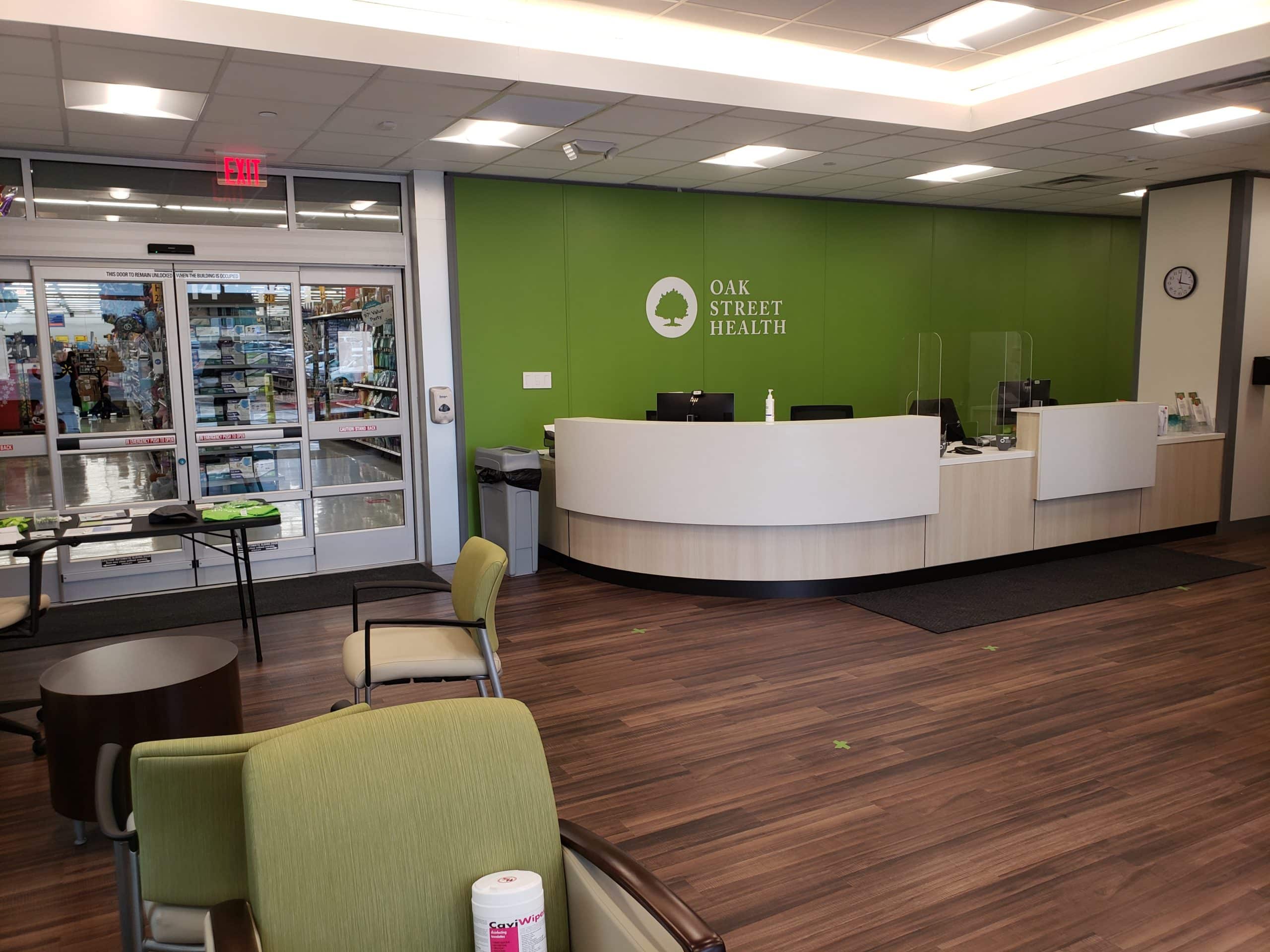

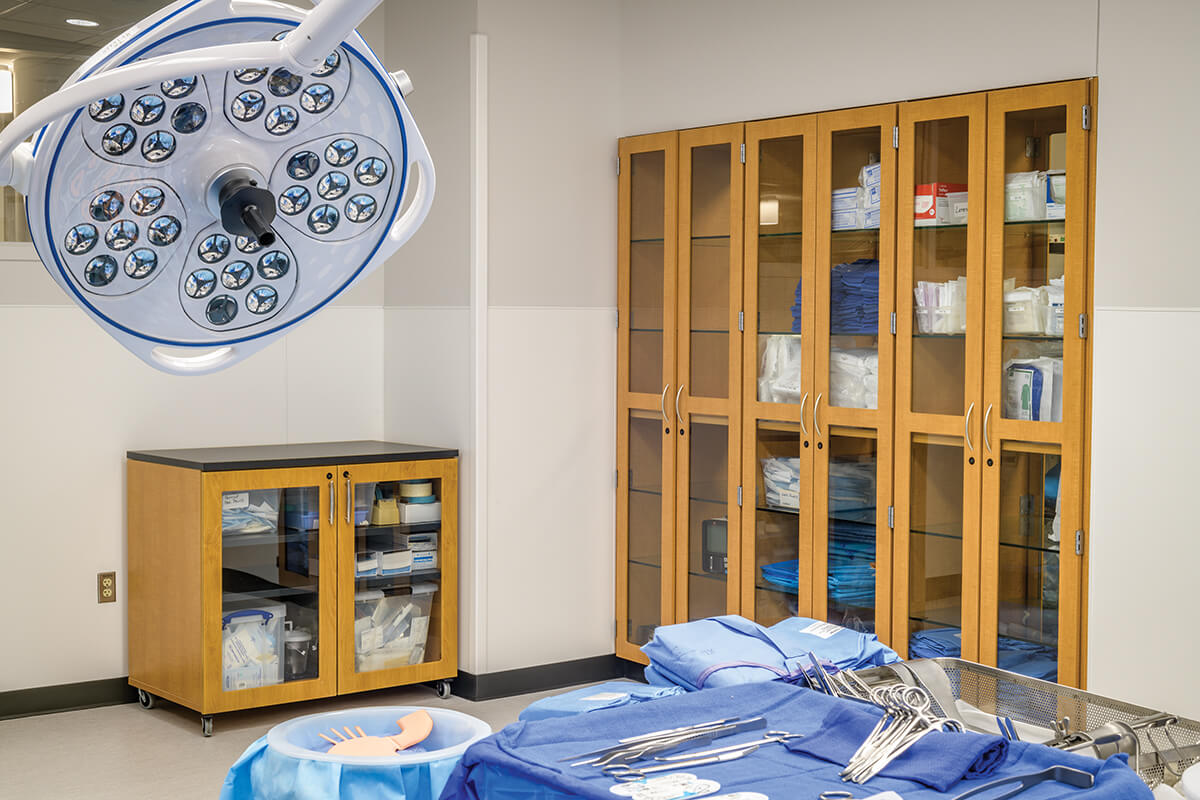
HAMILTON's US manufacturing operation makes it possible to deliver precision healthcare casework to projects anywhere — domestic or international. Ready-to-install components minimize on-site installation time and reduce disruption to active clinical environments.
When Internal Medicine physician Dr. Nandawula Kanyerezi Mutema developed The Clinic at the Mall — a 40,000 sq. ft. healthcare facility in Kampala, Uganda — she chose HAMILTON for all of her casework. Components that would have taken nearly a year to build locally were manufactured in weeks at HAMILTON's Fairfield, Ohio facility. HAMILTON dispatched an installation team to Uganda for two weeks to work alongside local craftspeople.
The Clinic houses a drug dispensary, full analytical laboratory, EKG, 3D ultrasound, CT scanner, digital x-ray, and mammography — all supported by HAMILTON casework built to the same standards as any US hospital installation.
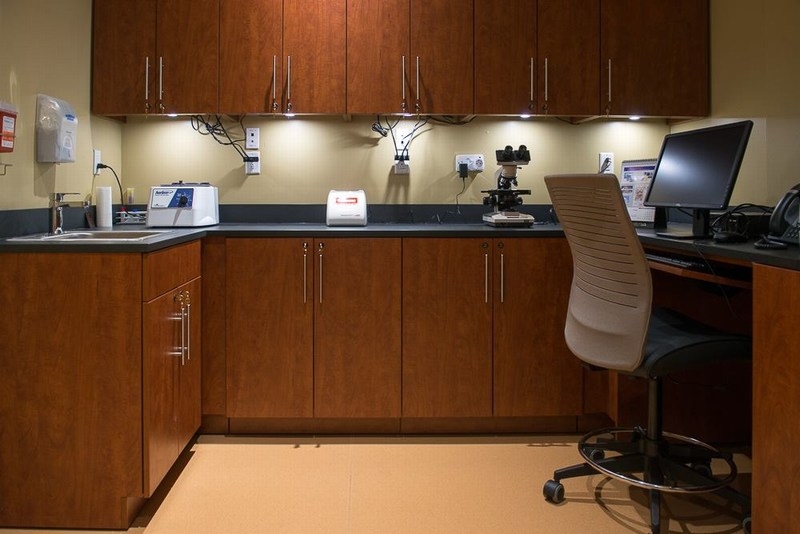
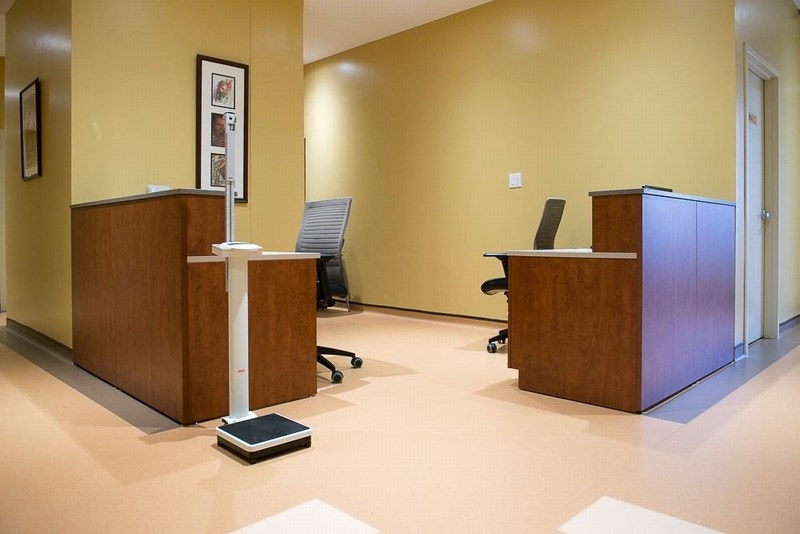
The complete overview of HAMILTON healthcare casework — clinical, administrative, and hospital environments.
Explore Healthcare Solutions →Unit dose fill stations, compounding suites, narcotics storage, and dispensing environments. Featured: Jackson South, St. Margaret's, St. Luke's Cornwall.
See Pharmacy Casework →Custom nurse station design built for clinical workflow efficiency, infection control, and 24/7 hospital durability. Featured: TriHealth Bethesda Hospital.
See Nurse Station Solutions →New OR suite, surgical department renovation, or hybrid environment — tell us about the project and we'll get to work.