From unit dose fill stations to compounding suites to narcotics storage, HAMILTON designs hospital pharmacy casework around clinical workflow — and engineers it to adapt as your dispensing model changes.
No two hospital pharmacies work exactly alike. Some dispatch thousands of unit doses per day. Some compound sterile IV preparations. Some serve satellite dispensing points across multiple floors. All of them are evolving as dispensing technology changes, patient volumes shift, and infection control standards tighten.
Generic casework fails pharmacies because it ignores how medications move through the space. HAMILTON's approach starts with workflow: where medications arrive, how they're sorted, where they're verified, how they're dispensed. Every cabinet, shelf, drawer, and worksurface is positioned around those answers.

Each of these projects presented a different problem: a mid-project pivot when technology funding fell through, a director who wanted warmth without sacrificing function, a hospital that needed infection control rigor and collaborative space planning.
Pharmacy Director Paul Eger led the second major renovation of Jackson South Community Hospital Pharmacy in five years — tripling the pharmacy's square footage. His mandate: design a system that would look 20 years into the future.
Midway through planning, hospital funding for the planned carousel dispensing technology evaporated. HAMILTON redesigned the unit dose fill area for traditional dispensing while engineering a clear conversion path back to carousel — protecting the initial investment without returning to administration for new funding.
The station now dispatches an average of 4,000 dosages per day with ready access to more than 900 medications.
Pharmacy Director Terry Arkins came from a family of pharmacists — a grandfather's 1917 pharmacy license hung on the wall. He wanted the character of a traditional pharmacy without compromising modern functionality. He assumed he'd have to choose.
HAMILTON's WilsonArt High Definition laminate delivered the look of textured granite at four times the industry standard in wear resistance. The layout features a U-shape unit dose area with freestanding back panels, floor-to-ceiling storage with angled adjustable shelves, a narcotics station with cabinet overheads, roll-out printer drawers, and individual pharmacist nooks with locked personal storage.
St. Luke's Cornwall took a cross-functional approach: architects, pharmacy staff, hospital HR, security, and HAMILTON's Project Management Team all contributed to the design before a single piece of casework was ordered.
The result: a waist-high work island for patient-specific hourly rounds, a high counter with stools for those who alternate sitting and standing, and a U-shaped compounding station with a view of the Hudson River. Wiring cutouts sealed with molding keep the IT infrastructure clean and accessible.
After move-in, the hospital's Infection Control department applied Crystal Light Fruit Punch paste to the worksurface overnight. The surface looked as good as new the next morning.
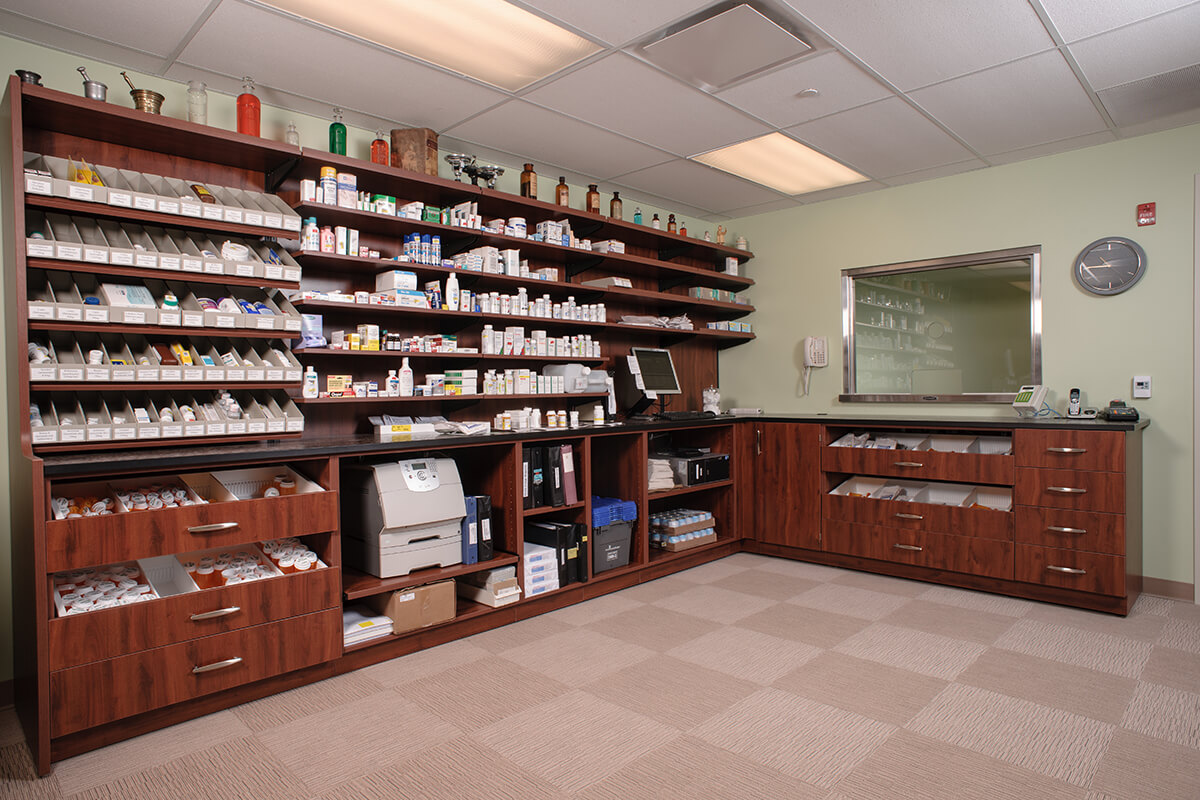


HAMILTON designs pharmacy environments as integrated systems. Each station connects to the next in a workflow sequence that reduces unnecessary movement, minimizes handling errors, and keeps pharmacy staff focused on patient care.
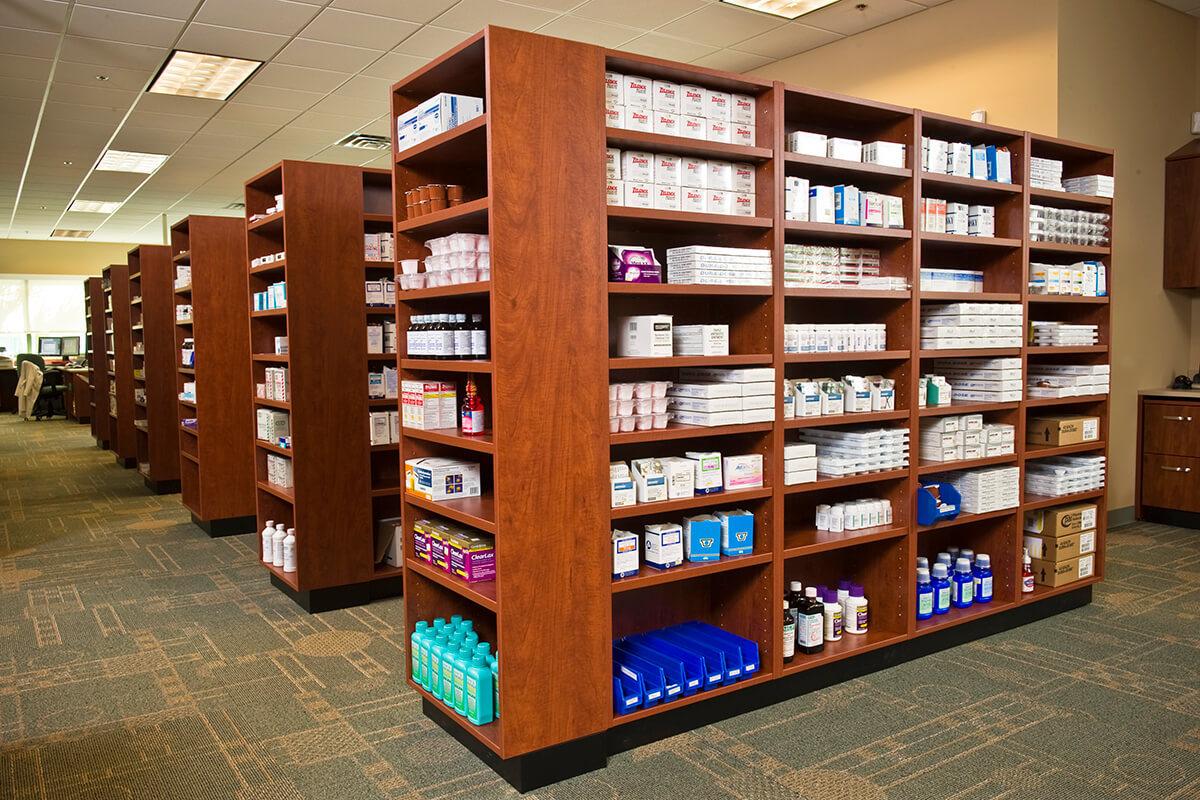
Compliant with hospital procurement requirements and infection control guidelines. Required by many health systems for occupied clinical spaces.
FSC® certified components (FSC-C110583) are available as specified by a designer — supporting hospital sustainability programs, green building goals, and LEED documentation requirements.
OSHPD-certified components are available for California hospital projects — meeting structural and seismic requirements for licensed healthcare facilities.
The complete overview of HAMILTON healthcare casework — clinical, administrative, and hospital environments built for 24/7 performance.
Explore Healthcare Solutions →Custom nurse station design built for clinical workflow speed, infection control, and around-the-clock durability. Featured: TriHealth Bethesda Hospital.
See Nurse Station Solutions →Stainless steel and sterile-field casework for OR suites, cath labs, and hybrid operating environments. Featured: Tulane Pediatric Heart Center.
See OR Casework →Renovating an existing pharmacy, expanding into new space, or starting from scratch — tell us about the project and we'll get to work.