HAMILTON designs nurse stations, medication rooms, clean utility, and clinical storage around how nursing staff actually work — counter height, drawer placement, supply access, and traffic flow specified for the shift, not the catalog.
Nursing staff spend the majority of their shift at the station or traveling to and from it. Where the medication drawers sit, how high the counter is, where supply bins are located, how charting flows into medication prep — all of it has a direct effect on care quality and staff fatigue.
Nurse station casework is frequently specified like office furniture: by catalog number, without a workflow conversation. The result is casework that fits the room but not the work.
HAMILTON starts with a workflow analysis. Where is the current casework creating unnecessary steps? What do staff wish they could change? The answers drive every dimension, every drawer, every decision.
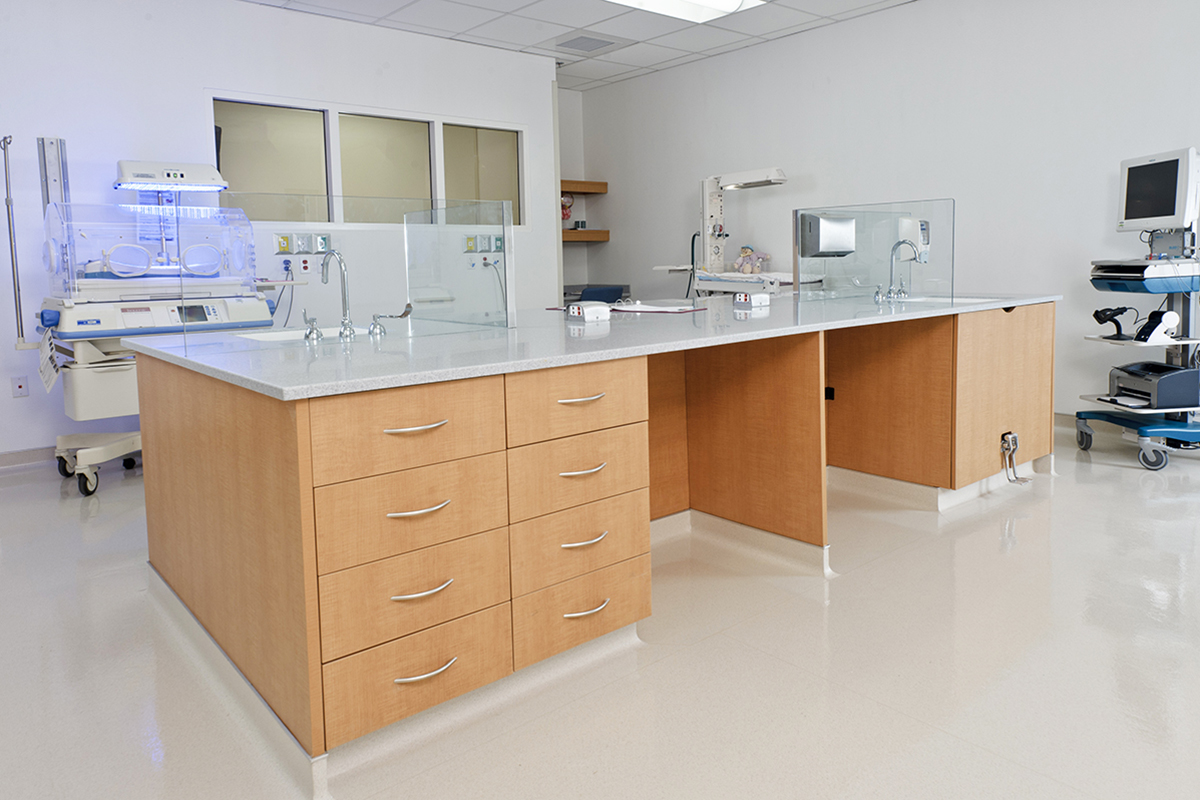
HAMILTON designed and installed nurse station casework for TriHealth Bethesda Hospital in Ohio — integrating charting space at ergonomic heights, medication preparation areas positioned for efficiency and visibility, and supply storage organized by use frequency.
The scope covered multiple nursing units. Materials were specified for long-term durability and daily disinfection in a busy clinical environment. The aesthetic is clean and consistent throughout.
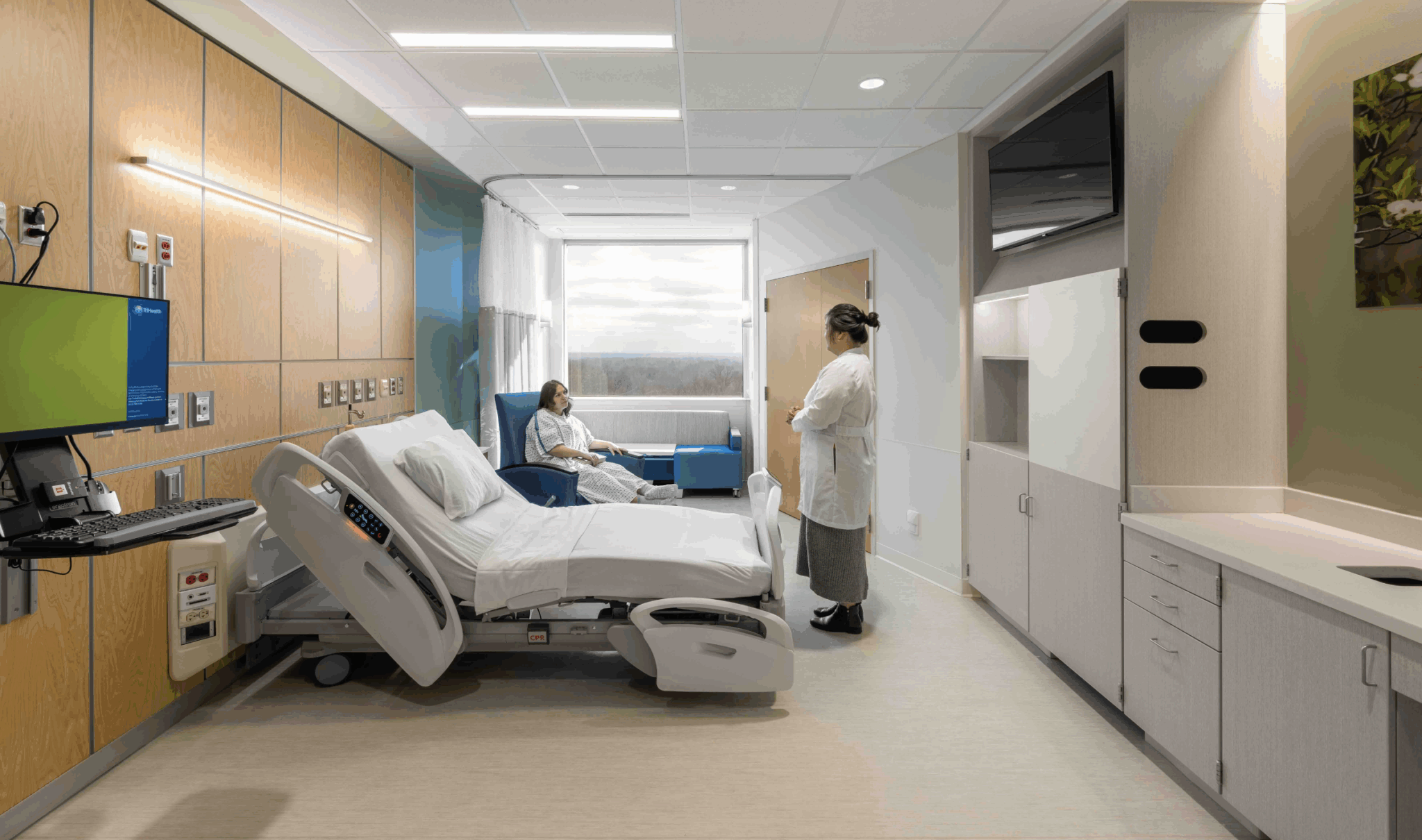
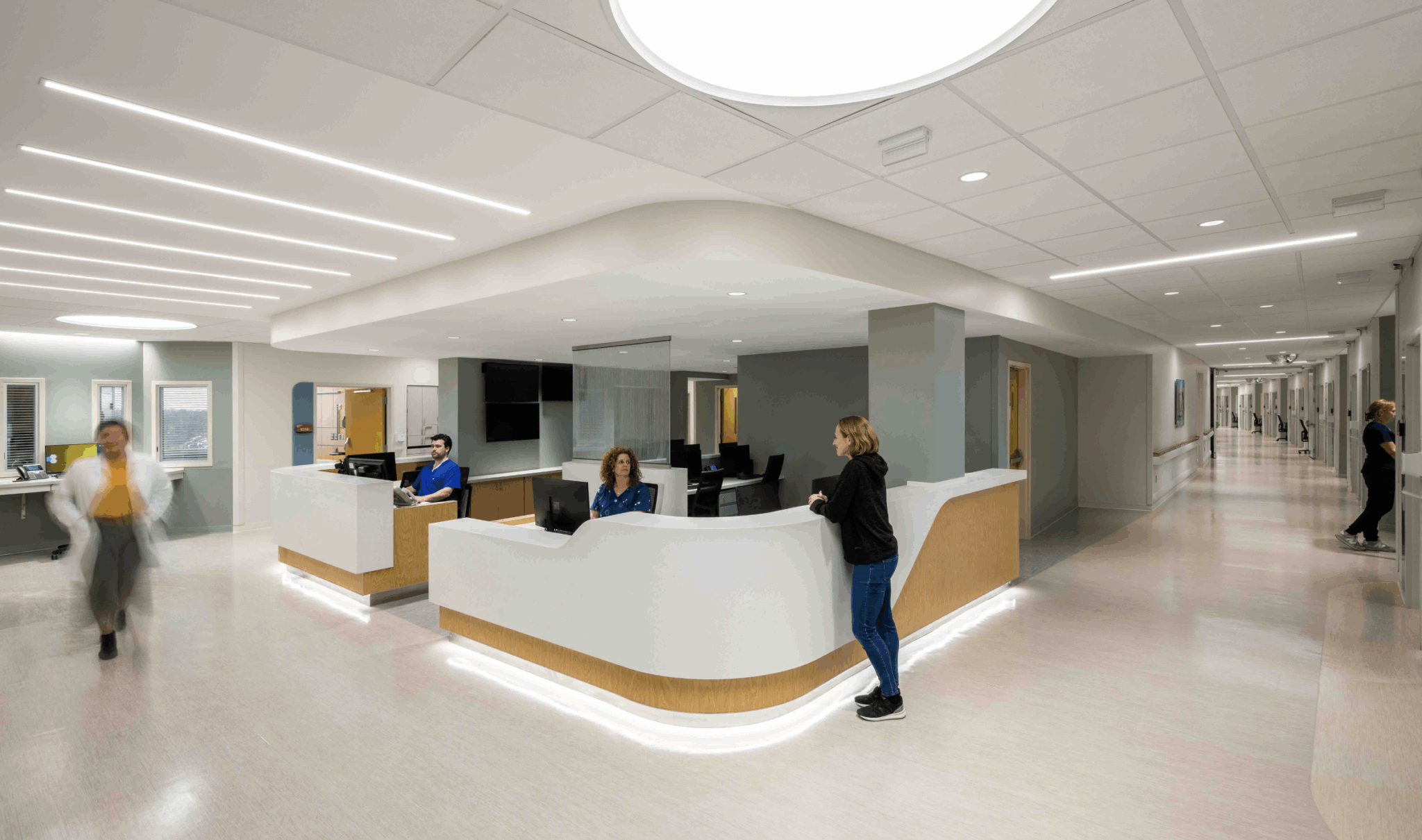
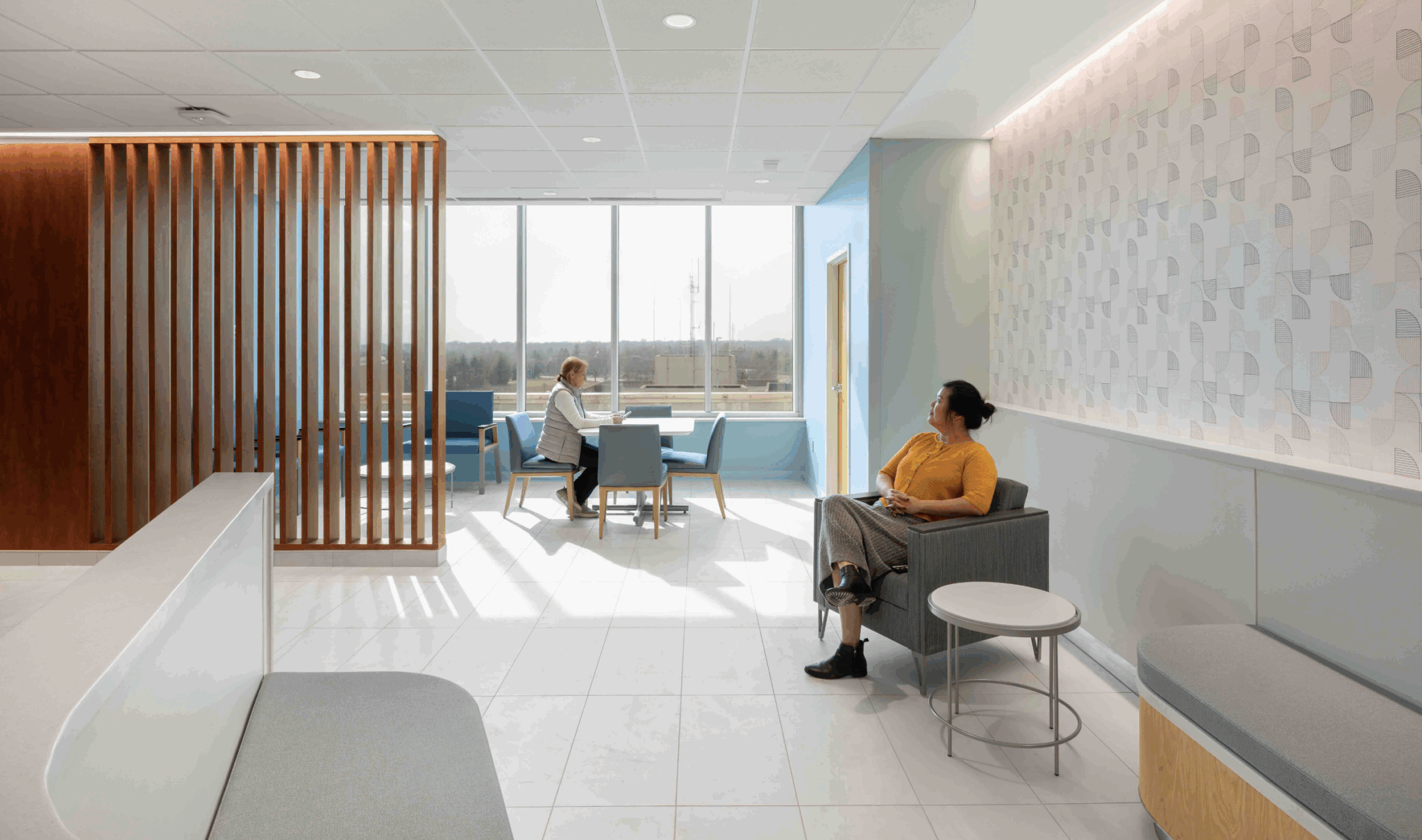
HAMILTON designs the full sequence of clinical casework — from the patient entry point to the deepest parts of the care environment. Each zone connects to the next with a unified aesthetic and consistent material palette.
The operational hub of the floor. HAMILTON designs charting counters, communication zones, medication access points, and supply staging areas — organized within the station footprint to minimize staff travel time during a shift.
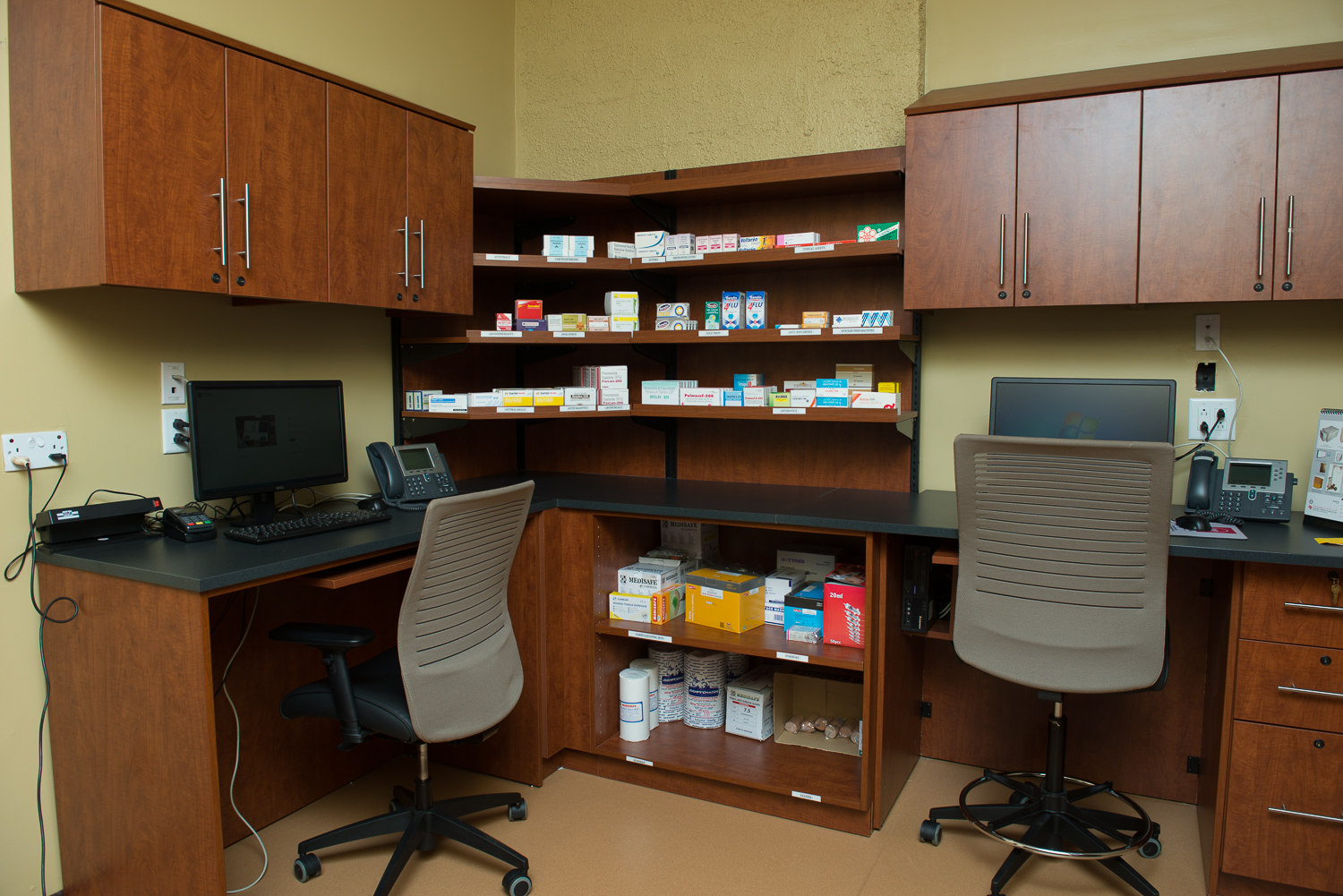
Controlled-access cabinetry, preparation worksurfaces, locked narcotic storage, and IV supply organization. Every design decision prioritizes error reduction and infection control without sacrificing efficiency.
Floor-to-ceiling storage organized by category and access frequency. Open shelving for quick retrieval, closed storage for regulated items, and worksurfaces for staging. Built for daily restocking operations.
Designed for infection control — seamless surfaces, easy-clean materials, strategic sink placement, and storage that clearly separates clean from contaminated workflows.
Distributed charting stations bring documentation closer to the point of care — reducing trips to the central station and keeping staff more accessible to patients. Designed to fit within existing corridor footprints.
Patient-facing casework for reception, admissions, and first-contact areas. HAMILTON designs reception desks and admissions counters that balance privacy, aesthetics, and operational workflow from the first touchpoint.


Clinical casework lives in a different world from commercial furniture. It gets wiped down with disinfectant multiple times a day. It's bumped by supply carts and IV poles. It's loaded and depended on at every hour of every shift. HAMILTON specifies materials built for that reality.
The complete overview of HAMILTON healthcare casework — clinical, administrative, and hospital environments.
Explore Healthcare Solutions →Unit dose fill stations, compounding suites, narcotics storage, and dispensing environments. Featured: Jackson South, St. Margaret's, St. Luke's Cornwall.
See Pharmacy Casework →Stainless steel and sterile-field casework for OR suites, cath labs, and hybrid operating environments. Featured: Tulane Pediatric Heart Center.
See OR Casework →Renovating a nursing unit, building a new clinical floor, or replacing casework that's failing your staff — tell us about the project and we'll get to work.