Laminate Lockers — Higher Education
How the University of Redlands built a 24/7 VR lab around two banks of custom laminate lockers. Built-in charging, Metra smart access, MDM integration, and campus photography on every door — approved by the university president.
At a Glance
Five things this project proves about laminate lockers in university settings.
The Problem
Before the XR Lab existed, the University of Redlands stored its VR headsets in an unused office tucked away from student foot traffic. The location alone made self-directed learning impossible. The process made it worse.
Students who wanted a headset had to find a staff member, fill out paperwork, and wait for device retrieval. Faculty needed two or three staff members to physically move headsets to a classroom. It was a system built for compliance, not learning.
The room itself was sealed off. No windows, no visibility. Students walked past the library corridor every day without knowing anything was there.
Why Laminate
The XR Lab brief had requirements metal lockers couldn't meet. The material choice wasn't preference. It was necessity.
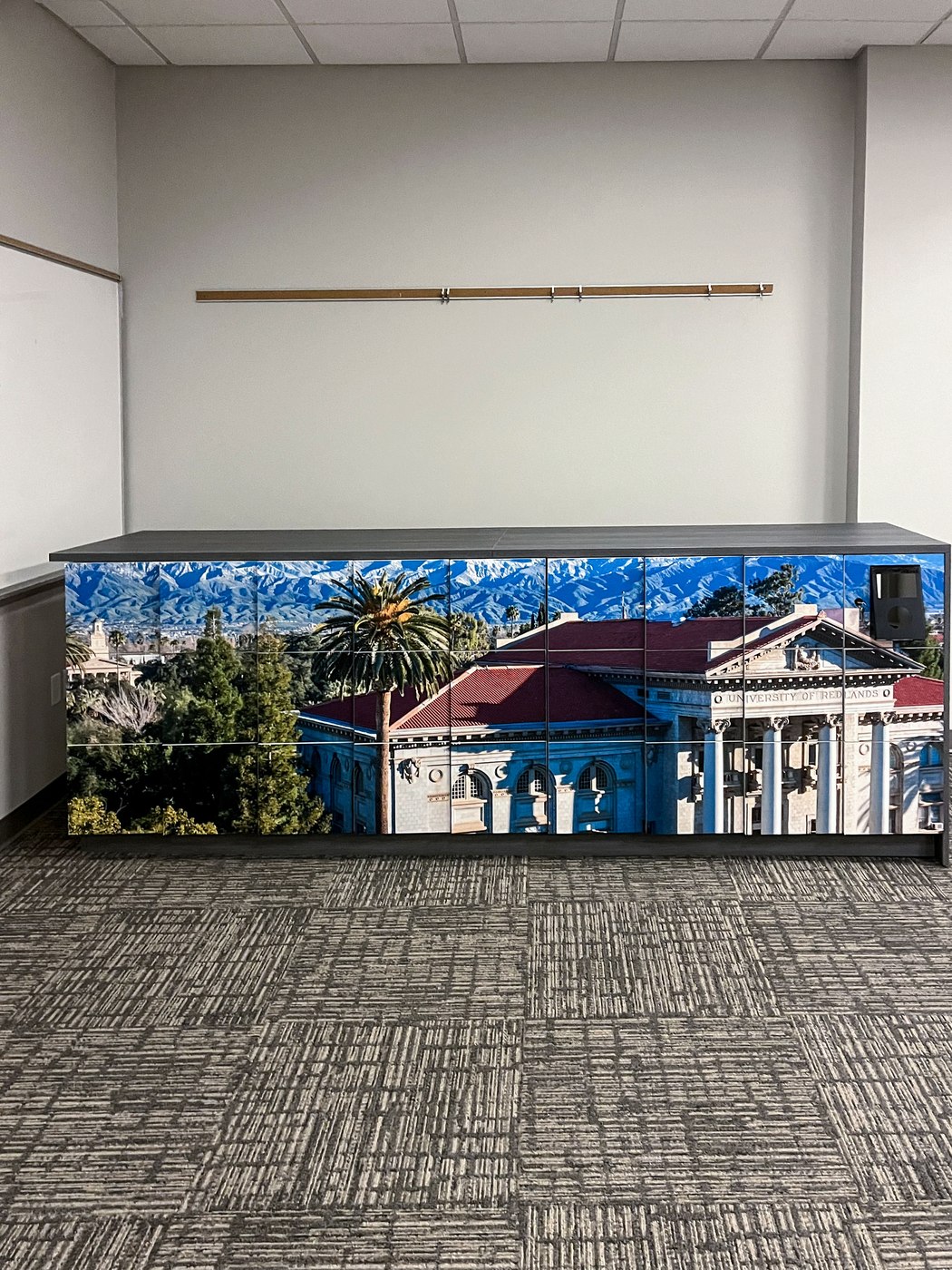
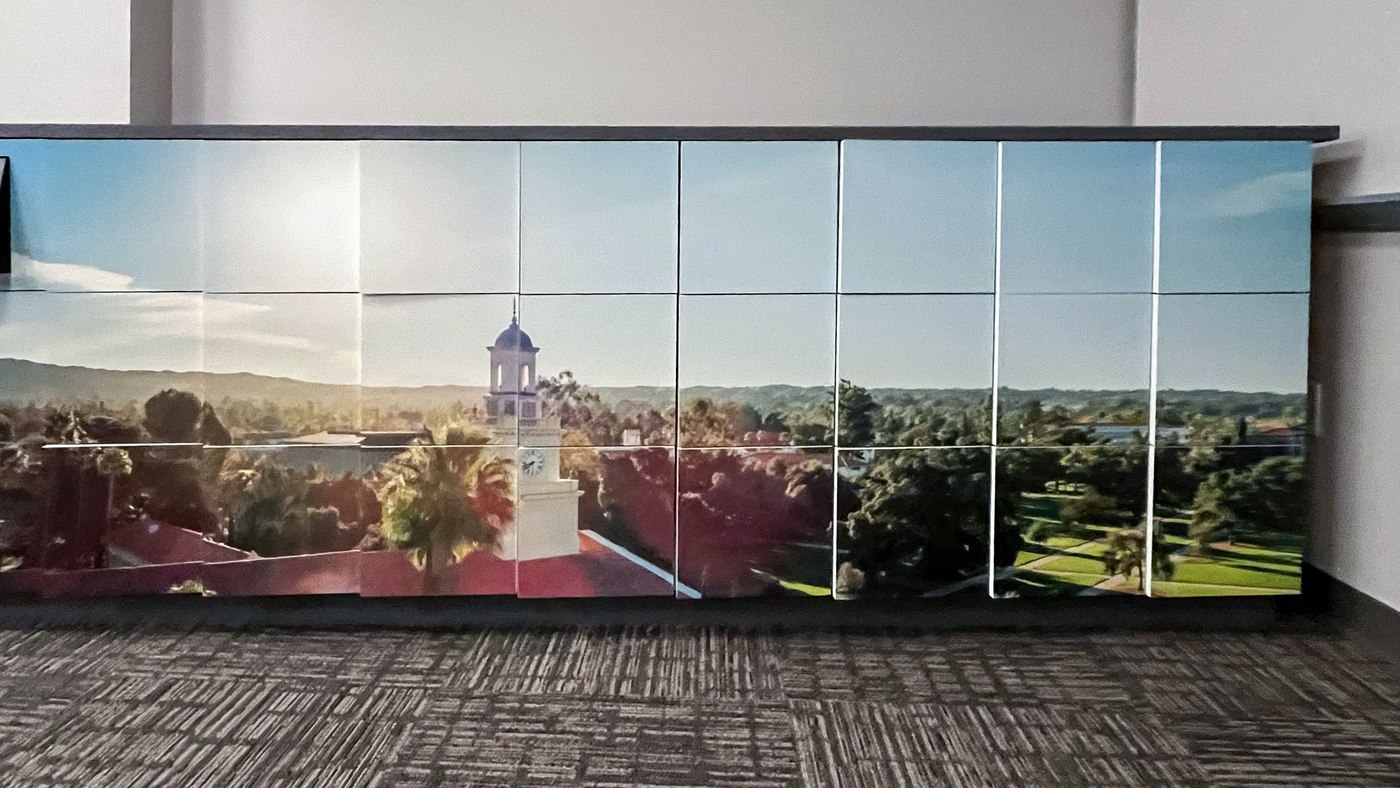
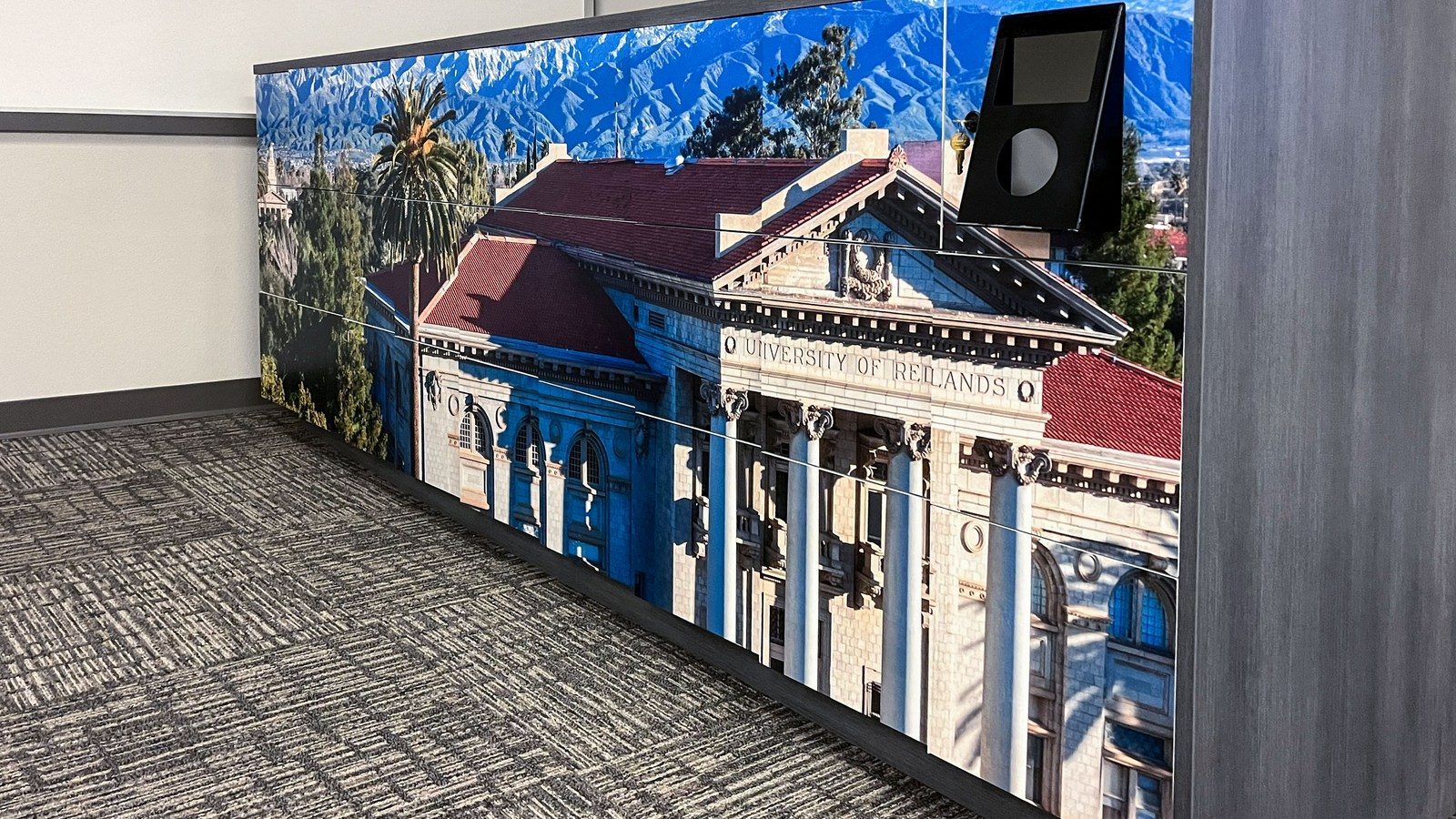
The University of Redlands needed lockers that could carry campus photography on the doors. Not slate, not wood grain. Laminate surfaces accept full-coverage vinyl wraps, including high-resolution photography. Metal lockers don't. The wrap selection went to the university president for approval. Competitors never made it past the finish conversation.
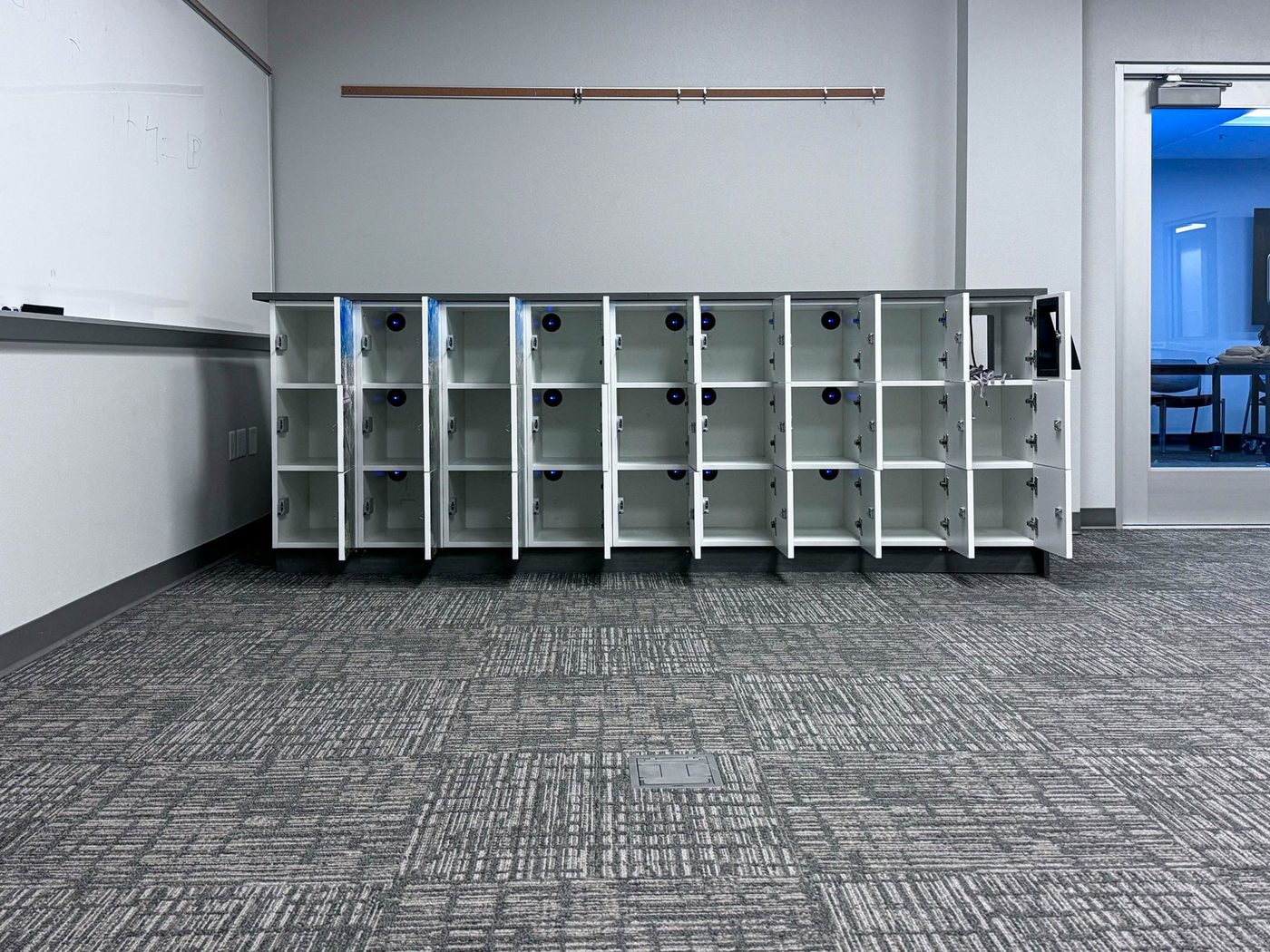
VR headsets need to be charged and ready every time a student opens a door. Laminate locker panels are routed to carry electrical wiring cleanly through the cabinet. OE Electrics PIP outlets sit flush in the panel, providing AC power and USB fast-charging. Devices stay powered between uses.
The Metra Mini touchscreen and HID reader mounts cleanly into a laminate cabinet face. The smooth surface and casework-grade construction read as architecture, not industrial equipment. In a library designed to attract students and anchor campus tours, that distinction matters.
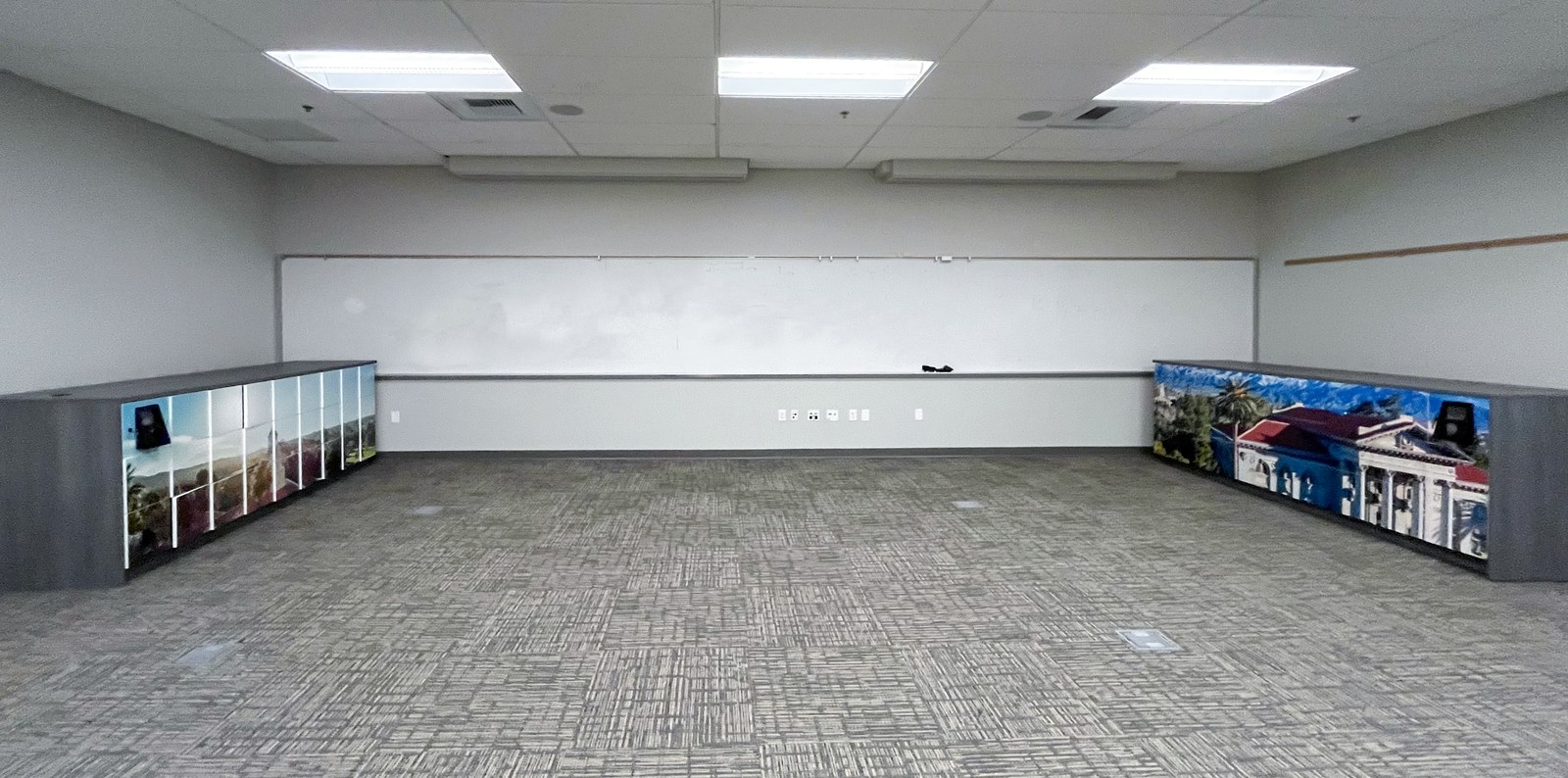
The XR Lab was a full renovation: walls removed, new windows cut, the adjacent collaborative space opened up. Laminate locker banks were designed to the specific dimensions of each zone. Bank A and Bank B are each 110¾" wide × 41" tall, fitted to the renovated floorplan without dead space.
The University of Redlands operates multiple master's degree programs in sustainability. The laminate locker system eliminated paper-based checkout forms, reduced staff resource consumption, and enables an MDM workflow where devices are managed electronically with no physical handling between sessions. The environmental footprint of device management dropped substantially.
Laminate finishes (woodgrain, solid, patterned, or custom-wrapped) belong in design-forward environments. Metal lockers read as utilitarian regardless of powder coat. In a space used for prospective student tours and LinkedIn-featured announcements, the locker finish is part of the institution's brand expression.
The Wrap That Went to the President
Every other vendor offered slate or wood grain. The university said no.
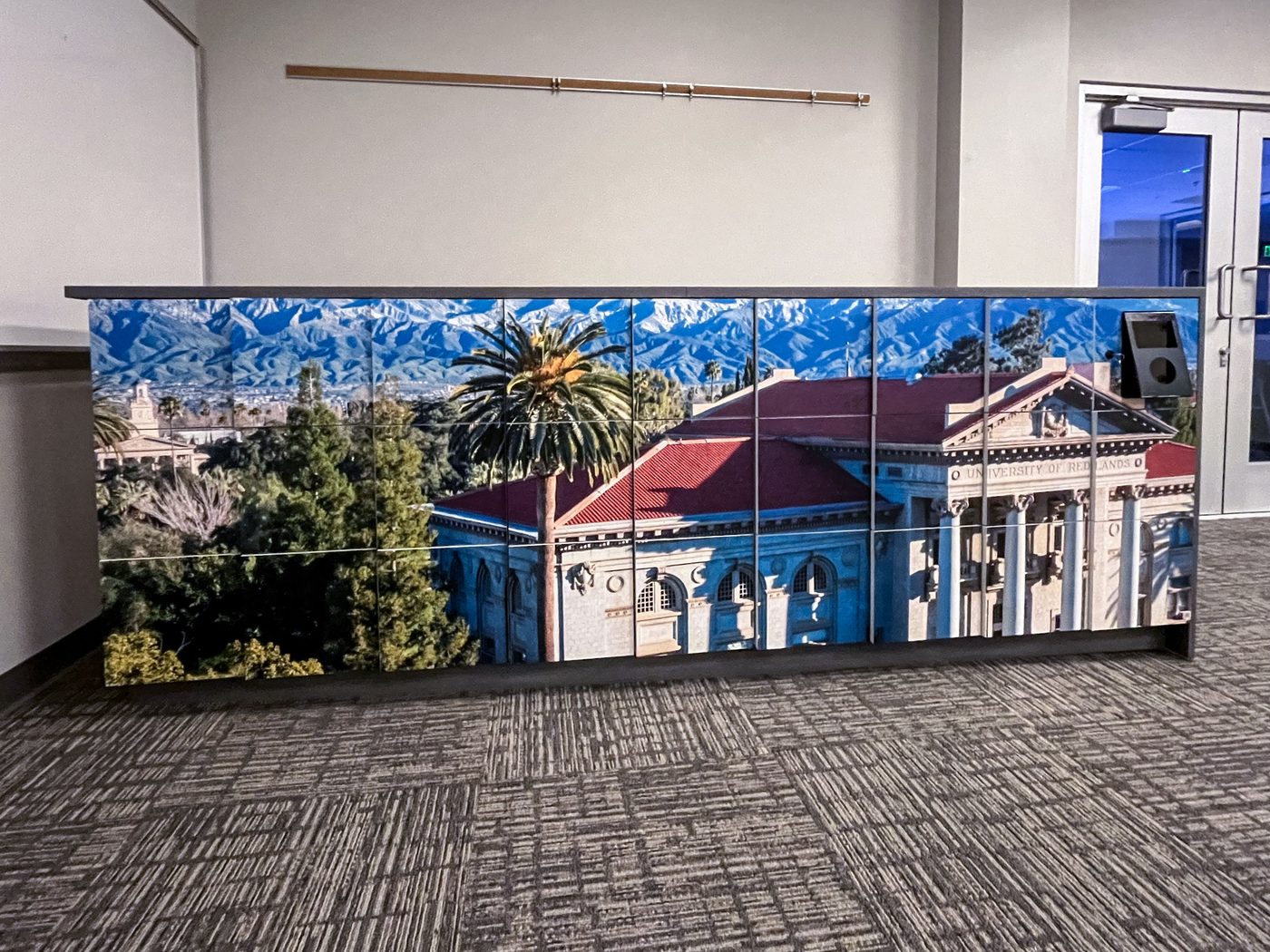
The University of Redlands wanted campus photography on the locker doors. Not a generic finish. Landmark imagery that students recognized, that connected them to the institution.
The IT director selected seven candidate images from the university's digital asset library. The shortlist went to the university president. Two images were chosen and printed as full-coverage vinyl wraps applied directly to the laminate doors.
The result is now a stop on prospective student campus tours. Students walking past see the lockers through the new glass wall, recognize the landmarks on the doors, and stop. Faculty reference the space in academic conference proposals. The LinkedIn post announcing the XR Lab featured the lockers prominently.
None of this works with a metal locker or a standard laminate color. Vinyl wrap capability, available through laminate construction, was the deciding factor when the university evaluated vendors.
The Build
The University of Redlands XR Lab was designed with Hamilton from the ground up. Every specification reflects the VR lab workflow, not a standard locker catalog.
| Configuration | Two independent banks (Bank A, Bank B) |
| Bank Width | 110¾" per bank |
| Bank Height | 41" |
| Bank Depth | 29" |
| Individual Locker Width | 12" |
| Lock System | Metra touchless smart locks, all doors |
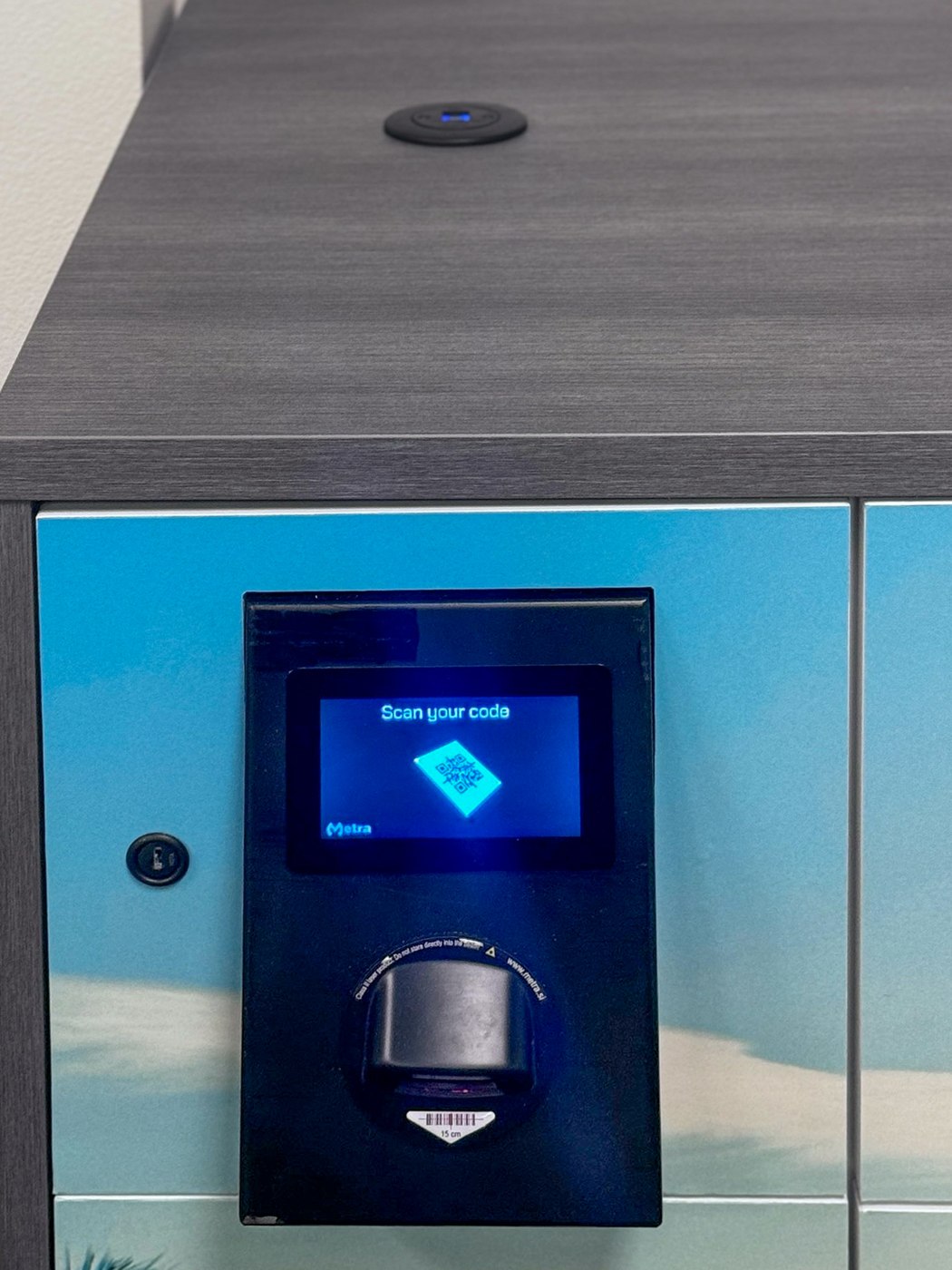
| Access Interface | Metra Mini touchscreen + HID reader, angled metal casing, per bank |
| Access Modes | Individual student (digital badge / phone barcode) + Faculty mass-release (badge swipe opens all doors) |
| Power Integration | OE Electrics PIP outlets, AC + USB-C fast charging, panel-routed |
| Wiring | Lock wiring routed through left-side panels to back |
| Surface Finish | Laminate construction with custom campus-photography vinyl wrap |
| Bases | Separate bases, per bank |
| MDM Solution | Apps pushed to headsets while locked; no device removal required for setup |
| Badge System | Students use phone barcode reader; individual locker assignment with time-stamp logging |
| Faculty Mode | Single badge swipe opens all doors in the bank simultaneously |
| Access Hours | 24/7; student self-access outside class sessions fully supported |
| Device Compatibility | Configured for VR/XR headsets; infrastructure supports future laptop, iPad, Surface Pro use |
The OE Electrics PIP outlet mounts flush into the locker panel via a standard 2.34" grommet. It provides AC power and USB-A/C fast charging. VR headsets charge between sessions without leaving the locker. The PIP was a late-stage addition to the Redlands spec and proved critical to the MDM workflow.
The Metra Mini touchscreen and HID reader sits in a custom angled metal casing mounted to the locker bank face. The angled housing presents the interface naturally for standing users. One reader per bank handles all access events: individual student, group, or faculty mass-release.
Before each class session, a faculty member books the XR Lab space. The IT team pushes the relevant VR applications to all headsets through the MDM solution while the devices remain inside the lockers. Students arrive, faculty presents their badge, all doors open. Students grab a headset and go immediately into the experience. No setup. No cables. No wait.
Lock wiring routes through the left-side panels to the back of the bank. No exposed conduit, no surface-mounted cable runs. The finished locker bank presents a clean exterior consistent with the renovated library environment.
Locker height, reach range, and locker bank positioning were all reviewed against ADA requirements during the design phase. The 41" bank height and accessible floor placement ensure students with disabilities have equal access to the system without special accommodation requests.
Day-to-Day Operation
Two workflows. One for the classroom. One for any student, any time.
Faculty books the XR Lab through the room scheduling system. IT pushes the session's VR apps to all headsets via MDM while devices charge in the lockers. Faculty arrives, presents badge to the Metra HID reader. Every locker door in the bank opens simultaneously. Students grab a headset and go. When done, headsets go back in, doors close, charging resumes.
A student walks into the XR Lab at any hour: 9pm, 7am, spring break. They present the phone barcode at the Metra reader and their assigned locker unlocks. They take the headset, use it alone or in a group, and return it when done. The system logs the access with a timestamp. No staff. No forms. No email trail.
After class sessions, a student assistant cleans the headsets and returns them to their lockers. Devices are back on charge within minutes. The MDM pre-loads the next session's apps before anyone returns. The locker bank handles the rest: power, security, readiness.
The Space
The XR Lab renovation wasn't a furniture installation. The room had been a sealed computer lab behind a solid wall in the bottom floor of Armacost Library. Students walked past it every day without knowing it was there.
The university demolished the wall, replaced it with glass windows, and positioned the two laminate locker banks so they're visible from the main corridor. Students walking by see the wrapped lockers, the ambient Hue lighting, and students using headsets. They stop. The space pulls its own foot traffic.
The adjacent collaborative lab was also opened up, with the shared wall replaced by double doors, allowing sessions to expand to 40–50 students by flowing into the flex conference space next door.
The result is a working lab, a campus showcase, and a tour destination. All of it runs on two banks of laminate lockers.
What Happened
Device checkout no longer requires any staff involvement. The 2–3 person process of moving headsets to classrooms multiple times per week is gone. IT bandwidth was reclaimed for higher-value work.
Students access VR headsets independently at any hour for self-directed exploration, and the same infrastructure supports full class sessions of 40–50 students. One system serves both use cases.
The laminate lockers, visible through the new glass wall and wrapped in campus photography, became a stop on prospective student tours. When students see them, the reaction is consistent: "that is cool."
The XR Lab was featured in a LinkedIn post by the university's communications team. Survey results from students and faculty exceeded expectations. Plans are already underway to expand the model to the campus maker space.
The laminate locker infrastructure has proven adaptable enough that the university is evaluating a third bank for additional device types, and reviewing the maker space as a candidate for a parallel installation.
"I'd say innovative — one of the most innovative products we've been able to implement. The convenience, the enhanced ability for engagement and immersion, the safety, the secureness of the new storage, the ability to have students collaborate in real time."
— Instructional Technology Leader, University of Redlands
"The pivotal point was being able to bridge the gap between formal and informal learning — where students can now just walk in at any point during the day."
— Instructional Technology Leader, University of Redlands
"That was one of the main features that really catapulted our decision making — the other vendors were like, you can go with a slate backdrop, or you can go with the wood grain. I was like, no. That is not happening."
— Instructional Technology Leader, University of Redlands
Frequently Asked Questions
Can laminate lockers be used for VR headset and technology storage in university labs?
Yes. Laminate locker panels are designed to route electrical wiring cleanly through the cabinet, so power outlets and USB charging ports can be built in. Devices charge inside the locker between uses. Metra smart lock systems with HID readers support 24/7 student self-access via mobile credential or digital badge. The University of Redlands deployed two banks of Hamilton laminate lockers in their library XR Lab to store and manage VR headsets, with an MDM solution that pushes app configurations to headsets while they remain in the lockers. No device removal required for setup.
Can laminate lockers have custom graphics or vinyl wraps applied to the doors?
Yes. Smooth laminate door surfaces accept full-coverage vinyl graphic wraps, including high-resolution photography, brand imagery, and custom patterns. At the University of Redlands, locker doors were wrapped with landmark campus photography selected from the university's digital asset library and approved by the university president. Custom graphic wrap capability was a deciding factor in Hamilton's selection. Competing vendors offered only slate or wood-grain finishes.
How does MDM integration work with smart laminate lockers for VR headsets?
At the University of Redlands, a Mobile Device Management solution pushes app configurations to VR headsets while they remain inside the laminate lockers. When a faculty member books the XR Lab, the relevant VR applications are pushed to all headsets before the session begins. No manual setup required. Students retrieve headsets and go directly into their experience. Hamilton manufactures the laminate locker cabinets; MDM and smart lock systems are selected and managed by the institution.
What makes laminate lockers better than metal for a university design environment?
Metal lockers read as utilitarian regardless of powder coat. Laminate construction enables woodgrain, solid, patterned, and custom-printed surface finishes, including full vinyl wraps with campus photography. Laminate integrates more cleanly with casework-style interiors, and smooth door surfaces support touch-screen hardware like the Metra Mini display without visual conflict. For spaces like the University of Redlands XR Lab, designed to attract students and serve as a campus showcase, laminate was the only finish category that could meet both the functional and aesthetic brief.
How does faculty badge-release work with smart laminate lockers?
Hamilton laminate lockers configured with Metra smart lock systems can be set to release all doors in a bank simultaneously when a faculty credential is presented to the HID reader. At the University of Redlands, faculty book the XR Lab, arrive, present their badge to the Metra reader, and all locker doors open at once. Students access headsets immediately with no individual authentication steps. Individual student access via phone barcode is also supported for self-directed use at any hour.
The full Hamilton laminate locker offering: tiers, configurations, widths, finishes, and smart lock options for any environment.
See Laminate Lockers →288 smart lockers at Fordham University. 84% used same-day. How electronic access reshapes campus locker policy.
See Fordham Case Study →Self-serve parcel pickup for student mail centers, residence halls, and campus service buildings.
See Parcel Lockers →Wilsonart solid and woodgrain finishes, Formica patterns, Fenix NTM matte, and custom vinyl wrap capability for branded installations.
Browse Finish Options →Tell us about your lab environment, your device types, and your access requirements — and we'll design a laminate locker system that runs it.