Arraya is the result of a design collaboration between HAMILTON and Gensler — the world's largest architecture and design firm. This is the story of how a locker system gets reimagined from first principles.
The Starting Point
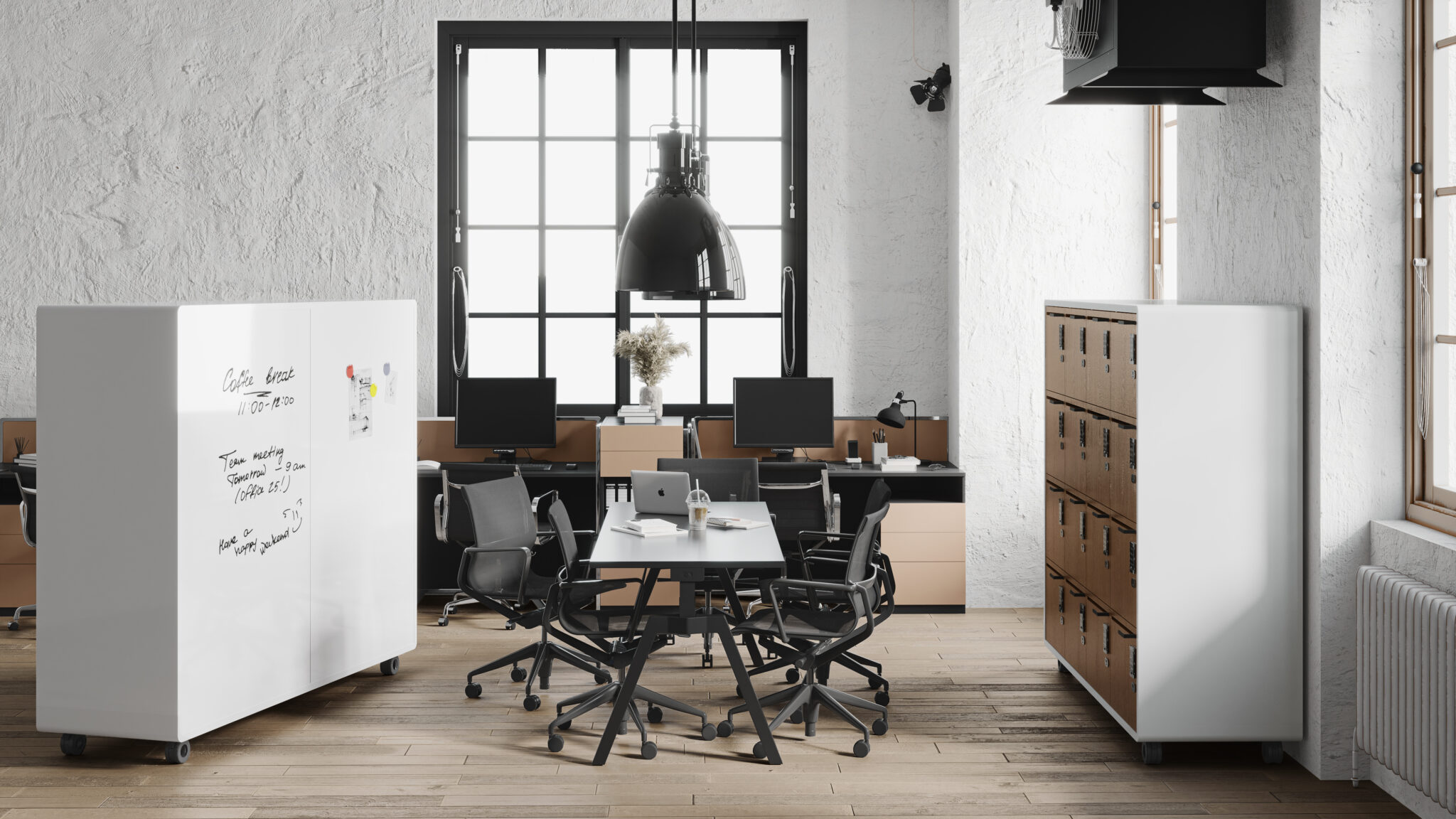
The modern workplace has been reimagined from the ground up. Ceilings are exposed. Floors are open. The furniture is architect-specified, tactile, and intentional. Workstations are collaborative. The materials palette is curated. Every surface signals the values of the organization.
And then there are the lockers. In most cases, they're the same product they've always been: metal boxes or basic laminate casework, designed for function and nothing else, dropped into a corridor or alcove and largely ignored by the design team.
The hybrid workplace has made that impossible to accept. In a hoteling office, lockers are out in the open plan. They're what employees interact with the moment they arrive and the last thing they touch when they leave. They are front-of-house, whether the design team planned for them to be or not.
The Collaboration
HAMILTON brought Gensler into the project not as a branding exercise but as a genuine design development partnership. The brief was deliberately open: if you were designing a locker system specifically for the modern open-plan workplace, what would you do differently?
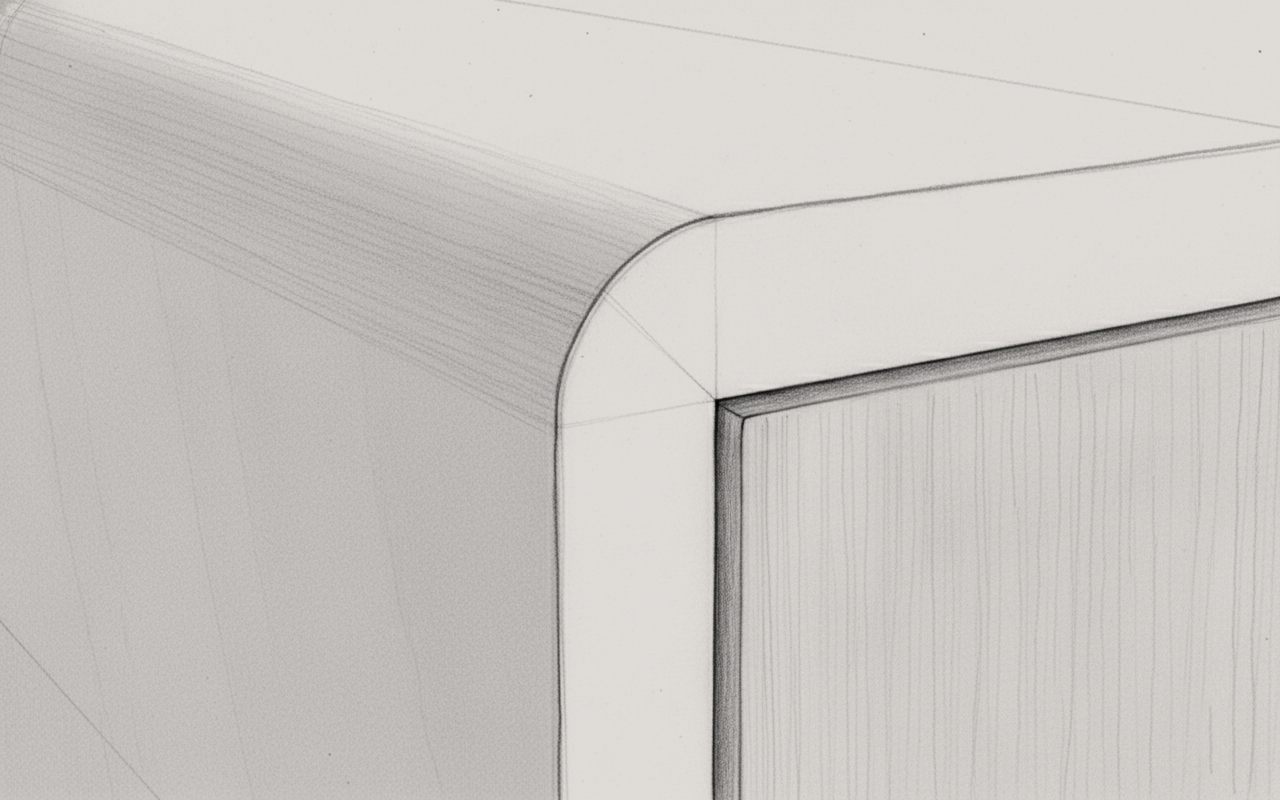
Gensler's answer was clear. Every detail that made lockers look institutional needed to be reconsidered. The hard corners. The industrial proportions. The disconnect between the locker bank and the rest of the architectural language. The total absence of material sophistication.
What emerged was a design language: softer geometry with purposeful radius corners, a modular kit-of-parts logic that reads as furniture rather than casework, a curated finish palette anchored in FENIX® NTM ultra-matte surfaces and Wilsonart woodgrains, and a base system that lifts the locker bank off the floor — as furniture, not fixtures, would be.
The Partnership
Arraya works because the collaboration was genuine — each partner brought something the other couldn't replicate.
Gensler Contributed
HAMILTON Contributed
The Design Language
Every radius, proportion, and finish has a purpose. Nothing is default. Nothing is carried forward from convention without deliberate re-evaluation.
Arraya is specified and experienced as furniture — it enters a space through the furniture plan, not the equipment schedule. This changes how it's designed, detailed, and perceived.
FENIX® NTM surfaces were chosen because they feel different from standard laminate — ultra-matte, soft to the touch, anti-fingerprint. Materials that reward proximity.
Any configuration of Arraya — from a 2-wide single-high unit to a 5-wide full-height wall — maintains the same visual rhythm and proportional logic. The system is infinitely flexible but never incoherent.
From Sketch to Product
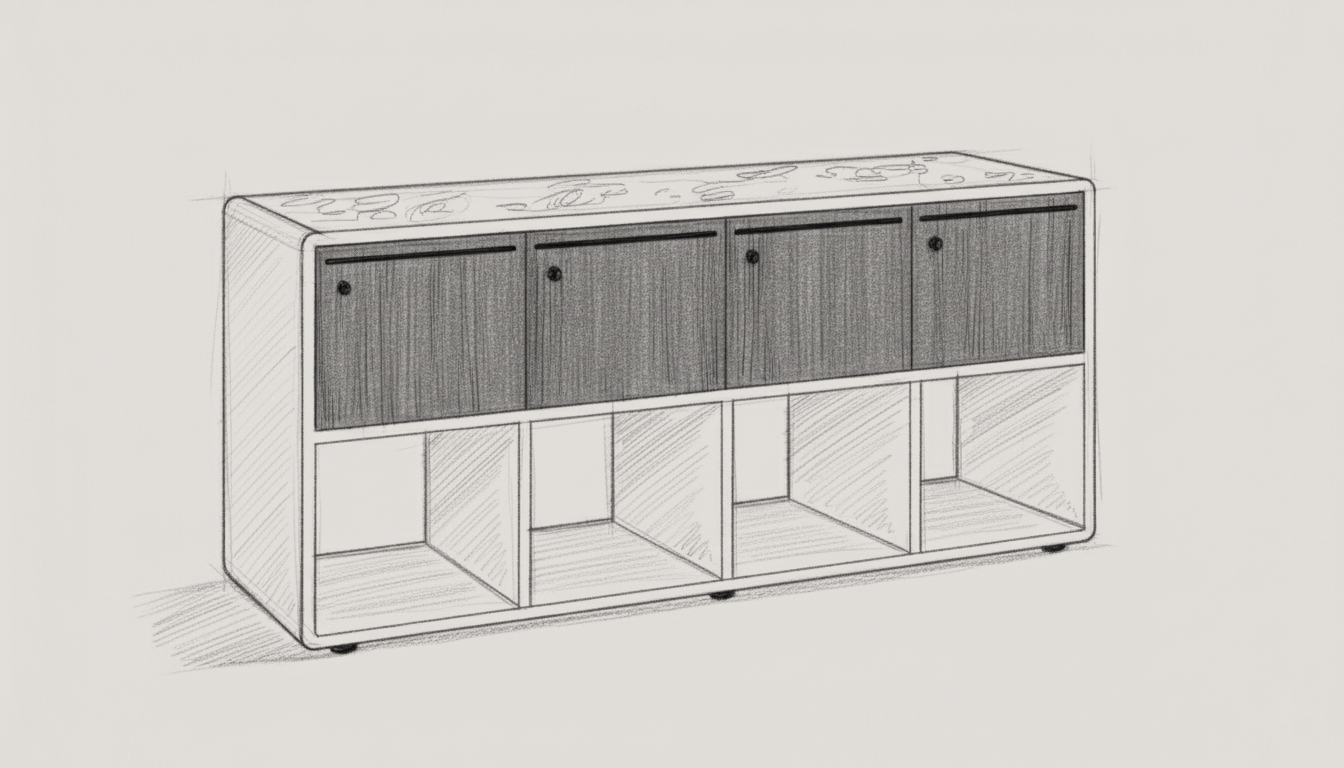
The leg base was one of the design decisions that defined Arraya's character. Traditional locker systems sit directly on the floor or on a plinth — both ground the system visually, both communicate weight and permanence.
Gensler's approach was to offer legs as a base option — solid maple in ebony or natural finish. The effect is immediate: the locker bank reads as furniture. The floor plane continues beneath it. Light passes under it. The system looks like it belongs in the same vocabulary as the conference table and the seating.
Beyond aesthetics, the leg base solves a functional problem: it raises the lowest locker opening above the 15" AFF floor required by ADA §308.2, making ADA reach range compliance straightforward in configurations that would otherwise require careful engineering.
"Arraya is the result of a design collaboration between Hamilton and Gensler — a locker system elevated to the level of fine furniture."
The Result
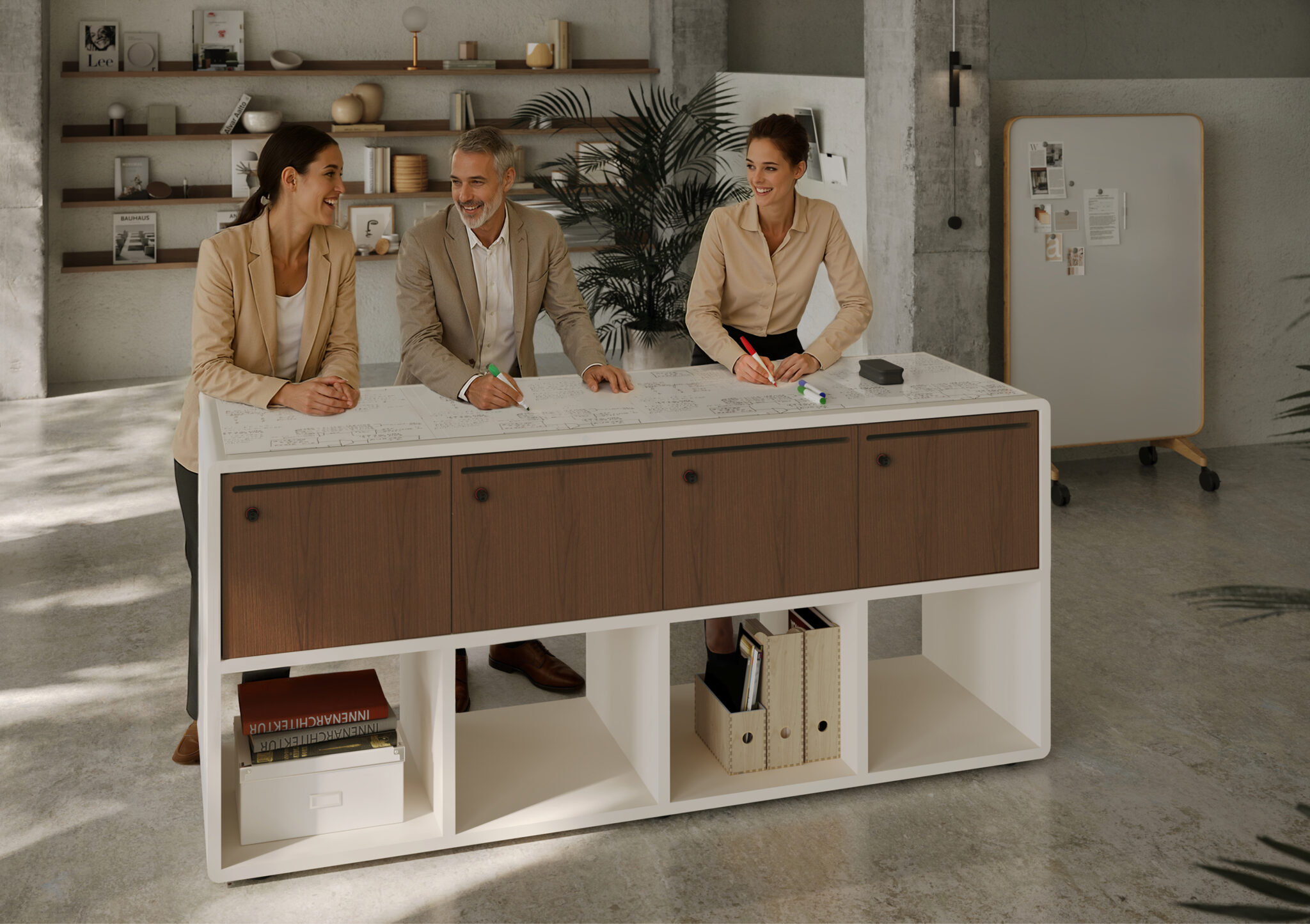
Arraya doesn't compete with standard locker systems. It occupies a different category entirely: furniture-grade storage, specified by the design team, intentional in every detail, and manufactured to commercial performance standards by an American maker with a lifetime guarantee.
For architects and interior designers, it means a locker specification that doesn't require compromise. For facility managers, it means a system that performs at commercial scale and holds up over time. For the employees who use it, it means storage that feels like it was designed with them in mind — not an afterthought assigned to the back of the floor plan.
For HAMILTON, it represents a natural extension of four decades of commercial casework manufacturing — finally expressed in a product designed from the start to live proudly in the open plan.
Frequently Asked Questions
Why did HAMILTON partner with Gensler to design lockers?
HAMILTON has manufactured commercial locker systems for decades and has direct insight into the gap between what workplace designers want from storage furniture and what the market provides. Gensler brings the most rigorous design process in commercial architecture — and their deep experience with hybrid workplace design made them the right partner to define what a locker system should look and function like in a modern open-plan office. The collaboration was a first-principles product development effort: starting from what workplace designers actually need and engineering backward to a manufactured product.
What did Gensler contribute to the design of Arraya?
Gensler contributed architectural design intelligence: the proportion system, the radius geometry on corners and edges, the finish palette curation (FENIX® NTM ultra-matte colors and Wilsonart woodgrain selection), the spatial intent of the kit-of-parts system, and the design language that makes Arraya legible as furniture rather than institutional equipment. Gensler's involvement means that every visible element of Arraya was reviewed through a design lens — not just engineered for function.
What does Gensler's involvement mean for specifiers?
For interior designers and architects, Gensler's co-design involvement is a strong signal of design credibility. Gensler is the world's largest architecture and design firm, with deep experience in workplace interiors. When a product carries Gensler's design involvement, the proportions, finishes, and spatial logic have been validated by the same design standard that defines premium workplace interiors. Specifiers can reference Arraya in the same conversation as high-end furniture without qualification.
Arraya is available for specification on commercial projects nationwide. Contact HAMILTON to request spec resources, finish samples, and project support.