Specification Resources
CAD drawings, finish samples, an AIA HSW CEU course, and direct project support from HAMILTON's team. What you need to specify Arraya from SD through CDs.
What's Available
Available at no cost to qualified design professionals.
Full kit-of-parts documentation — base configurations, locker heights and widths, door layouts, interior options, and top selections with dimensions.
Request Catalog →Elevation and plan drawings for horizontal and vertical configurations across all four base types. Dimensioned for design development and construction documents.
Request CAD Files →Physical FENIX® NTM and Wilsonart woodgrain finish chips for client presentations and material boards. FilzFelt back panel color samples also available.
Request Samples →A formal AIA-approved course (1 LU, 1 HSW) on designing accessible shared storage systems — ADA standards, reach range compliance, universal design, and material strategy — using Arraya as the reference product.
Learn About the Course →Direct specification support from HAMILTON's team. Bring your floor plan and design intent — we'll recommend configurations and provide preliminary pricing.
Schedule a Consultation →Project photography and case studies from HAMILTON's portfolio — financial services, professional services, and healthcare environments.
Request References →Continuing Education
An AIA-approved CEU on accessible shared storage design, using Arraya as the reference product. Covers ADA compliance from programming through construction documents. 1 LU, 1 HSW.
Spec Reference
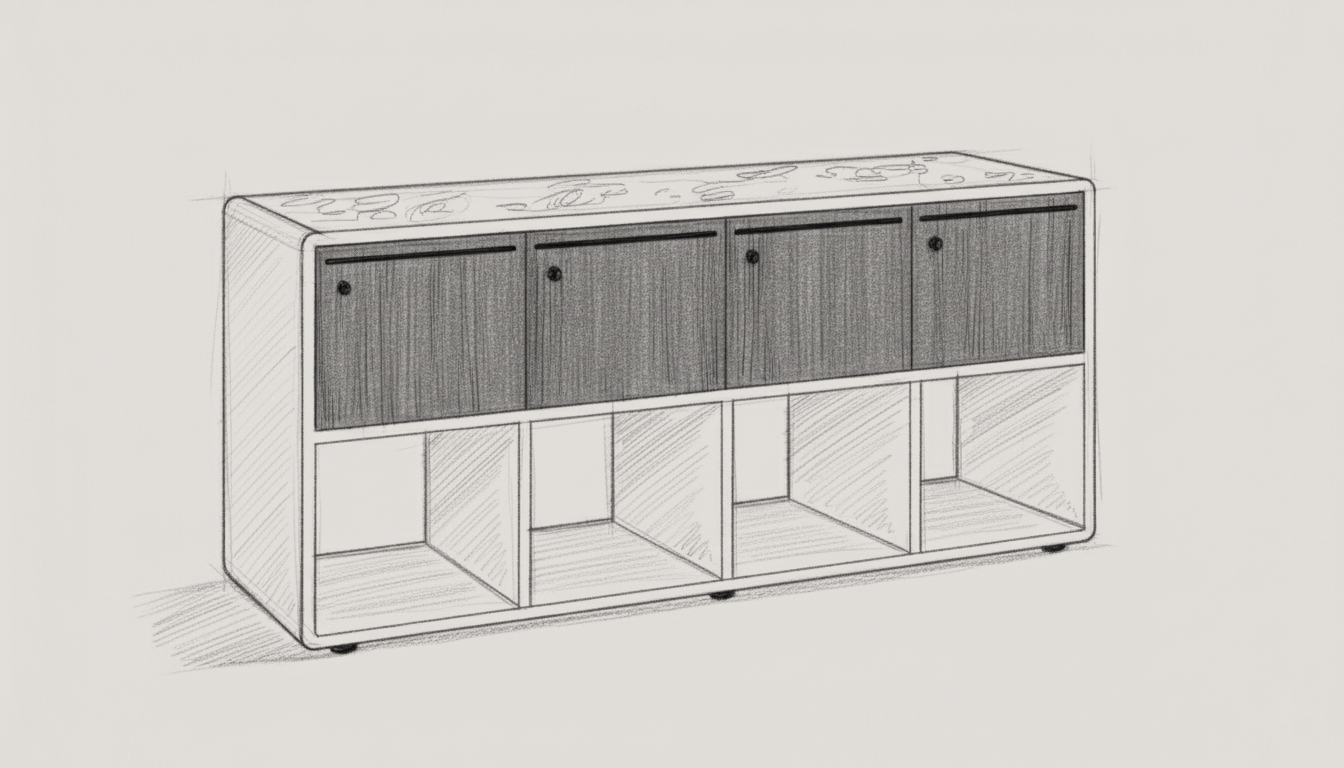
Arraya is specified in five steps, each corresponding to one of the system's zones. Every decision is independent — changing the base doesn't change the lockers; changing the top doesn't affect the doors.
| Step | Decision | Options | Notes |
|---|---|---|---|
| 1 — Base Lower Zone | Base type & width | Plinth · Mobile (casters) · Leg (maple, ebony or natural) · Storage base · 2–5 wide | Base height controls ADA reach range. Leg and storage bases raise the bank 6"–9" off floor. |
| 2 — Lockers Middle Zone | Orientation, height & width | Horizontal (wider) or Vertical (taller) · 1, 2, 3, or 4 high · 2, 3, 4, or 5 wide | Overall height range: 15" (1H horizontal) to 75" (4H vertical). Horizontal 2H on leg base is the most ADA-accessible configuration. |
| 3 — Doors Middle Zone | Door layout, swing, hardware | Multiple door size/layout options per locker height · Left or right hinge · Pull style (black/silver/white/graphite or no pull) · Tag style | Accessible openings require ADA-compliant lock. Confirm door swing direction — cannot swing into 30"×48" clear floor space at accessible openings. |
| 4 — Interior Middle Zone | Shelf, hook, power | Adjustable shelf (included in 2H–4H openings) · Coat hook · In-locker power (USB-A, USB-C + NEMA in back panel) | Power option requires electrical rough-in. Coordinate with MEP during schematic design. |
| 5 — Top & Finish Upper Zone | Top type & finish palette | Common top (back-painted glass: white matte/glossy, black matte/glossy) · Planter box (white/grey/black, holds 6" grow pots) · Door: FENIX® 16 colors or Wilsonart 8 woodgrains · Case: coordinating solid colors | Mix-and-match door finishes supported within a single bank. Back panels: FilzFelt, corkboard, or markerboard (cases only). |
Design Detail
Every proportion, radius, and pull in Arraya was developed with Gensler and validated through HAMILTON's manufacturing process.
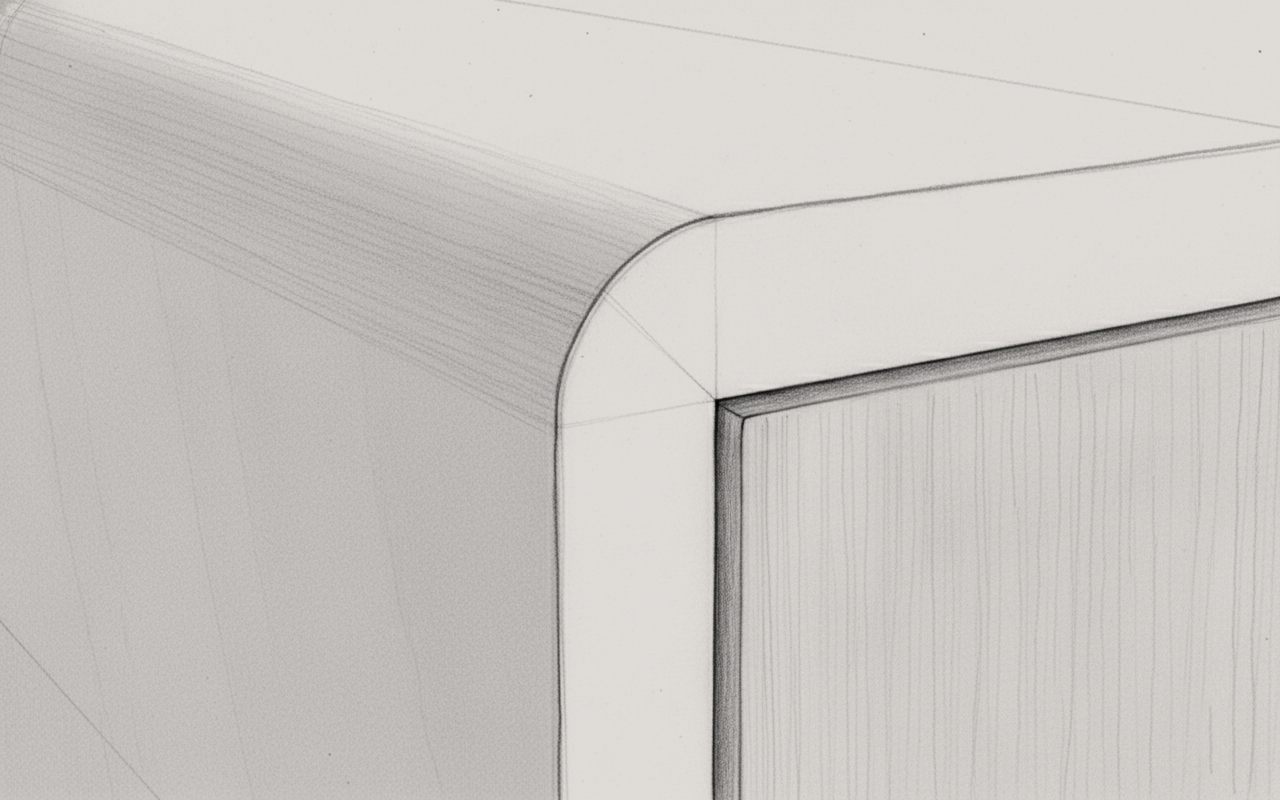
Radius corner detail — developed in collaboration with Gensler to soften the typical hard edge of locker construction
Leg base configuration — solid maple legs (ebony or natural) elevate the locker bank and open the floor plane beneath
20.5" deep. All horizontal configurations. Internal clear depth: 18.5625". Accommodates standard laptop bags, backpacks, and day-use items.
18.75" per column. 2-wide bank: ~39.7" · 3-wide: ~58.5" · 4-wide: ~77.25" · 5-wide: ~96". Allows accurate floor planning from SD onward.
15" per column. More compact footprint for vertical orientation. Internal clear width: 13". Optimized for narrower items and personal belongings.
For 2H horizontal on leg base: lowest opening typically at ~22"–24" AFF, top opening at ~37"–39" AFF — solidly within 15"–48" ADA zone. Base type controls all AFF measurements.
Specification FAQ
What specification resources does HAMILTON provide for Arraya?
HAMILTON provides: a full product guide with kit-of-parts configuration logic and dimensions, CAD drawings for horizontal and vertical configurations across all base types, FENIX® and Wilsonart finish samples, a formal AIA continuing education course (1 LU, 1 HSW) on accessible locker design, and direct project consultation. All resources are available at no cost for qualified design professionals — contact HAMILTON to request them.
How do I specify the correct Arraya configuration for ADA compliance?
ADA compliance for locker systems requires at least 5% of each locker type be accessible, all operable parts within 15"–48" AFF, and a 30"×48" clear floor space at each accessible opening. Arraya's base system controls where the lowest opening falls relative to the floor. A leg or storage base (6"–9" raised) typically brings the lowest row above 15" AFF while keeping the top row within 48" on a 2H or 3H unit. HAMILTON's AIA HSW course covers this with Arraya configuration examples.
Can Arraya doors be mix-and-matched with different finishes?
Yes. Arraya supports mix-and-match door and case finishes. Locker doors can be specified in any combination of FENIX® NTM solid colors and Wilsonart woodgrain options within the same bank. The case and base are typically specified in a coordinating solid color. This allows designers to create visual rhythm, highlight specific sections, or coordinate with the broader material palette of the space. Finish chips are available from HAMILTON on request.
What lock options are available, and who selects them?
Arraya locker cabinets are lock-agnostic — HAMILTON engineers the cabinet to receive the electronic or mechanical access hardware selected by the owner, facilities team, or their locker distributor. Options Arraya is engineered to accommodate include OCS smart locks, Combi Pro mechanical combination, OTS batteryless RFID, and Vecos networked smart locks. Lockers can also be specified without a lock for open storage applications. All accessible opening locks must meet ADA §309.4 operable parts requirements — confirm compliance at specification.
Request spec resources, book the AIA HSW course, or get configuration support for a specific project.