Design Guide

Custom Office Locker Design:
Types, Materials & Technology

Lockers are no longer just storage — they're architectural elements that shape how a space feels, how a brand is expressed, and how employees experience the office every day. This is how HAMILTON designs them.

Lockers That Do More Than Store

The traditional locker was bulky, functional, and deliberately forgettable. A beige box against a beige wall. In the modern workplace, that's not good enough — and it's not necessary.

HAMILTON designs lockers that guide office layout, divide open-plan spaces, showcase brand identity, integrate biophilic elements, and create genuine moments of delight for the people who use them every day.

The right locker design starts with understanding what will go inside, who will use it, how often, and what role it plays in the overall space. Everything else — size, material, configuration, technology — flows from there.
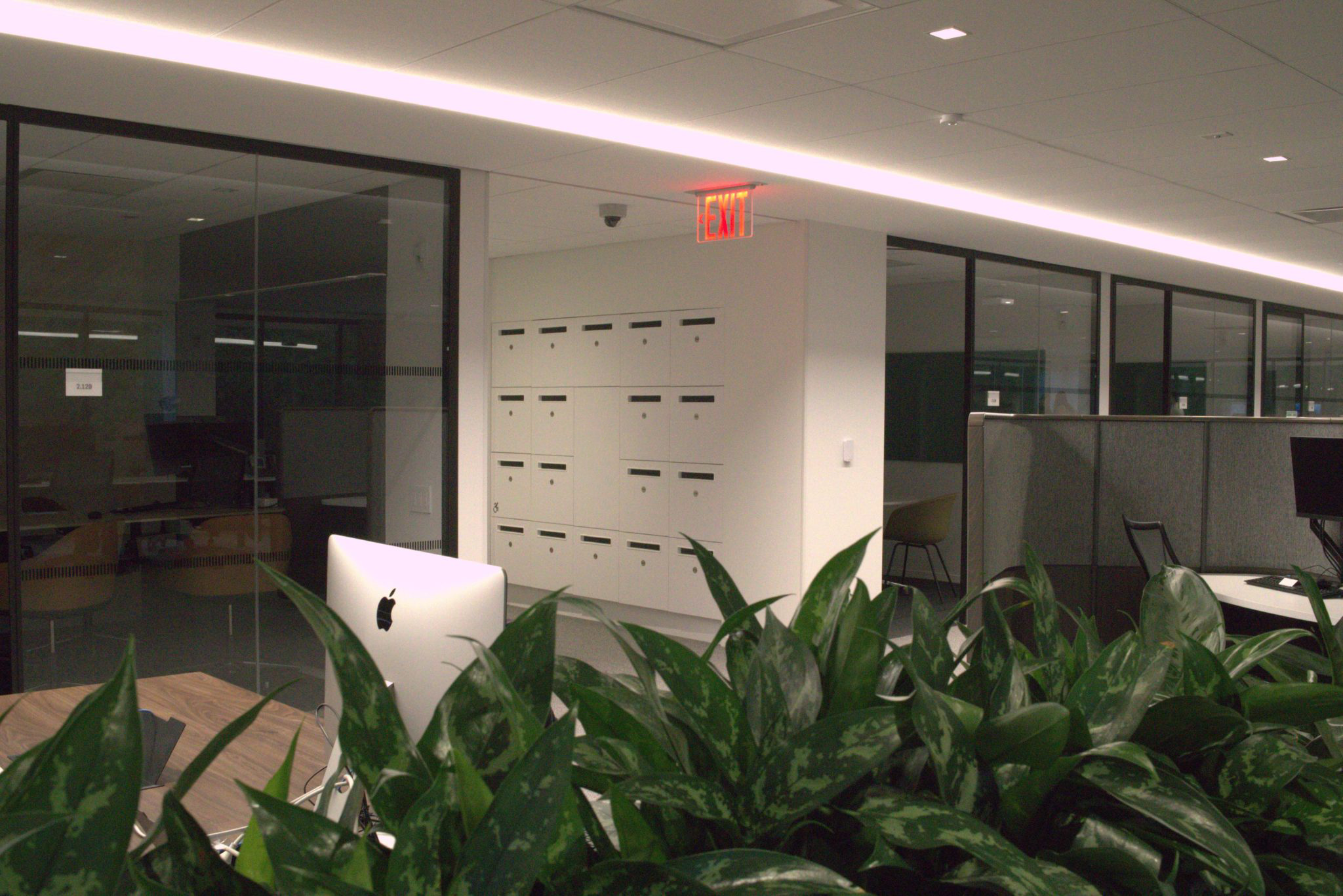
Custom office locker design by HAMILTON Casework Solutions
Configuration Type 01

Zone Divider Lockers

Zone divider lockers solve two problems at once: they give employees secure personal storage, and they create spatial definition in open-plan offices — without the cost or rigidity of full walls.

By positioning locker banks perpendicular to the floor plan, designers can carve an open floor into focused work zones, collaboration areas, and quiet spaces — all while maintaining visual connection and natural light flow through open cubby sections.
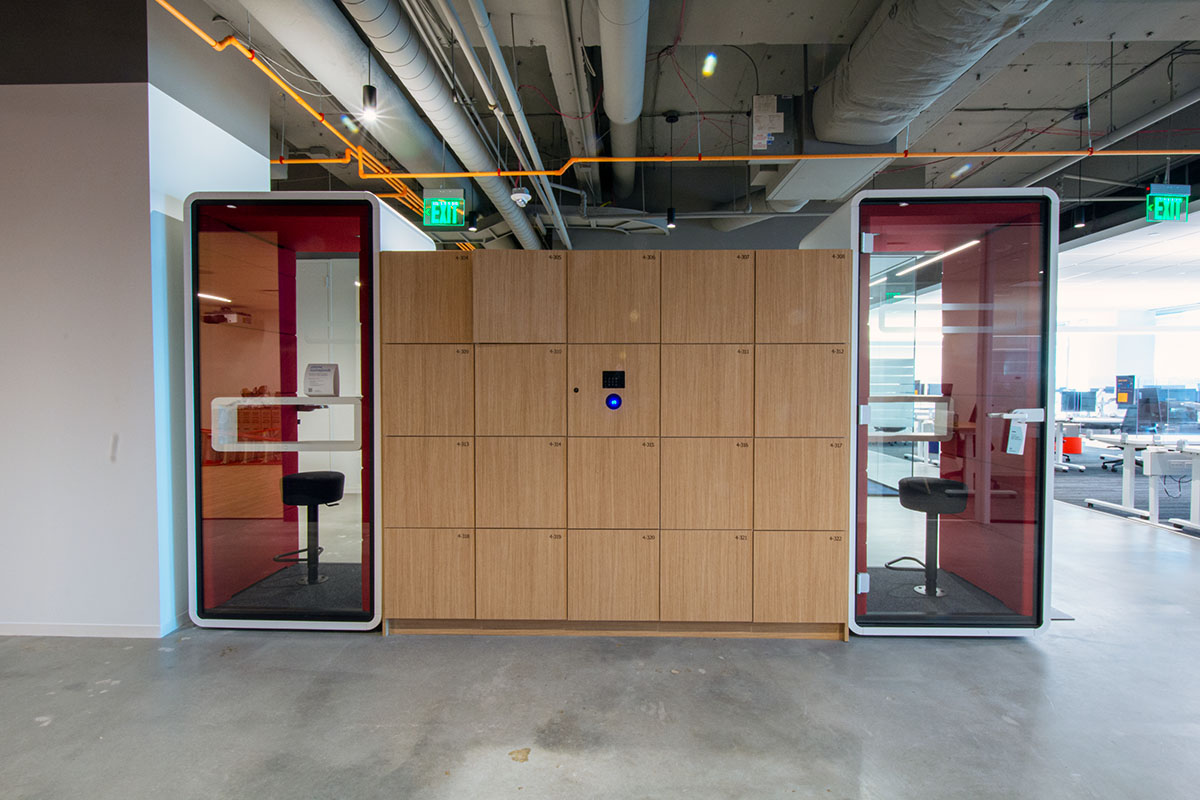
  • Open cubby sections allow light and sightlines to pass through
  • Integrated phone booths and focus pods for private calls
  • Writable laminate or painted-glass surfaces for team collaboration
  • Any height — from half-wall to full floor-to-ceiling configurations
  • Power and data integration available throughout the bank
  • Modular design allows future reconfiguration as teams shift
Zone divider locker wall in open office by HAMILTON Casework Solutions
Configuration Type 02

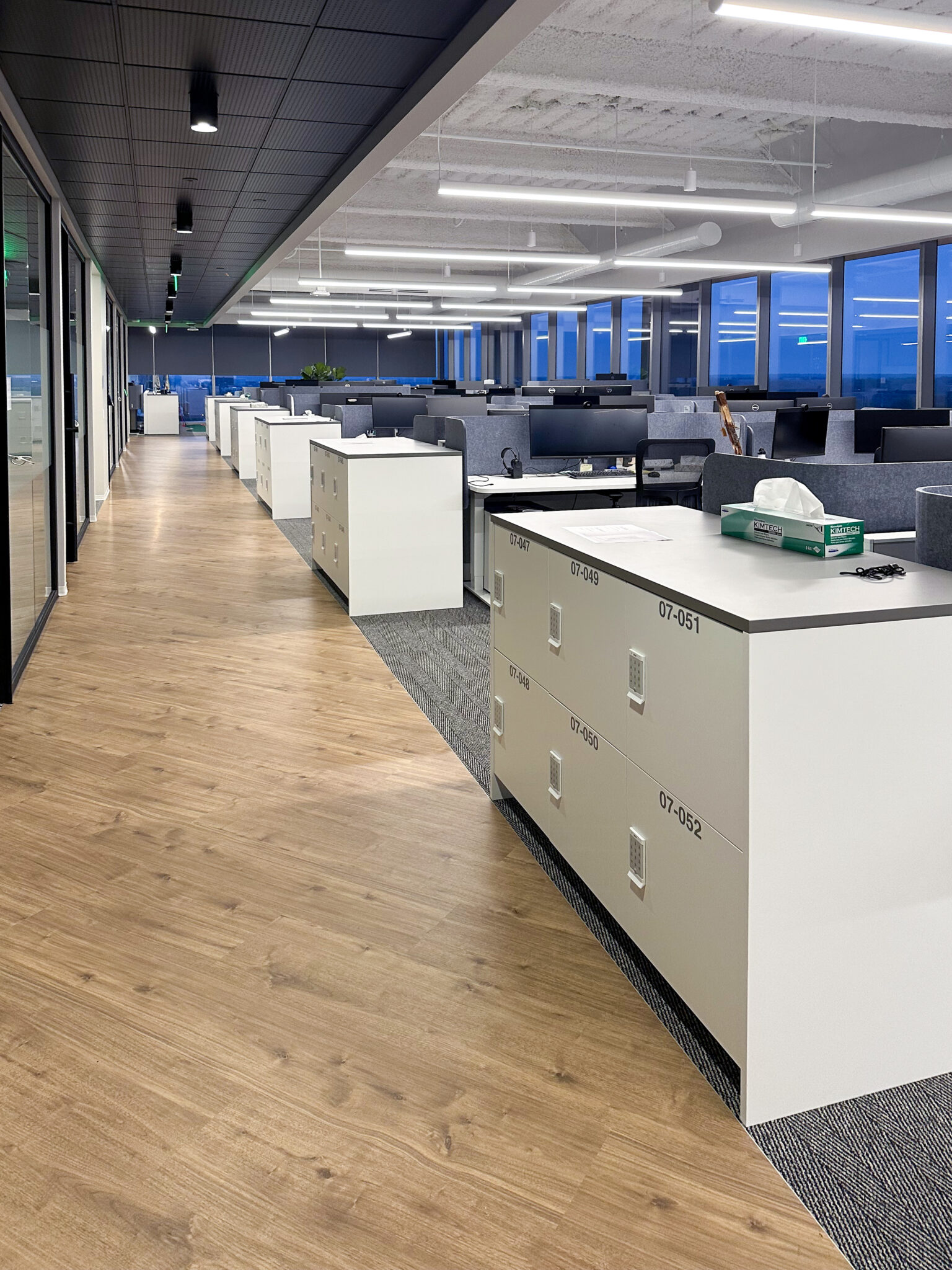
End Cap Lockers

End cap lockers are installed at the terminus of a workstation row — transforming an awkward end-of-aisle space into a storage and organizational hub. They're one of the most efficient configurations in a dense open-plan office because they add significant storage capacity without consuming any additional floor area.

In the hybrid office, end caps are particularly effective at giving each workstation cluster its own storage identity — employees in the vicinity know which lockers are "theirs," even in a hoteling environment.

  • Integrated mail slots with name tag holders for quick item distribution
  • Hidden recycle and trash bin compartments in the base
  • Drawer bases replace low-level lockers — eliminating awkward stooping
  • Raised base options lift the entire unit off the floor for easier cleaning
  • Countertop extension options for informal perch seating
  • Match or contrast the adjacent workstation finish
End cap locker installation by HAMILTON Casework Solutions
Configuration Type 03

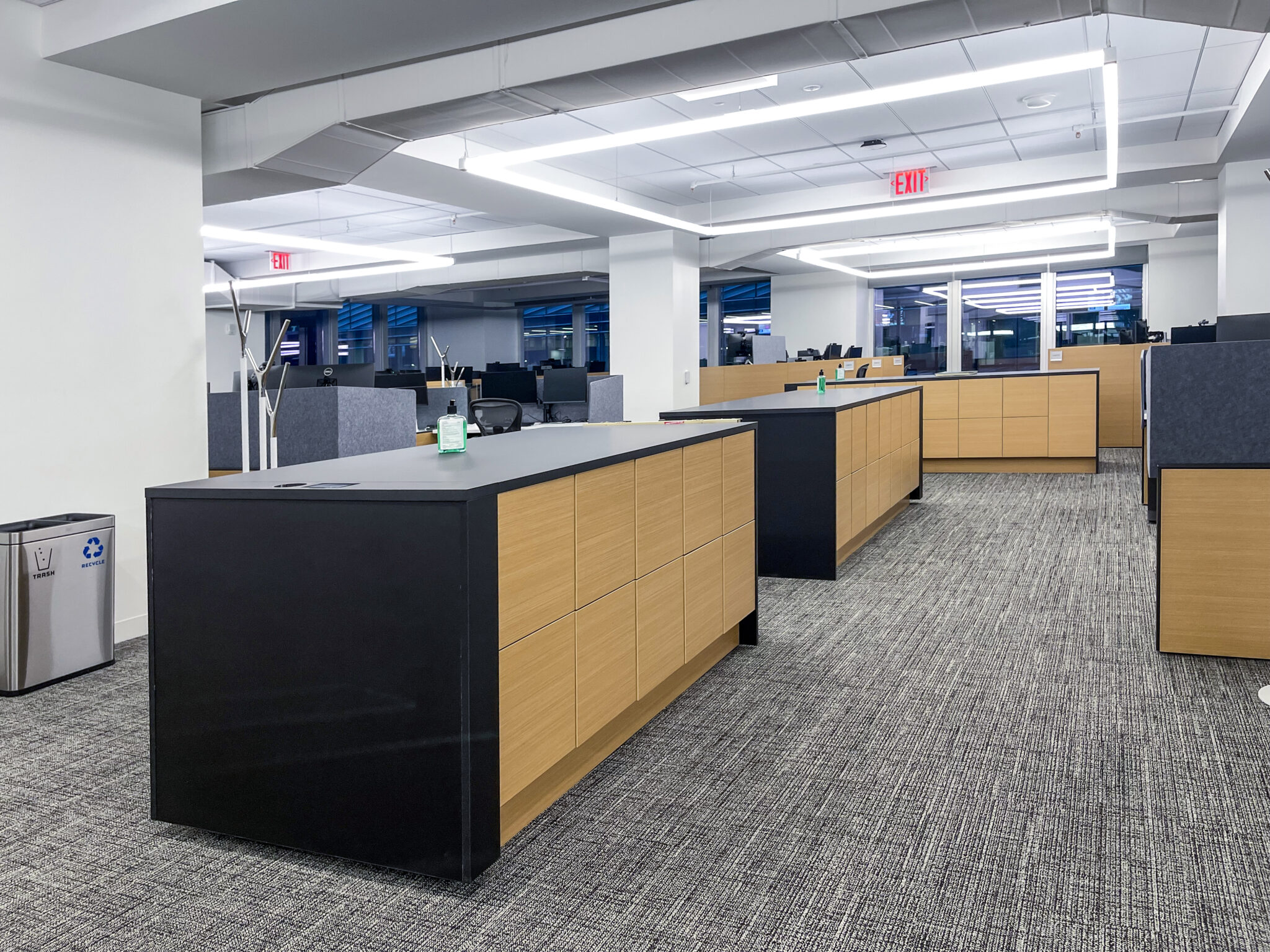
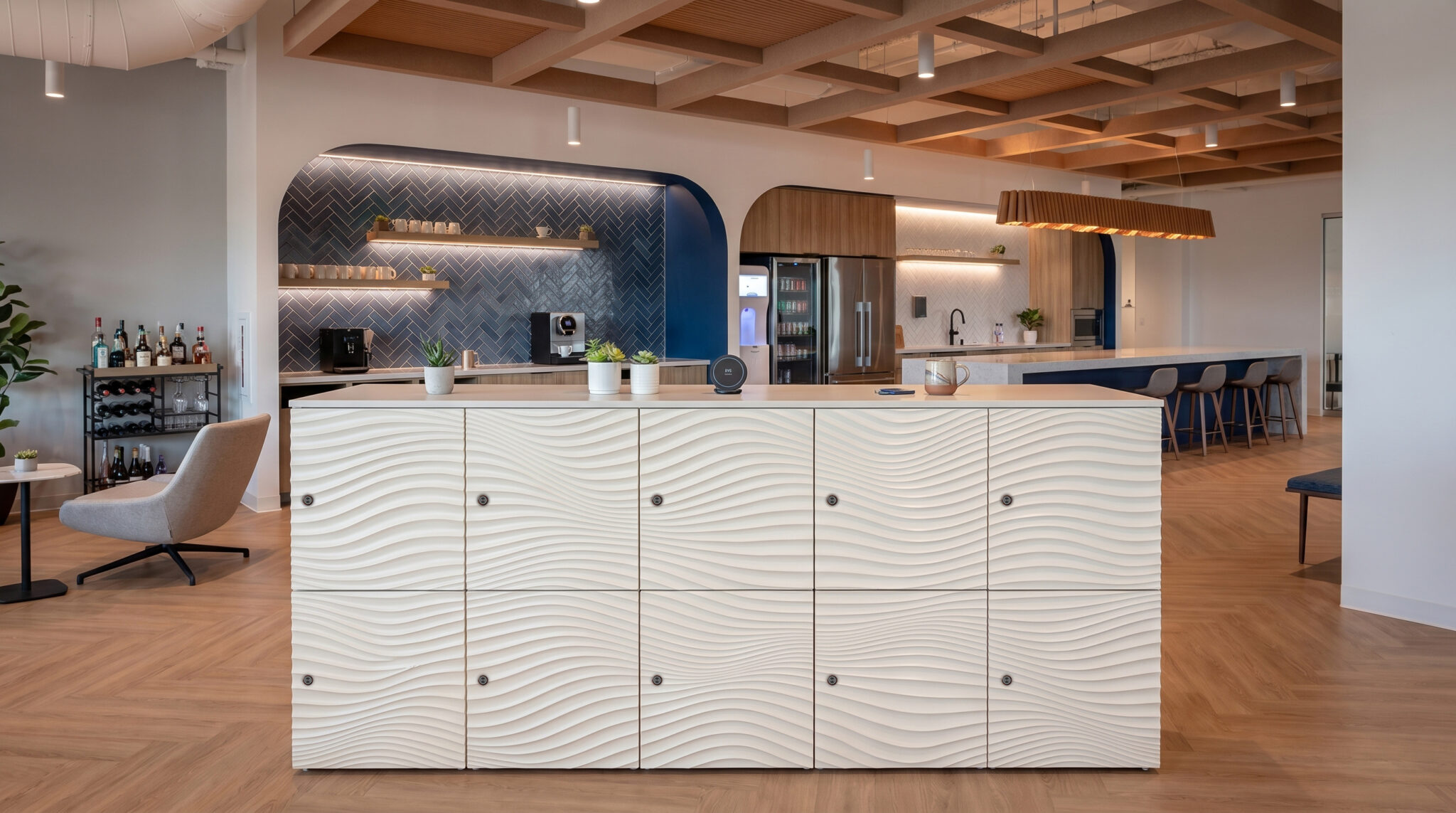
Island Lockers

Island lockers are freestanding units positioned in the center of open office space — functioning as a destination rather than a boundary. They create natural gathering points and can double as collaboration surfaces, making them ideal for neighborhoods and team areas in activity-based working environments.

The countertop becomes a working surface, a coffee bar, a whiteboard, or a display platform — depending on what the space needs. The locker compartments below handle storage. The result is a multifunctional element that earns its square footage.

  • Solid surface, quartz, or writable laminate countertop options
  • Painted-glass surfaces for ideation and brainstorming
  • Integrated seating with leg cutouts at the base
  • Recycle and trash bin integration keeps the floor clear
  • 360° finish design — every face is visible, every face is designed
  • Power access built into the countertop for device charging
Island locker unit in open office environment by HAMILTON Casework Solutions
Configuration Type 04

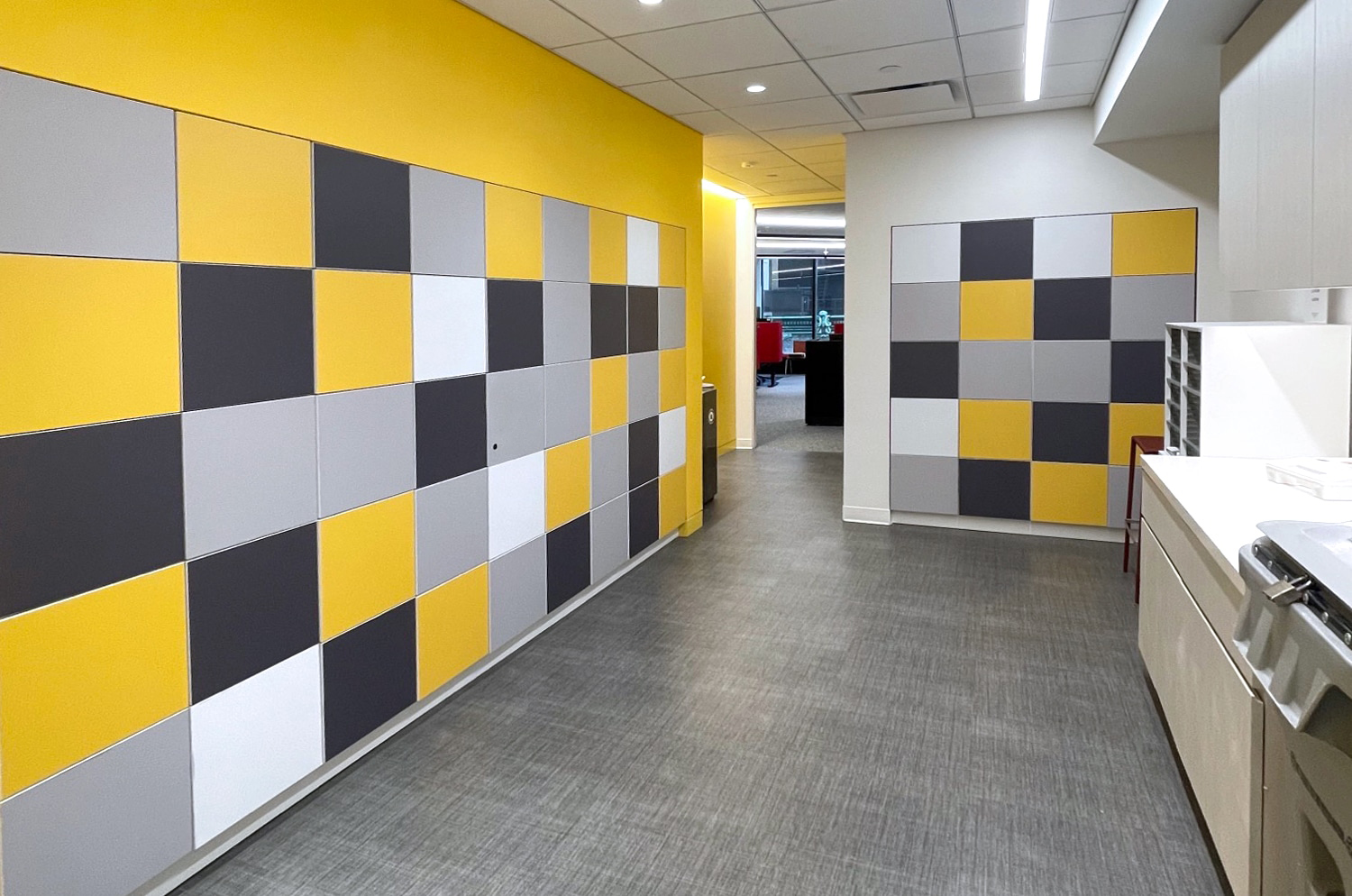
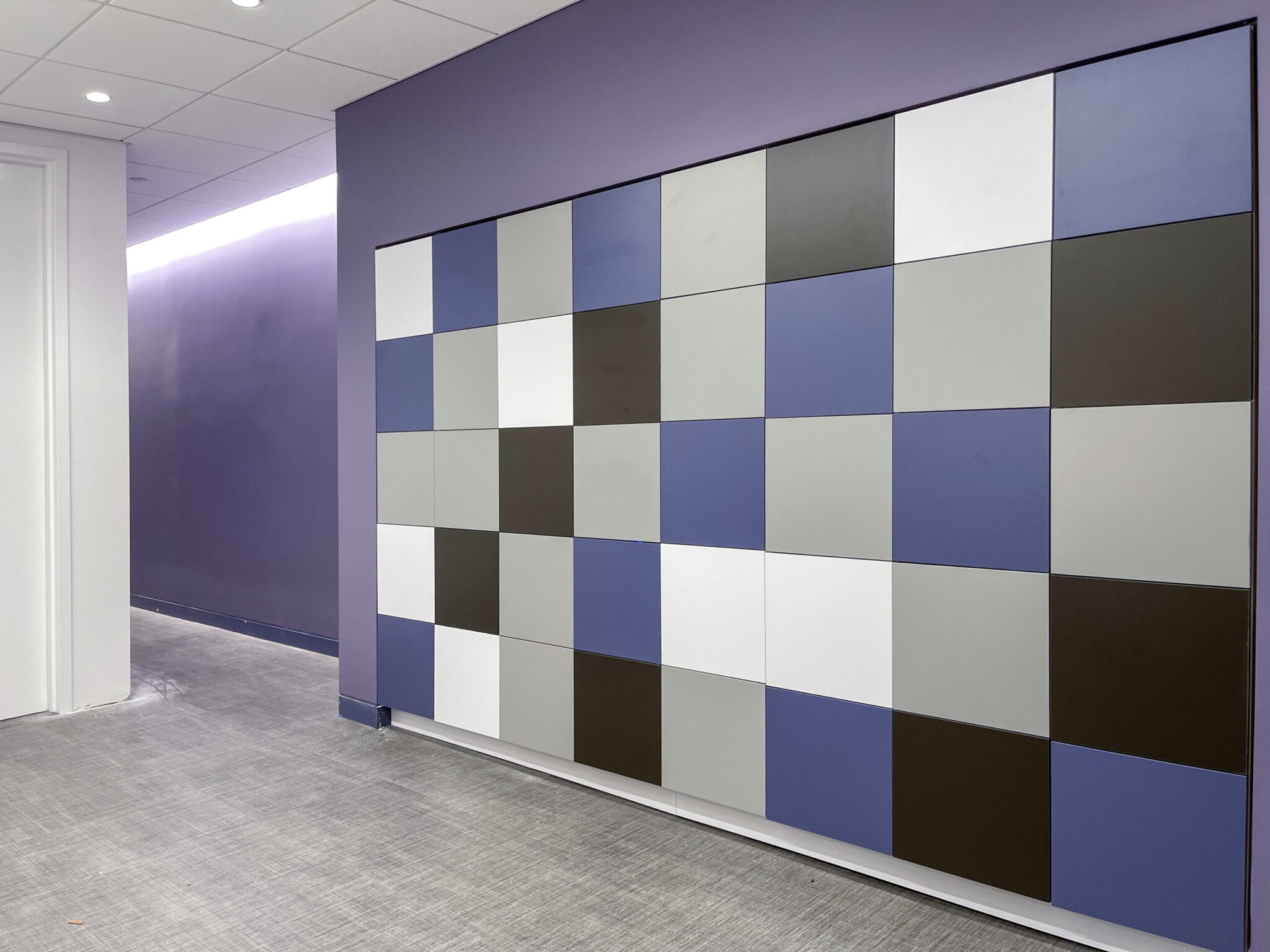
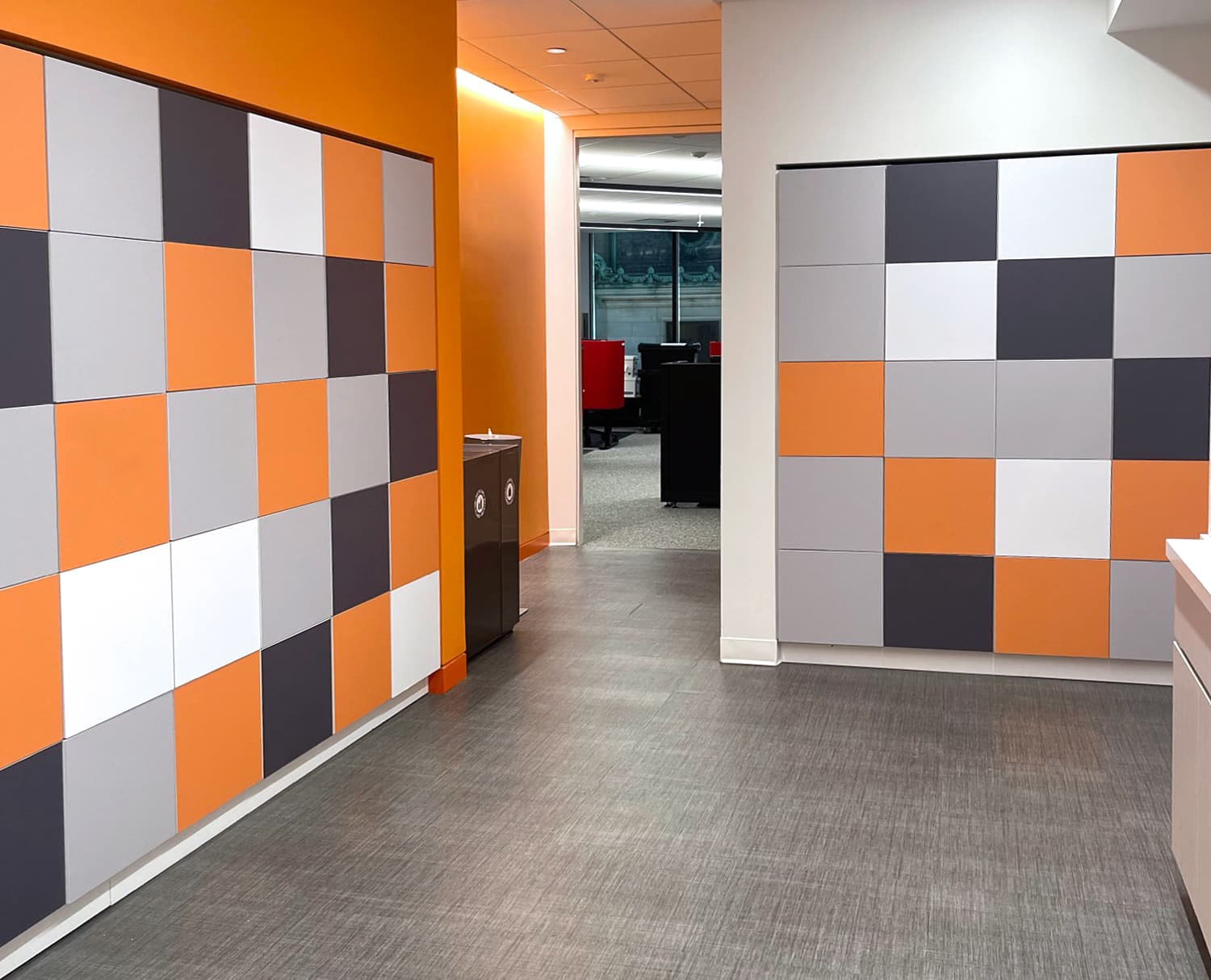
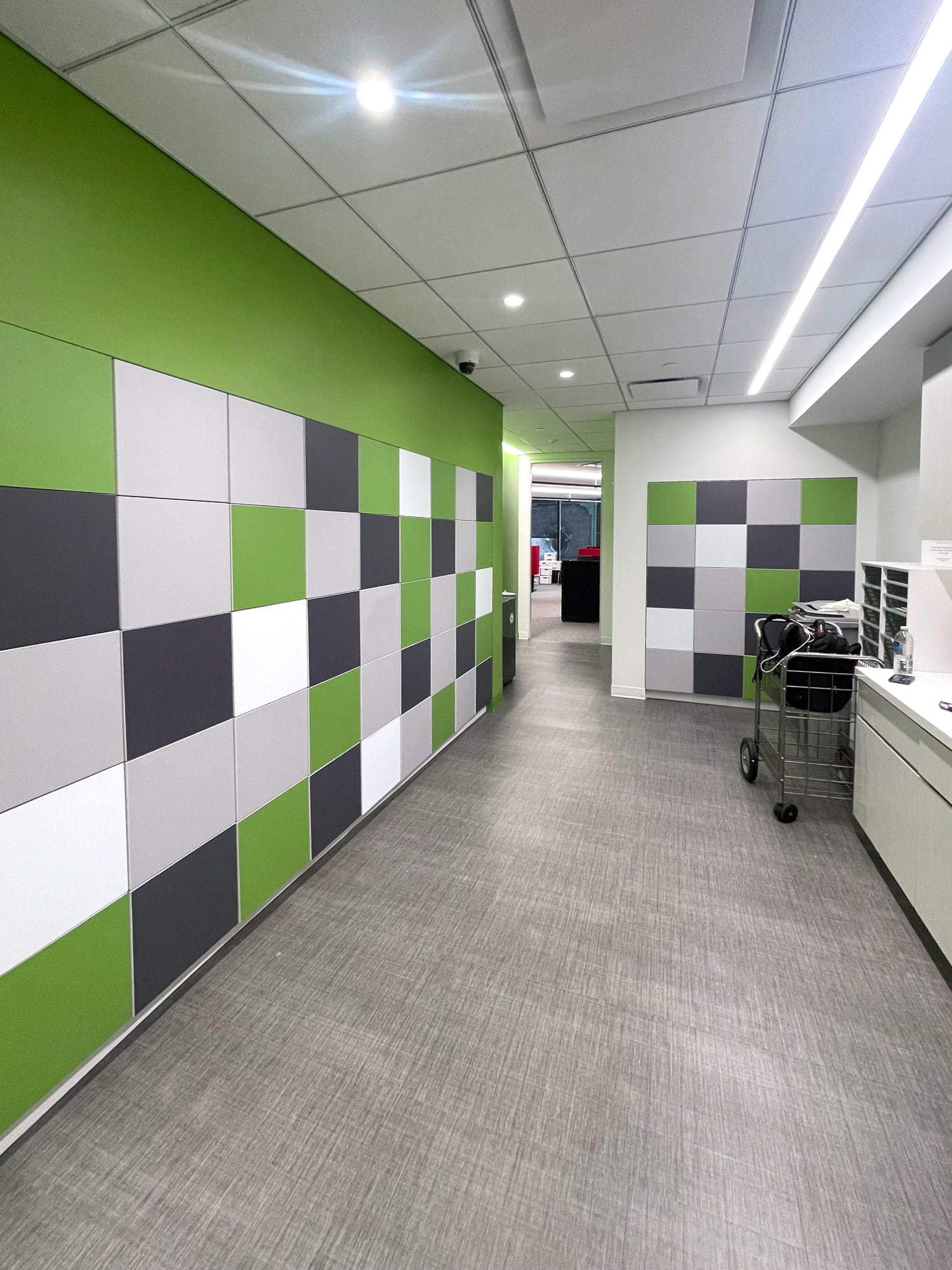
Built-In Wall Lockers

When floor space is constrained, built-in wall lockers integrate directly into the architecture — flush with the surrounding surface or set into the wall cavity. They achieve the storage density of a full locker bank without any floor footprint, and with the right finish, they disappear entirely into the design or become its defining feature.

Built-in installations are common in reception areas, corridors, touchdown zones, and amenity floors — anywhere the design intent is clean and architectural. They're also frequently specified in renovation projects where the goal is to add locker capacity without changing the spatial character of the floor.
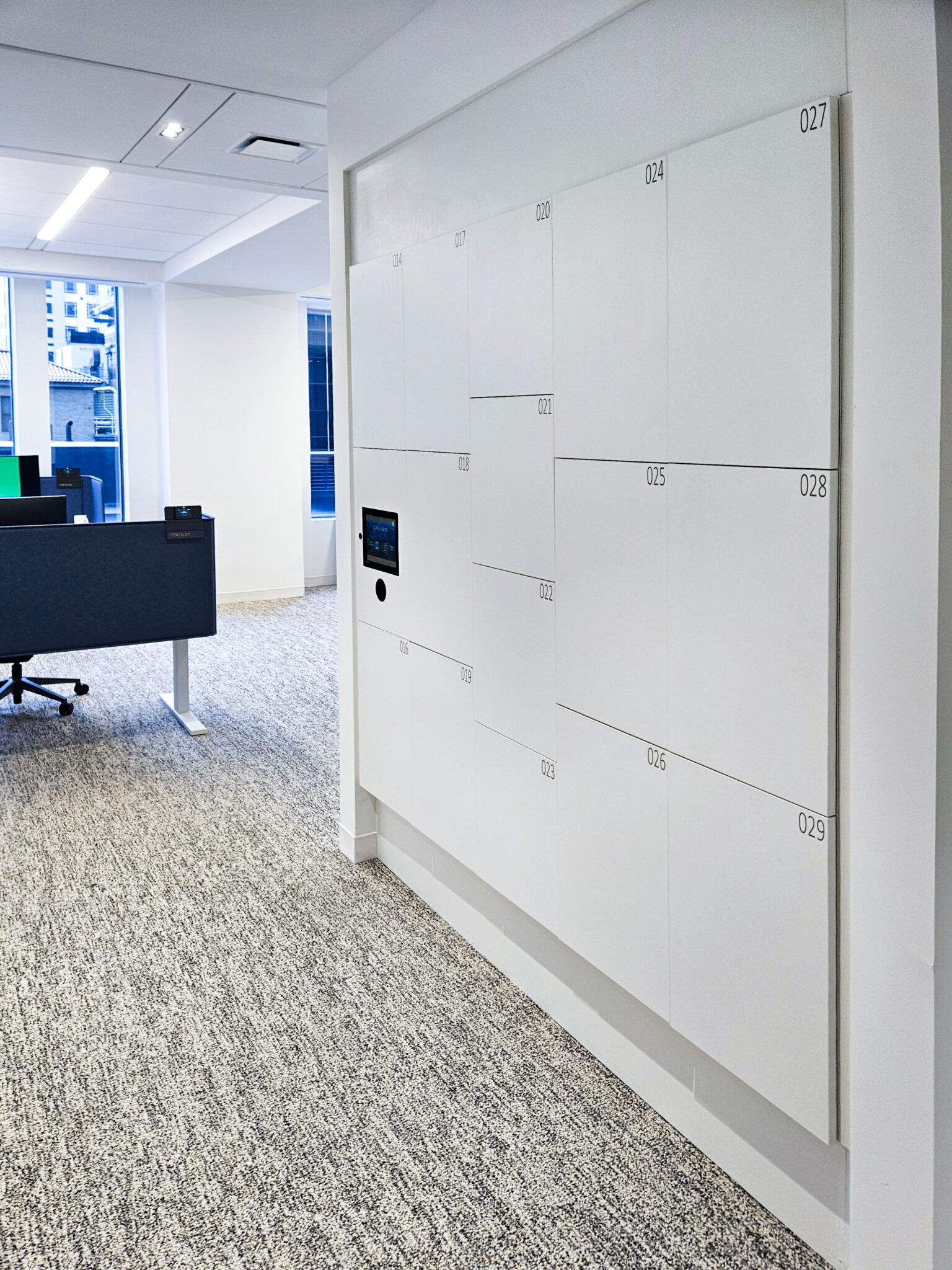
  • Full flush integration with surrounding wall finish
  • Frameless door options for a seamless, handle-free appearance
  • Structural engineering for any wall depth and locker dimension
  • Custom graphic wraps, veneer, or painted finishes
  • Designed to code for fire ratings and egress clearances
  • Available in any smart lock technology
Built-in wall locker installation by HAMILTON Casework Solutions

Every Surface Is a Design Decision

HAMILTON lockers are specified in virtually any material available in commercial interiors. The right choice depends on durability requirements, brand standards, and the aesthetic language of the space.

Wood Veneer

Natural warmth. Matches millwork and furniture specifications. Engineered for dimensional stability.

High-Pressure Laminate

Hundreds of colors, patterns, and textures. The most specified finish for workplace lockers.

Phenolic Panels

Extreme durability for high-traffic environments. Resistant to moisture, impact, and graffiti.

Painted Glass

Premium countertop and door surface. Available in any RAL color — writable when specified.

Bamboo & Cane

Natural, sustainable materials that add texture and warmth. Ideal for biophilic design schemes.

Sound-Absorbing Panels

Fabric-wrapped acoustic panels integrated into locker faces. Reduces ambient noise in open offices.

Match the Technology to the Use Case

Choosing the right lock starts with understanding how the locker will be used. Will it hold personal items for the day, or permanently? Is it for asset lending, package delivery, or flexible daily use? HAMILTON matches lock technology to the answer.

Mobile Credentials

Employees unlock via smartphone app — the same device they already carry. No cards, no codes. Integrates with existing HR and facility management platforms.

RFID / NFC Badge

A common choice for organizations with existing access control infrastructure — employees use the same badge to enter the building and open their locker. The lock hardware is specified by the customer or distributor; HAMILTON cabinets are built to accommodate it cleanly.

Keypad / PIN

Simple and reliable for visitor lockers, temporary use, or environments where employees don't carry badges consistently. One of several electronic access options your distributor or facilities team can specify.

QR Code

Scan to access. Ideal for package pickup and IT asset lending — the delivery confirmation or checkout notification contains the code.

Kiosk & Touchscreen

Floor-standing or wall-mounted kiosks display locker availability, floor maps, and booking status. Employees find and claim a locker in seconds.

Mechanical Backup

Many electronic lock systems include a physical override provision for facilities teams. HAMILTON locker cabinets can be specified to accommodate this — so no employee is locked out due to power or connectivity issues. Ask your lock vendor or distributor about override options for your chosen system.

Lockers That Bring Nature In

Biophilia — the human tendency to seek connection with nature — is one of the most powerful drivers of employee wellbeing and office desirability. HAMILTON integrates biophilic elements directly into locker design.

Planter boxes built into the top or base of a locker bank. Living moss panels integrated into zone divider units. Cane and bamboo fronts that bring natural texture to high-traffic corridors. These aren't afterthoughts — they're structural elements, engineered and specified as part of the locker design from day one.

Research consistently shows that offices with biophilic elements see measurably better attendance, higher satisfaction scores, and lower stress markers. When the locker wall is also a garden, it changes how people feel about the space.
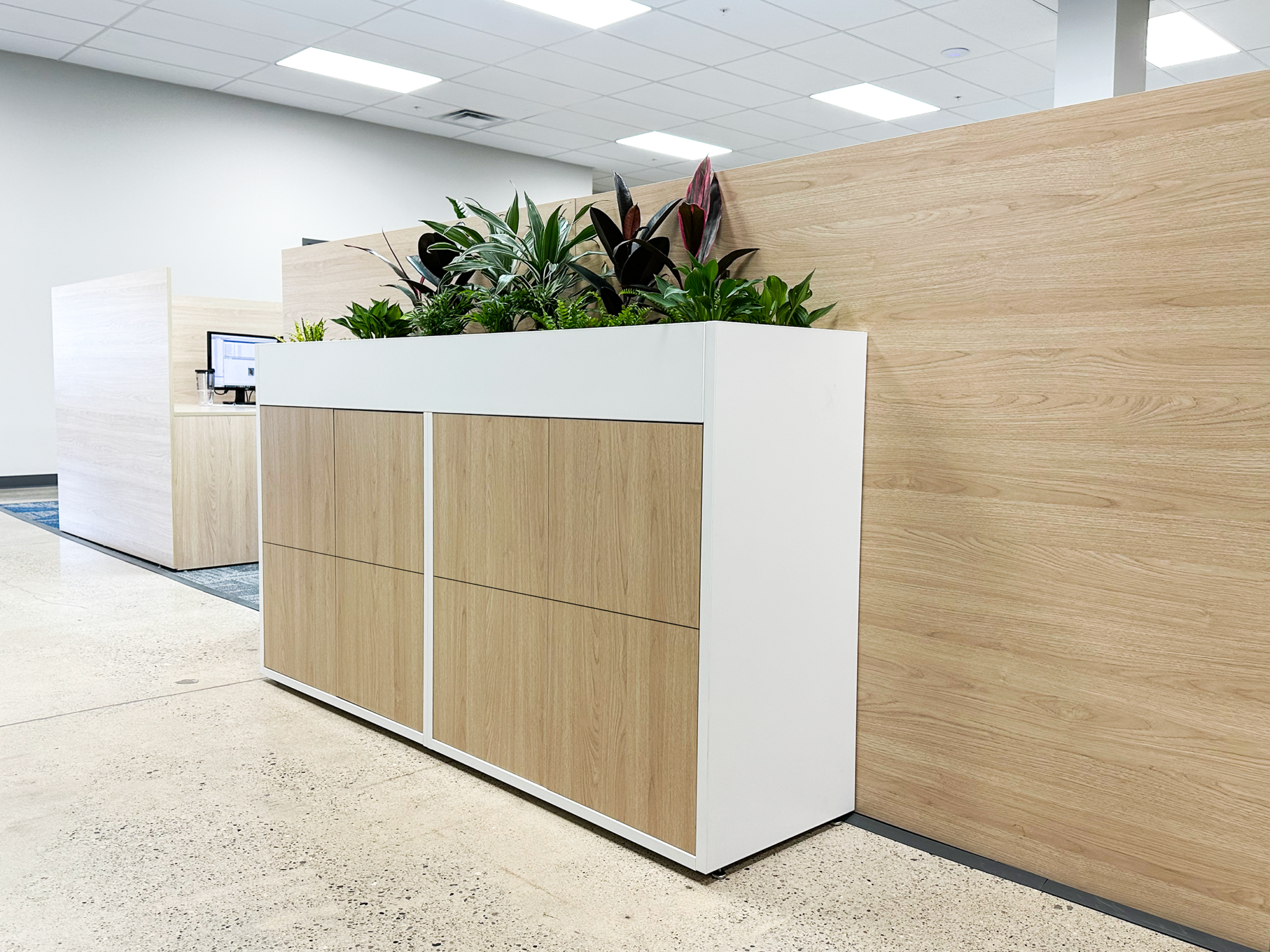
Biophilic office locker design with integrated planters by HAMILTON Casework Solutions

Your Lockers Should Tell Your Story

Every surface in a HAMILTON locker is a canvas. The companies that do this best don't use their lockers as storage — they use them as brand infrastructure. Here's how.

Custom Color Programs

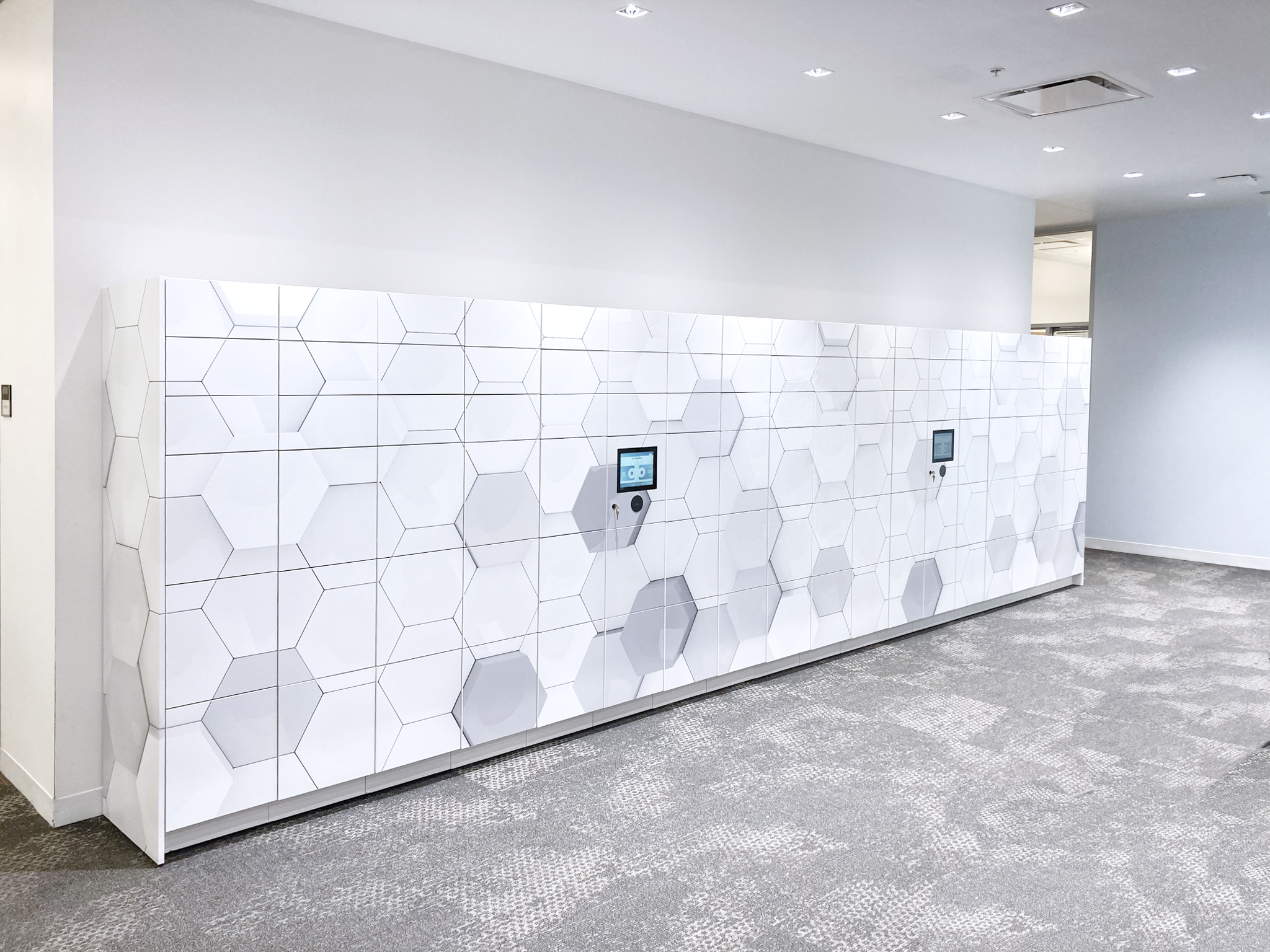
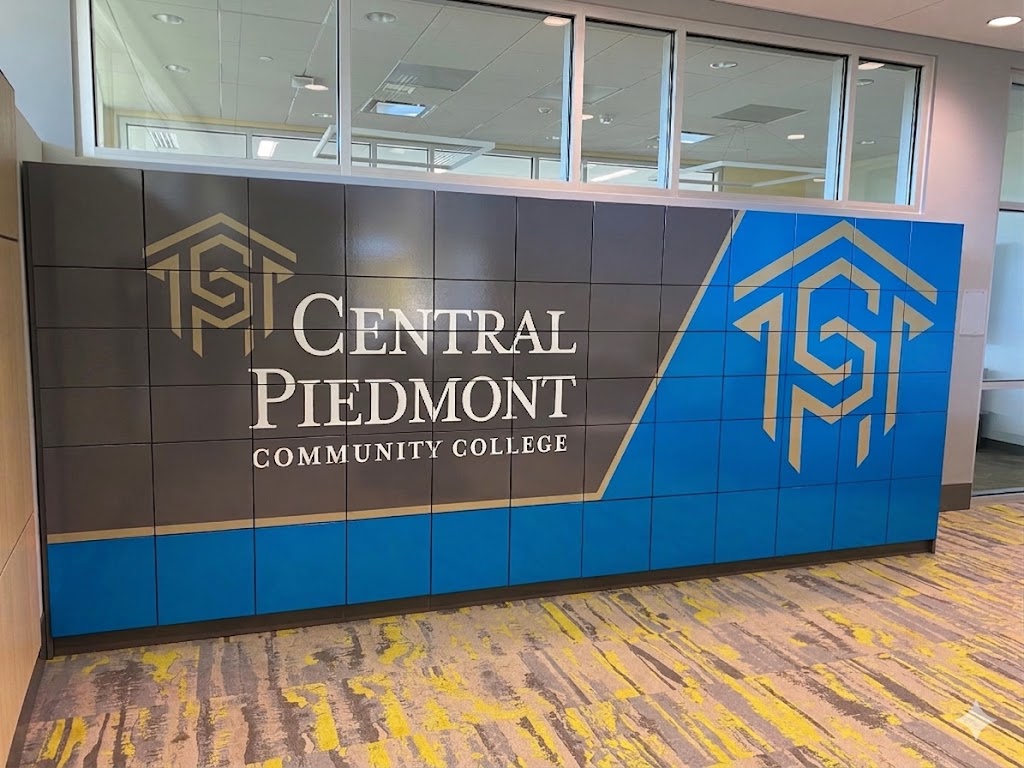
Match brand Pantones exactly. Use department colors to create visual wayfinding. Create a gradient across a locker wall that reinforces spatial identity. HAMILTON can match any color system — RAL, Pantone, or custom.

Vinyl Graphics & Wraps

Full-face vinyl graphics turn a locker wall into a mural. Company mission statements, city photography, product imagery, team photos — anything that makes the space feel alive and distinctly yours.
Custom Door Profiles

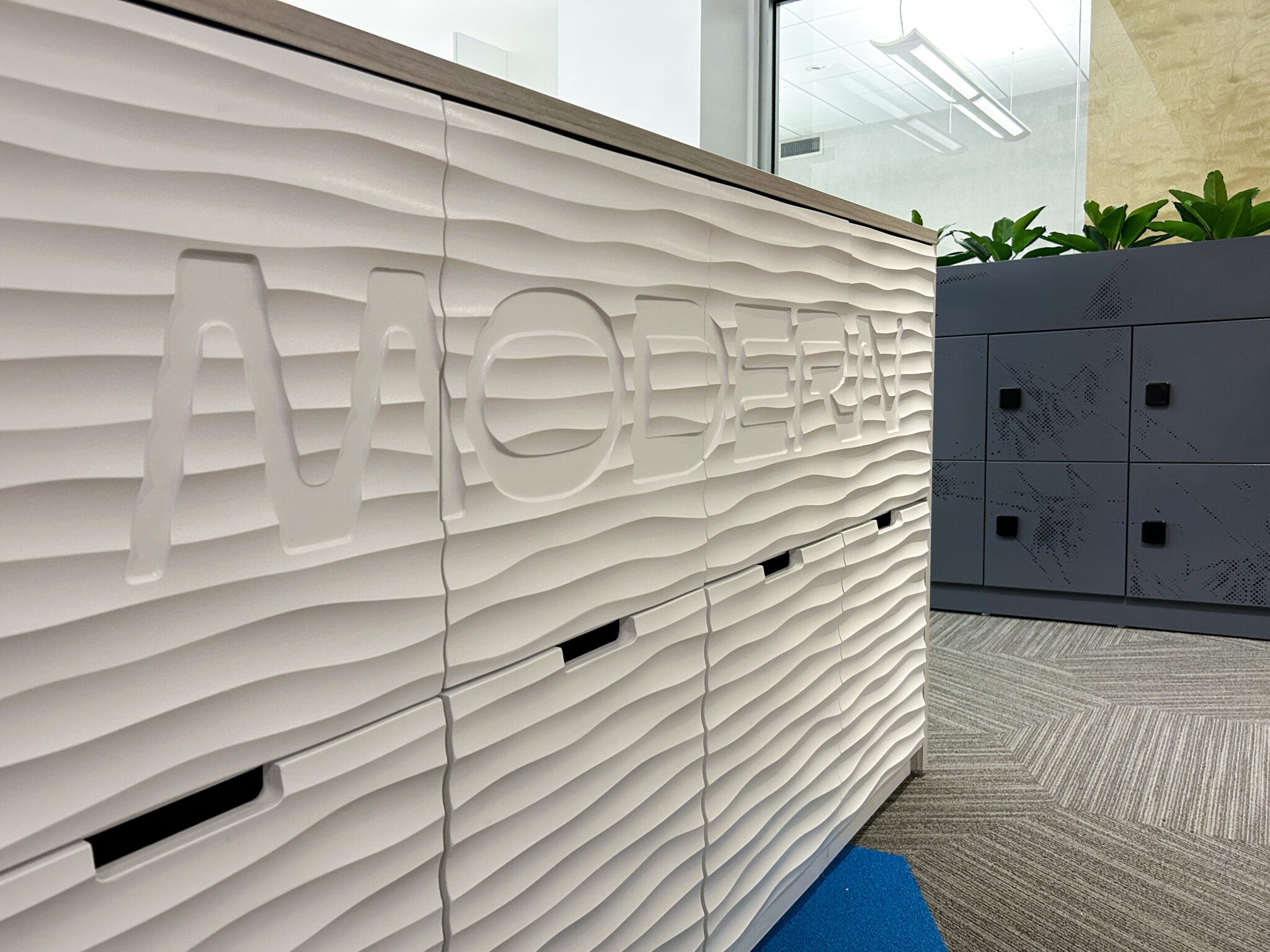
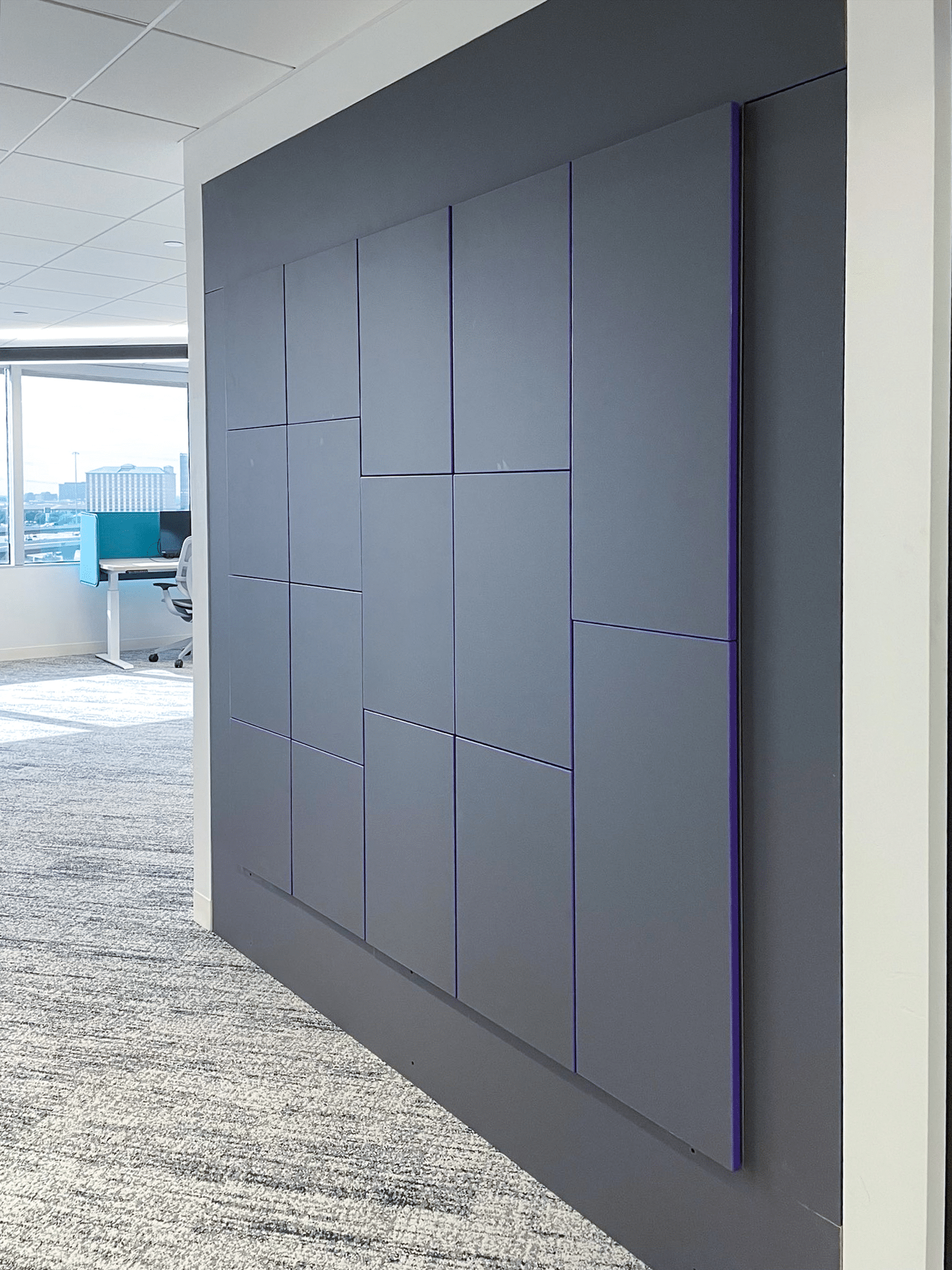
CNC-routed door fronts in any pattern — a company wordmark in relief, a geometric pattern that references the brand's visual language, or a texture that reflects the building's architectural character.

Numberless Design

Remove visible locker numbers and hardware for a clean, architectural surface. Smart lockers don't need physical numbering — assignments are managed in software. The result looks like a wall, not a locker bank.
Integrated Signage

Digital displays built into locker banks show wayfinding, company news, booking status, and availability in real time — turning the locker wall into a live communication channel.

Visitor Impression

Set aside a dedicated section of lockers — or an entire bank — for visitors and contractors. A branded, frictionless experience when someone walks into your space for the first time is worth more than any lobby poster.

Download the Full Design Guide

22 pages from HAMILTON on the hybrid office, smart locker design, customization options, biophilic integration, and brand storytelling through workplace storage. Free — no form required.
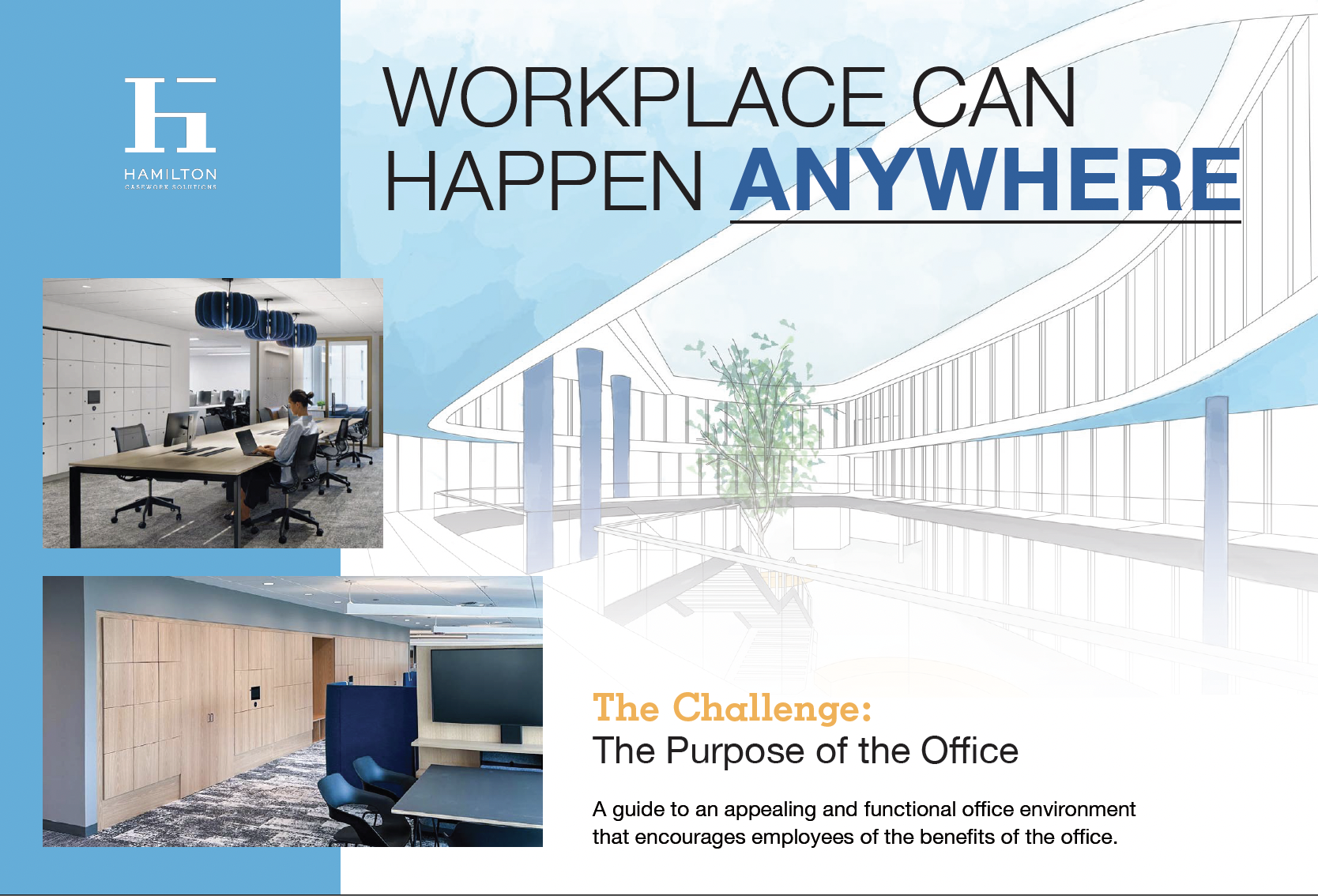
Workplace Can Happen Anywhere — HAMILTON Guide Cover

Workplace Can Happen Anywhere

The complete HAMILTON guide to designing an office that earns employee attendance — with smart lockers at the center of the experience.

PDF · 22 pages · HAMILTON Casework Solutions
Download Free →

Custom Office Locker Design — FAQ

What are zone divider lockers?
Zone divider lockers are locker walls configured to divide open office space into functional zones without fully enclosing them. They create privacy and spatial definition while allowing light and air to flow through open cubby sections. They can include phone booths, whiteboards, and integrated seating — and HAMILTON builds them in virtually any height, width, and finish.
What is an end cap locker?
End cap lockers are installed at the end of a row of workstations, serving as both a space divider and personal storage unit. They commonly include mail slots, hidden trash and recycle bins, and drawer bases that replace low-level lockers. They're one of the most space-efficient configurations in open-plan offices — maximum storage capacity, zero additional floor area required.
What is an island locker?
Island lockers are freestanding units positioned in the center of open space, typically with a countertop surface for collaboration. They feature 360° design (every face is visible and finished), can include integrated seating, power access, writable surfaces, and recycle bins — turning a storage unit into a multifunctional workplace hub.
Can office lockers be built into walls?
Yes. HAMILTON built-in wall lockers are integrated directly into the architecture, maximizing floor area. They can be flush with the surrounding wall, set into a cavity, or designed as a feature element. Common in reception areas, corridors, and amenity floors where a clean architectural look is the priority.
What materials can office lockers be made from?
HAMILTON lockers are available in high-pressure laminate (hundreds of colors), wood veneer, phenolic panels, painted glass, powder-coated steel, bamboo, cane weave inserts, sound-absorbing fabric panels, and vinyl graphic wraps. Countertops can be solid surface, quartz, or writable laminate. Any RAL or Pantone color is achievable.
Can office lockers incorporate plants or biophilic design?
Yes — and it's one of HAMILTON's most requested features. Locker banks can integrate planter boxes at the top or base, with structural support engineered for the additional weight. Biophilic locker installations are proven to improve employee wellbeing and make office environments more inviting — both factors that support stronger RTO attendance.
What electronic access hardware can HAMILTON locker cabinets accommodate?
HAMILTON locker cabinets are engineered to accommodate a wide range of electronic lock hardware — including RFID readers, keypad systems, and mobile credential readers. The lock brand and software platform are selected by the customer or their distributor based on their existing access control environment and IT requirements. HAMILTON is lock-agnostic: we manufacture the locker cabinet to receive the hardware; the technology selection is yours.

Let's Spec Your Locker Program Together

Bring us your floor plan, your brand guidelines, and your headcount. We'll come back with a locker program that looks like it was designed for the space — because it was.